10 Tips for Choosing a CNC VMC Machine

Choosing a cnc vmc machine is not just a matter of comparing spindle speeds or price tags. It is a decision about the parts your shop must produce, the operators who will run them, and the work you expect next year. A compact vertical machining center may suit aluminum brackets, while heavier steel components can demand greater rigidity, torque, and cutting stability. Details matter. A 10,000-rpm spindle looks impressive, but it may add little value if your jobs need torque at lower speeds.

CNC educator Mike Lynch’s practical guidance can be distilled into this buyer’s rule: “Choose the machine around the work you run, not the specifications that look best on paper.” This is an editorial paraphrase, not a verified verbatim quotation. Use it as a prompt to examine your actual part mix, tolerances, materials, and annual production volume. Then compare work envelope, tool capacity, control familiarity, service support, and installation needs. Ask for a test cut using representative material. Watch the chip flow. Listen for vibration. Check whether the quoted options include the tooling and software your operators need.

A brochure cannot reveal every limitation. Neither can one successful demo. These ten tips offer a practical framework for asking better questions before you buy. Some trade-offs will remain. That is worth admitting early. A machine that fits today’s workload may still require careful planning for tomorrow’s.
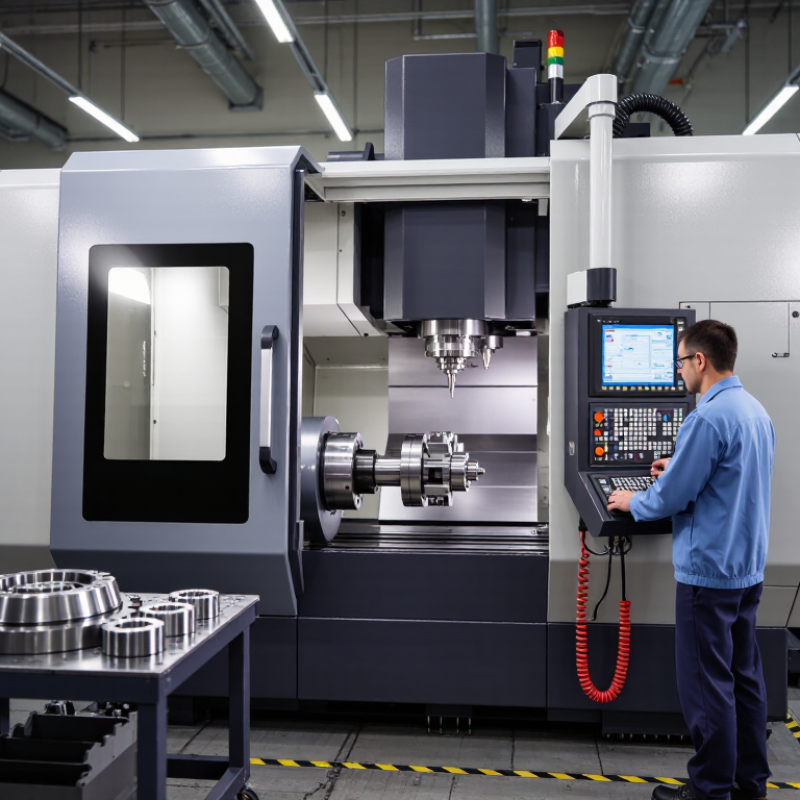
10 Tips for Choosing a CNC VMC Machine

Assess Production Goals, Materials, and Workpiece Size

10 Tips for Choosing a CNC VMC Machine

Assess Production Goals, Materials, and Workpiece Size

Start with the work the machine must do each week. Estimate part quantities, shift hours, setup changes, and acceptable cycle times. A machine suited to occasional prototypes may struggle with repeated production runs. That matters. Compare expected output with realistic cycle-time estimates, not the fastest number in a sales demonstration.

Material choice affects spindle power, tooling, and cutting strategy. Aluminum often allows higher cutting speeds, while steel may demand more torque and rigidity. If your shop runs several materials, check the spindle’s usable speed range and the machine’s load capacity. Ask for technical specifications, and confirm them against your actual cutters and operations. A test cut on representative stock can reveal vibration or chip-clearance issues that a brochure may not show.

Measure the largest workpiece, including fixtures, clamps, and tool access—not just the part itself. Check X, Y, and Z travel, table dimensions, and allowable table load. Leave room. A heavy fixture or tall part can limit usable Z clearance quickly. One detail is easy to miss: the tool must reach every feature without colliding with clamps. It is tempting to choose extra capacity “just in case,” but unused travel still costs money and floor space. Recheck the numbers with a machinist who understands your planned setups.

Match Machine Travel, Capacity, and Spindle Performance

10 Tips for Choosing a CNC VMC Machine
Match Machine Travel, Capacity, and Spindle Performance

Start with the parts you actually plan to cut, not the largest part you might make someday. Measure each workpiece, then include fixture height, clamp clearance, and tool reach. A machine’s advertised travel does not equal usable workspace. Leave room. A vise or rotary table can consume space quickly, especially near the machine’s travel limits. Check X, Y, and Z movement against your setup, including how the spindle nose approaches deep pockets.

Capacity involves more than the weight of a single part. Consider the combined load of the workpiece, fixture, and any rotary equipment. Confirm that the table can support it and that loading remains practical for operators. Measure twice. A machine may fit the part on paper but leave little room for safe clamping or chip removal. That matters during daily production, not just during a showroom demonstration.

Match spindle performance to the materials, cutters, and operations you expect to run. High spindle speed can suit small tools and light finishing cuts, while heavier cuts often need adequate torque at lower speeds. Check the spindle’s power and torque curves across the speeds you will use; peak figures alone tell little. Also consider tool-holder limits, coolant delivery, and how often you change tools. There is no perfect match. A slightly larger machine may seem reassuring, but it can add cost and floor-space demands without improving your actual work.

Compare Accuracy, Control Systems, and Tool-Changing Options

When comparing accuracy, ask for measured results, not only brochure tolerances. ISO 230-2:2014 defines tests for numerical-axis positioning accuracy and repeatability, including measurements from both travel directions. Request the machine’s test report, measurement conditions, and results in micrometres. Check performance across the working range, not just near the center. A warm spindle and a cold shop can produce different results. A spreadsheet can still mislead.

Control systems matter when parts have tight contours or frequent program changes. Compare look-ahead, interpolation, alarm history, and how easily operators can recover from an interrupted cycle. For machining-center performance, ISO 10791-6:2014 covers tests of speeds and interpolations; ask whether the machine’s documented tests match your intended work. Then compare tool-changing options by capacity, change time, and tool-to-tool consistency. A short change time helps only when the magazine holds the tools your jobs actually need. Track real cycle times on representative parts, since quoted change times may exclude acceleration or settling. I would not choose from specifications alone; the test setup may not reflect your shop.

Evaluate Automation, Compatibility, and Workshop Requirements

Automation should solve a measured bottleneck, not simply make a VMC look advanced. The International Federation of Robotics reported 4,281,585 industrial robots operating in factories worldwide in 2023. That figure signals expanding automation, but it does not mean every workshop needs a robot. Check whether the machine’s control system supports your intended pallet changer, probing routine, or robotic interface. Ask for cycle-time estimates using your actual part, tool changes, and loading method. A robot-ready cell can still sit idle. Small details matter.

Compatibility starts with the parts you already make. Compare workpiece dimensions and weight with the VMC’s table capacity, travels, spindle taper, and tool magazine. Confirm that the controller can handle required programs and communicate with existing systems. Then walk the workshop route: measure the doorway, ceiling height, service access, and floor space for chip removal and maintenance. Measure the doorway first. Verify electrical supply, compressed air, coolant handling, and floor loading with qualified site personnel before installation. Leave room for operators to open enclosure doors and safely change tools. It is easy to underestimate that space. A compact layout may look efficient on a drawing, yet become awkward when a cart, chip bin, and operator share the same aisle. Ask the supplier for a site checklist, and compare it against your real production schedule—not an idealized one.

10 Tips for Choosing a CNC VMC Machine — Evaluate Automation, Compatibility, and Workshop Requirements

# Selection Tip What to Evaluate Questions to Ask or Checks to Make Why It Matters
1 Match the work envelope to your parts Usable X, Y, and Z travel; table dimensions; maximum workpiece size; and clearance for fixtures, tools, and spindle nose. Measure representative parts with their fixtures installed. Confirm that the tool can reach all required features without exceeding travel limits. A part may fit on the table but still be impossible to machine if the tool, fixture, or spindle lacks adequate clearance.
2 Check load capacity and machine rigidity Table load rating, workpiece weight distribution, column and base construction, spindle support, and the cutting forces expected for your materials. Compare the combined weight of the part, fixture, and clamping equipment with the machine’s rated table load. Review cutting tests using representative material. Rigidity and proper loading affect vibration, surface finish, tool life, and dimensional consistency.
3 Select spindle performance for the cutting process Spindle speed range, torque characteristics, taper, power, cooling method, and duty requirements. Match spindle speed and torque to the tools, materials, and operations you use. Ask for performance data across the speed range, not just the maximum speed. High speed alone does not guarantee suitability; heavy cutting may require adequate torque at lower speeds.
4 Verify accuracy and repeatability needs Positioning accuracy, repeatability, thermal behavior, calibration practices, and the tolerances required by your parts. Request test results and the measurement conditions used. Confirm that the machine can maintain the required tolerances over your expected operating cycle. Published accuracy figures depend on test methods and conditions; real results also depend on setup, temperature, tooling, and maintenance.
5 Confirm tool-change capacity and tool compatibility Tool magazine capacity, tool-change time, supported tool holders, maximum tool dimensions and weight, and chip-to-chip time. Check that your existing holders and tools fit the spindle taper and magazine limits. Estimate how many tools a typical job requires. A suitable tool system reduces setup changes and helps avoid delays, while incompatible holders can require additional investment.
6 Plan automation around production needs Manual loading, pallet changers, probing, robotic tending, automatic doors, and the machine’s interfaces for automation. Estimate part volume, batch size, loading time, and operator availability. Confirm that proposed automation supports the part, fixture, and required safety systems. Automation can increase unattended operating time, but its value depends on repeatable work, suitable fixturing, and a reliable production workflow.
7 Check CNC control and software compatibility Program formats, postprocessor availability, probing cycles, data transfer, network access, and integration with existing CAD/CAM workflows. Test a representative program before purchase. Verify that your CAM postprocessor supports the machine’s axes, tool changes, and required cycles. Compatibility reduces program editing and commissioning work and helps prevent errors during the transition to a new machine.
8 Assess chip and coolant management Chip conveyor options, coolant capacity and delivery, through-spindle coolant availability, filtration, and access for cleaning. Consider chip type and volume for your materials. Check whether the coolant system and conveyor are appropriate for long-running or unattended jobs. Effective chip evacuation helps prevent recutting, tool damage, poor finishes, and avoidable interruptions.
9 Measure workshop and utility requirements Machine footprint, service clearance, floor loading, door access, electrical supply, air requirements, coolant handling, and environmental conditions. Confirm the installation route and available floor space, including room for maintenance and material handling. Have qualified personnel verify utility requirements. A machine that fits its allocated footprint may still be difficult to install or operate without adequate access and utilities.
10 Compare lifecycle support and operating costs Training, service availability, spare parts, maintenance schedule, energy use, tooling, fixtures, and warranty coverage. Request a written maintenance and training plan. Estimate total cost over the intended ownership period, including installation and ongoing consumables. Purchase price is only one part of ownership cost; support and maintenance affect uptime, productivity, and long-term value.

Verify Supplier Support, Total Cost, and Machine Performance

When comparing a CNC VMC, treat supplier support as part of the machine, not an optional extra. Ask who handles installation, operator training, and urgent service calls. Get response times and maintenance terms in writing. Small details matter. A clear answer about replacement parts is more useful than a vague promise of “full support.” If possible, speak with a nearby shop using a similar configuration and ask how service works after the first year.

Purchase price is only one line in the budget. Estimate costs over five years, including tooling, coolant systems, preventive maintenance, electricity, and downtime. Ask the supplier to explain what is included in the quote and what costs extra. An inexpensive machine can become costly if a spindle repair takes weeks. Still, cost forecasts are imperfect; production changes, and nobody can predict every repair. I would compare assumptions, not just totals.

Performance should match the actual parts you plan to cut. Review spindle speed, travel, tool capacity, and positioning specifications against your materials and tolerances. Ask for a cutting demonstration using a representative workpiece, then inspect the finish and measure critical features. A brochure figure is not a shop-floor guarantee. This comparison takes time, and it can feel tedious, but skipping it leaves too much to guesswork.

Suggested evaluation weights for comparing CNC VMC machines. The weights total 100% and are a planning framework, not market survey data. Compare supplier support and service response alongside total ownership cost and machine performance, and adjust the weights to fit your production needs.