
Top 10 CNC Metal Milling Machine Types for Global Buyers
Buying a CNC metal milling machine is rarely a simple search for maximum spindle speed. Global buyers must match machine architecture, work envelope, material, tolerance, and service support to real production needs. A compact three-axis mill may suit aluminum brackets, while a five-axis machining center can reduce setups for complex aerospace-style components. Horizontal mills often improve chip evacuation during heavy cutting. Vertical models may offer easier access and lower initial costs. Every choice changes tooling, floor space, operator training, maintenance, and delivery planning.
This guide examines ten common CNC metal milling machine types used across workshops and industrial plants. It considers practical differences rather than relying on impressive specifications alone. Look beyond horsepower. Check spindle taper, positioning accuracy, rapid traverse, coolant design, control compatibility, and workholding options. A machine rated for steel may still struggle with unstable fixtures or inadequate chip control. That detail is easy to miss.
For international purchasing teams, reliability extends beyond the machine frame. Buyers should verify factory experience, inspection procedures, spare-parts availability, installation guidance, and technical support. Ask for sample cuts using the intended alloy, cutter, and tolerance. Photos are useful, but test results provide stronger evidence. Supplier references can reveal how the machine performs after six months, not only on delivery day.
Budget matters, yet the lowest quotation can become expensive through downtime, imported tooling, or difficult repairs. Energy use, automation readiness, software licensing, and local service capability deserve careful review. No ranking fits every factory. That is the important limitation. A thoughtful comparison exposes compromises and helps buyers select equipment they can operate confidently, maintain consistently, and scale responsibly across changing markets.
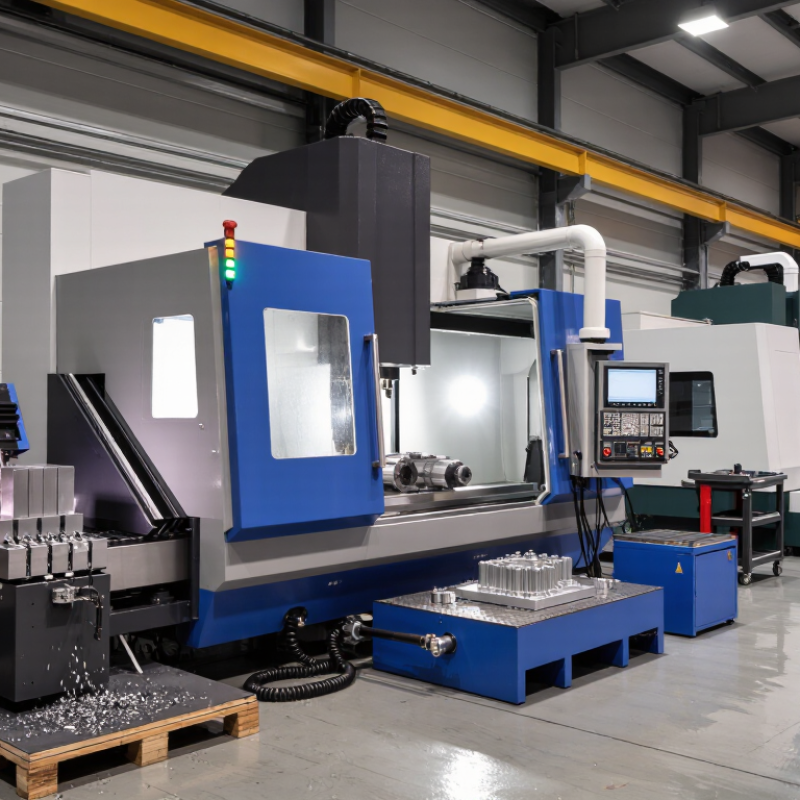
Understanding CNC Metal Milling Machines and Global Buyer Needs
Top 10 CNC Metal Milling Machine Types for Global Buyers
Understanding CNC Metal Milling Machines and Global Buyer Needs
CNC metal milling machines include vertical, horizontal, three-axis, four-axis, five-axis, gantry, bed-type, knee, universal, and compact models. Each type solves a different production problem. Vertical machines suit general parts and limited floor space. Horizontal and gantry machines handle heavier workpieces. Five-axis systems reduce repositioning for aerospace-style components.
Global buyers need more than a machine catalogue. Check spindle power, table load, travel range, positioning accuracy, chip evacuation, and compatible control systems. ISO 230-2 provides a recognized method for testing positioning accuracy and repeatability. Request the actual test report, not only a brochure claim. Material also matters. Aluminum, stainless steel, titanium, and hardened steel create different heat and tooling demands.
The International Federation of Robotics reported 541,302 industrial robot installations worldwide in 2023. This growth reflects stronger demand for connected manufacturing. Buyers should therefore inspect data interfaces, remote diagnostics, safety functions, and automation readiness. Electrical standards, language support, operator training, spare-part access, and local service can decide long-term value.
A perfect machine rarely exists.
A larger spindle may reduce finishing quality. A smaller machine may deliver better repeatability. Buyers should test their own sample parts before ordering. I have seen attractive specifications fail when fixtures, coolant systems, or operator skills were ignored. A reliable comparison includes cycle time, maintenance hours, energy use, tooling cost, and proven tolerance under real shop-floor conditions.
The Ten Main CNC Metal Milling Machine Types Explained
Top 10 CNC Metal Milling Machine Types for Global Buyers
The ten main CNC metal milling machine types differ by spindle position, axis movement, and workpiece capacity. A vertical machining center suits general steel, aluminum, and mold work. Its spindle moves downward, giving operators clear access. A horizontal machining center handles deep cavities and heavy production more efficiently. Chips fall away more naturally.
A three-axis mill moves along X, Y, and Z axes. It remains practical for plates, brackets, and simple profiles. A four-axis mill adds rotary positioning. This reduces repeated clamping. A five-axis mill reaches angled surfaces in fewer setups. It can improve accuracy, but programming becomes demanding.
A gantry mill uses a bridge structure for large plates, frames, and fabricated parts. A bed-type mill offers strong support for heavy workpieces. Its table movement can improve stability during rough cutting.
A turret mill provides flexible manual-style access with CNC control options. It fits repair shops and varied small-batch work. A universal mill combines multiple cutting directions and angular machining. A compact or mini CNC mill saves floor space. However, its smaller spindle and table limit material removal. These categories can overlap. Classification is not always perfectly consistent.
Tips: Match the machine to metal grade, part size, tolerance, and monthly volume. Check spindle torque, table load, travels, coolant control, and local service support. Ask for a cutting trial with your actual material. Do not trust speed claims alone. In my experience, an oversized machine may waste energy, while a small machine can struggle visibly. Leave room for operator training and future fixtures. That choice is easy to underestimate.
Matching Machine Types to Materials, Parts, and Production Goals
Choosing among the top 10 CNC metal milling machine types starts with the material, not the machine brochure. Aluminum cuts easily on a vertical or three-axis mill, while stainless steel benefits from a rigid bed mill or horizontal machining center. Titanium demands stable fixturing, controlled heat, and often five-axis movement. Cast iron needs power and careful chip evacuation. Material hardness changes cutting force, tool life, and spindle requirements.
Part geometry narrows the choice further. A knee mill suits repair work and simple brackets. A vertical machining center handles plates, housings, and repeatable production. Horizontal machines improve chip flow on deep pockets and heavy parts. Four-axis equipment reaches multiple faces without repeated setups. Five-axis mills are valuable for impellers, medical components, and complex molds. Gantry mills fit large frames, panels, and castings. Bed mills support heavier workpieces, while compact machining centers suit smaller precision parts.
Production goals must control the final decision. Job shops may prefer flexible three-axis equipment with quick programming. High-volume buyers should examine pallet systems, automatic tool changers, and cycle stability. I have seen buyers overpay for five-axis capability when their parts needed only accurate drilling and pocketing. That mistake is expensive. Yet choosing too little movement can create extra fixtures, longer handling time, and alignment errors. Review tolerance records, batch sizes, tool access, floor space, operator skill, and local service support before approval. A machine that looks powerful may still be poorly matched to the daily workload.
Evaluating Accuracy, Capacity, Automation, and Control Systems
Global buyers comparing the top 10 CNC metal milling machine types should examine accuracy before counting features. Common options include three-axis, four-axis, five-axis, vertical, horizontal, gantry, bed-type, knee-type, micro, and mill-turn configurations. Each suits different production risks. A five-axis machine can reduce setups, but skilled programming remains essential. A three-axis model may deliver better value for simple plates and brackets.
Tolerance tells the truth. Ask for measured results, not only advertised resolution. Review spindle runout, thermal stability, repeatability, and test-cut data from similar metals. A practical trial should include a steel pocket, a drilled hole pattern, and a finished surface check. Capacity also matters. Compare table dimensions, work envelope, spindle load, tool length, and chip evacuation. A large machine is not automatically productive. Oversized equipment can waste floor space and energy.
Automation changes the calculation. Tool changers, probing, pallet systems, and robotic loading reduce handling time, yet they add maintenance points. Control systems should support clear programs, simulation, alarm history, remote diagnostics, and secure data transfer. Operators need usable screens, not impressive menus. I have seen buyers overlook training costs and fixture design. That mistake becomes expensive. Also question claimed accuracy under heat, vibration, and long production runs. Specifications are useful, but real parts reveal more. A supplier’s inspection records, calibration routines, and documented service response provide stronger evidence than polished sales language.
Top 10 CNC Metal Milling Machine Types for Global Buyers
Comparative benchmark of typical accuracy, machining capacity, automation readiness, and control-system capability. Scores are normalized from 1 to 10 based on common machine configurations and are intended for initial purchasing evaluation.
Higher scores indicate stronger typical performance or capability. Actual results depend on machine structure, spindle configuration, tooling, workholding, software, and operating conditions.
Assessing Global Purchasing, Compliance, Service, and Total Cost
Related Posts
-
Top 10 Micro CNC Milling Machines of 2025: What to Look For?
-
China Top 10 CNC Milling Machine Brands to Know in 2026?
-
How to Choose the Best Home CNC Machine for Your Needs?
-
Top Precision CNC Milling Machines of 2026 for Buyers?
-
Ultimate Guide to Choosing the Best VMC Milling Machine for Your Manufacturing Needs
-
Top Strategies for Maximizing Efficiency with the Best Home Shop CNC Machine