How to Choose a CNC Milling Machine in 2026?
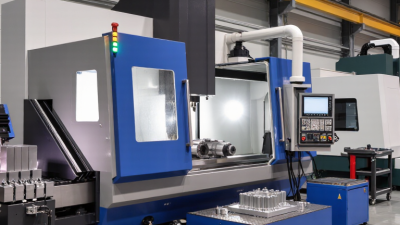
Choosing a CNC milling machine in 2026 requires more than comparing spindle speed and purchase price. A reliable decision begins with your actual work. Consider the materials, part dimensions, tolerances, surface finishes, and monthly production volume. A compact aluminum bracket needs different capabilities from a hardened-steel mold. Measure the available floor space, power supply, coolant requirements, and operator access before contacting suppliers. Small details matter.
The phrase “cnc machine milling machine” often appears in product searches, but specifications can still confuse buyers. Review the machine’s travel range, spindle torque, tool capacity, control system, positioning accuracy, and service coverage. Ask for test cuts using your material and a representative drawing. Watch the chip evacuation, listen for vibration, and inspect the finished surface. These practical checks reveal weaknesses that brochures may hide. No machine is perfect. A high-speed model may sacrifice torque, while a rigid machine may occupy more space and consume more energy. I have seen buyers focus on automation and overlook training, maintenance, and software compatibility. That mistake becomes expensive after installation.
This guide will compare machine types, key specifications, automation options, total ownership costs, and supplier reliability. It will also explain how to verify performance through documentation, demonstrations, and realistic production trials. Independent reviews are useful, but they should not replace engineering judgment. Prices and features may change during 2026, so confirm current data directly with qualified manufacturers. Choose evidence over impressive claims. Your best machine is not always the fastest one. It is the machine that consistently produces accurate parts, supports your operators, and remains serviceable for years.
Define Machining Needs: 3-, 4-, or 5-Axis Capability and Tolerance Targets
Choosing a CNC milling machine in 2026 starts with the parts you actually produce. Define material, envelope size, batch volume, and surface-finish expectations. Then set realistic tolerance targets. A drawing requiring ±0.01 mm demands stronger process control than general fabrication work. Keep it measurable.
A 3-axis machine suits prismatic parts with vertical walls, pockets, and drilled patterns. It can reduce programming complexity and maintenance costs. A 4-axis model adds rotational positioning, useful for machining several faces without repeated setups. This can improve consistency.
A 5-axis machine reaches angled surfaces and complex contours with fewer fixtures. However, extra axes also create more programming, calibration, and collision risks. More capability is not always better.
Review documented positioning accuracy, repeatability, spindle performance, and thermal behavior under defined conditions. Ask for sample test cuts using material similar to yours. Inspect a pocket, a circular bore, and an angled surface. Small details count. Check probing options, tool management, chip evacuation, and operator training requirements. A machine may meet its specification in a controlled test yet struggle during a long production cycle. That gap deserves attention. I have seen teams overbuy axis capability while underestimating fixturing and inspection needs. A careful trial part often reveals more than a polished sales sheet. Reconsider the choice if operators cannot maintain the required process discipline.
Compare Work Envelope, Table Load, and 20–40 m/min Rapid Traverse Rates
Choosing a CNC milling machine in 2026 starts with the part, not the brochure. Measure the largest fixture, tool length, and access angle. Then add clearance for chips and operator loading. A cramped work envelope creates expensive repositioning and awkward setups. I have seen a machine fit the drawing but fail around the vise. That mistake is common.
Table load deserves equal attention. Compare the published limit with the complete setup weight, including fixtures and coolant. A 1,000-kilogram table rating does not mean every axis behaves ideally near that limit. Check support points, pallet balance, and acceleration limits. AMT’s 2024 U.S. Manufacturing Technology Orders report recorded approximately 24,000 units valued at $4.7 billion. That spending shows strong demand, but it does not guarantee the right capacity for your parts.
Rapid traverse rates between 20 and 40 m/min can reduce non-cutting time, especially on large molds or repeated hole patterns. However, rapid speed is positioning speed, not cutting speed. Acceleration, axis travel, and control response matter more than the headline number. Ask for positioning data tested under ISO 230-2 procedures. Request cycle-time trials using your actual fixture. Faster is not always better. A heavy table may move slowly but remain stable. I would challenge any comparison that ignores acceleration, load, and real toolpaths. My own early choices sometimes favored speed too much.
How to Choose a CNC Milling Machine in 2026? - Compare Work Envelope, Table Load, and 20–40 m/min Rapid Traverse Rates
Representative specifications for common vertical CNC milling machine configurations. Confirm final values with the machine supplier and applicable test standards.
| Machine Class |
X × Y × Z Travel
(mm) |
Typical Work Envelope
(mm) |
Table Size
(mm) |
Maximum Table Load
(kg) |
Rapid Traverse
(m/min) |
Spindle Speed
(rpm) |
Typical Spindle Power
(kW) |
Best-Fit Applications |
| Compact Bench- or Floor-Type |
500 × 350 × 400 |
450 × 300 × 300 |
600 × 300 |
250 |
20 |
8,000–12,000 |
5.5–7.5 |
Prototyping, education, small aluminum parts |
| Standard 3-Axis VMC |
800 × 500 × 500 |
700 × 450 × 400 |
900 × 450 |
500 |
24 |
8,000–12,000 |
11–15 |
General production, steel and aluminum components |
| Heavy-Duty Production VMC |
1,050 × 600 × 600 |
950 × 550 × 500 |
1,200 × 600 |
800 |
30 |
6,000–10,000 |
15–22 |
Long cycle times, steel tooling, larger workpieces |
| High-Speed Aluminum VMC |
1,200 × 650 × 600 |
1,100 × 600 × 500 |
1,300 × 600 |
700 |
36 |
12,000–18,000 |
15–25 |
Aerospace-style aluminum parts, molds, high-speed cutting |
| Large-Format VMC |
1,500 × 750 × 700 |
1,350 × 700 × 600 |
1,600 × 750 |
1,200 |
40 |
6,000–10,000 |
18.5–30 |
Large dies, structural components, heavy fixtures |
Work Envelope
Select travel that exceeds the finished part size by allowing room for fixturing, tool access, clamping, and safe axis clearance.
Table Load
Include the workpiece, vise, rotary table, pallet, fixtures, and cutting forces. Do not treat the rated load as usable payload alone.
Rapid Traverse
Rates from 20–40 m/min reduce non-cutting time, but acceleration, axis stroke, control settings, and actual toolpath determine productivity.
Verify ISO 230-2 Positioning Accuracy and Repeatability Test Results
How to Choose a CNC Milling Machine in 2026?
Verify ISO 230-2 Positioning Accuracy and Repeatability Test Results
When comparing a CNC milling machine, request its latest ISO 230-2 test report. This standard evaluates positioning accuracy and repeatability across defined axis movements. A shiny specification sheet is not enough. Ask for measured values, test conditions, compensation settings, and ambient temperature. A reliable report identifies the machine, axis, travel length, feed rate, probe, and measurement method. Details matter.
Tips: Read the results, not just the tolerance claim. Check bidirectional positioning accuracy, unidirectional accuracy, and repeatability separately. Repeatability shows whether an axis returns consistently to the same coordinate. Accuracy shows how closely it reaches the commanded coordinate. Both matter in production. Request test data at several positions, including near the work envelope limits. If the machine will cut aluminum, steel, or hard materials, ask for tests under comparable thermal and load conditions. A room-temperature result may not predict an eight-hour production shift.
During evaluation, observe the test procedure or request a witnessed measurement. Confirm whether laser interferometry or another traceable system was used. Calibration records should be current and linked to recognized standards. Be cautious with unusually perfect numbers. They may reflect ideal setup conditions, not daily performance. I would also inspect repeatability after warm-up, because this step is easy to overlook. Real decisions need evidence, and evidence sometimes exposes a machine that looked better on paper.
Assess Automation, MTConnect Connectivity, Energy Use, and Lifecycle Cost
How to Choose a CNC Milling Machine in 2026?
A suitable CNC milling machine should match your production reality, not just its brochure specifications. Begin by measuring part volume, material hardness, tolerance demands, and operator skill. Automation can reduce handling time through pallet changers, tool monitoring, and robotic loading. However, automation adds programming work and maintenance points. A small workshop may gain more from reliable setup routines than a complex unmanned cell.
MTConnect connectivity deserves careful testing before purchase. It can expose spindle load, cycle time, tool life, alarms, and downtime through a common data structure. Ask whether the machine provides complete, usable data. A connection that reports only machine status has limited value. During an equipment trial, request sample data and check its accuracy against actual shop-floor events. Data quality often surprises buyers.
Energy use also affects the true purchase decision. Compare idle consumption, cutting power, coolant demand, and compressed-air usage. Measure a typical eight-hour shift, not only the rated motor capacity. Lifecycle cost includes installation, training, tooling, service visits, software, and eventual disposal. My practical mistake was focusing too heavily on hourly output during an earlier evaluation. The faster machine still lost value when maintenance access was poor. Leave room for uncertainty. Suppliers may estimate energy savings, but real results depend on workload, material, and operator habits.
How to Choose a CNC Milling Machine in 2026?
Ten-year lifecycle cost comparison for representative CNC milling configurations, calculated per 10,000 spindle-hours. The model includes equipment, energy, maintenance, operator labor, and MTConnect/data-integration costs.
Planning assumptions: electricity at $0.12/kWh, maintenance at 3% of equipment cost per year, labor at $30/hour, and representative spindle power of 12–28 kW. Higher automation reduces labor cost but increases initial investment and integration cost. Use supplier quotations and plant-specific energy data before making a final purchase decision.