
What Are the Top CNC Milling Machine Types in 2026?
In 2026, choosing a milling machine is less about buying the most axes and more about matching motion, rigidity, and tooling to the part. A compact three-axis vertical mill can handle brackets and plates efficiently. A four-axis model adds rotary access for indexed features. Five-axis machines reach angled surfaces with fewer setups, but require careful programming and higher investment. There is no universal winner.
CNC educator Mike Lynch’s process-focused teaching can be summed up in this practical principle: “Choose the machine around the part, not the other way around.” This is a paraphrase, not a verified verbatim quotation. It points to details buyers can inspect: spindle taper, work envelope, tool capacity, control interface, and chip evacuation. A demo cut matters. So does the operator’s experience.
This guide compares the leading CNC milling machine types, including vertical, horizontal, gantry, and multi-axis configurations. It also considers where a cnc machine milling machine fits into real production, from short-run prototypes to repeat batches. Expect trade-offs. A five-axis machine may reduce setups, yet a simpler mill can be easier to program and maintain. Even a tidy spec sheet cannot predict every shop-floor surprise. The right choice depends on material, part geometry, tolerances, volume, and available skills.
What Is a CNC Milling Machine and How Does It Work?
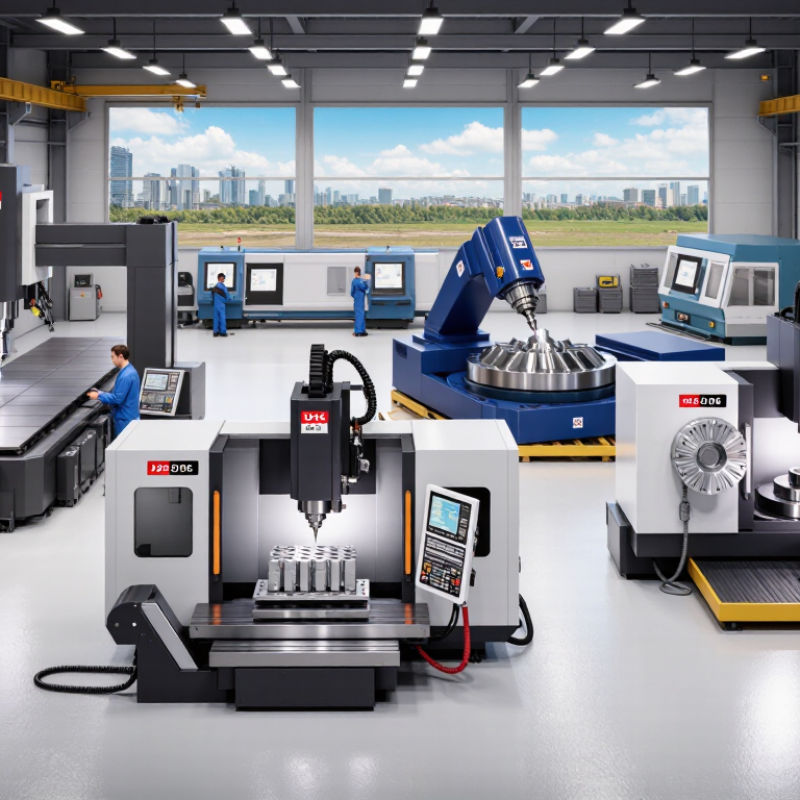
A CNC milling machine removes material with a rotating cutting tool guided by programmed instructions. The workpiece is clamped to a table, while the spindle carries tools such as end mills or face mills. Depending on the machine, the table, spindle, or both move along controlled axes. This creates features like flat surfaces, slots, pockets, and curved contours.
A controller reads toolpath commands, commonly prepared with computer-aided manufacturing software, and coordinates movement, spindle speed, and feed rate. The operator still matters: secure workholding, correct tool selection, and accurate offsets affect the result. A loose clamp can spoil a part. Coolant may also help manage heat and clear chips, though its use depends on the material and cutting process. Three-axis machines suit many straightforward jobs; four- and five-axis machines can reach more faces with fewer setups. That sounds simple. It isn’t always. Tool deflection, worn cutters, or a poor setup can leave marks or dimensional errors, so parts should be checked against the drawing. The machine follows instructions, but good machining still relies on careful preparation and inspection.
| Machine Type | Typical Axes and Configuration | How Milling Is Performed | Common Workpieces | Key Strengths | Main Considerations |
|---|---|---|---|---|---|
| Vertical 3-Axis Machining Center | Three linear axes: X, Y, and Z. The spindle is oriented vertically. | The cutter rotates in the vertical spindle while the tool and workpiece move relative to one another along the programmed axes. | Plates, housings, brackets, molds, and general-purpose prismatic parts. | Versatile, widely used, and well suited to face milling, pocketing, drilling, and contouring. | Deep cavities and features on multiple sides may require longer tools, extra setups, or additional fixturing. |
| Horizontal Machining Center | Usually three linear axes with a horizontally oriented spindle; some machines add rotary axes or pallet systems. | The side-facing cutter machines the workpiece. A rotary table or pallet arrangement may allow access to additional faces, depending on the machine. | Prismatic components, production parts, and workpieces requiring machining on several sides. | Can provide good chip evacuation and efficient multi-face machining, especially in production setups. | Workholding, programming, and setup can be more involved than on a basic vertical machine. |
| 3+2-Axis Milling Machine | Three linear axes plus two rotary axes. The rotary axes position the workpiece or tool at a fixed angle during cutting. | The machine tilts or rotates the workpiece or tool to reach angled faces, then performs cutting with the linear axes. | Parts with angled surfaces, multiple faces, and features that benefit from fewer setups. | Improves access to several sides and can reduce repositioning compared with basic 3-axis machining. | The rotary axes are typically indexed and held during cutting; this is different from continuous simultaneous 5-axis machining. |
| Simultaneous 5-Axis Milling Machine | Three linear axes plus two rotary axes that can move during cutting. | The cutter and workpiece move in coordination, allowing the tool to follow complex surfaces from changing angles. | Impellers, turbine components, complex molds, aerospace parts, and other contoured components. | Can machine complex geometry with fewer setups and support shorter, more suitable tool orientations. | Requires compatible programming, accurate setup, and careful collision checking; not every part needs five-axis capability. |
| Bed-Type Milling Machine | A rigid bed supports the workpiece; axis arrangements vary, commonly with table travel along the bed and vertical spindle-head movement. | The workpiece is clamped to the table while the spindle and table follow the programmed toolpath; exact movement depends on the design. | Larger or heavier components, long parts, and machining tasks needing a rigid machine structure. | Can offer a sturdy work platform and substantial workpiece capacity in suitable configurations. | Travel, spindle orientation, and axis layout differ by model, so capacity should be checked against the actual part and setup. |
| Gantry or Bridge-Type Milling Machine | A bridge or gantry spans the work area; the spindle head moves across the structure, with axis layouts varying by machine. | The machine positions the cutter over a large, often stationary workpiece and removes material along programmed paths. | Large plates, dies, molds, structural components, and oversized parts. | Provides a large working envelope for parts that may not fit in conventional machining centers. | Floor space, workholding, and machine capacity are important; performance depends on the specific structure and configuration. |
| CNC Knee-Type or Toolroom Mill | Typically a vertical spindle with a knee-supported table; axis count and CNC features vary. | The CNC control coordinates table and spindle movements for programmed cuts, often with a more compact toolroom-style setup. | Prototypes, repair work, small batches, and relatively small components. | Useful for flexible shop work and lower-volume machining where a large production machine may not be necessary. | Work envelope, automation, and cutting capacity are generally more limited than on many machining centers. |
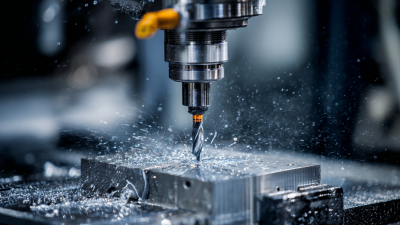
How CNC milling works: a programmed control system coordinates the rotating cutting tool and the machine axes to remove material from a secured workpiece. Available axes, travel, capacity, and features vary by machine configuration.
Related Posts
-
Top 10 CNC Metal Milling Machine Types for Global Buyers
-
How to Choose a CNC Milling Machine in 2026?
-
2026 Top Micro CNC Milling Machine Types for Buyers
-
Top 10 Micro CNC Milling Machines for Global Buyers
-
How to Choose the Best Micro CNC Milling Machine for Your Needs
-
Top 10 CNC Milling Machines for Precision Manufacturing in 2023