Top 10 Micro CNC Milling Machines for Global Buyers

Choosing a micro cnc milling machine is less about finding the smallest footprint and more about matching precision to real production needs. A compact machine may fit neatly beside a bench, yet still disappoint if its spindle runout, thermal behavior, or workholding cannot support the parts you make. Tiny details matter.

Quality expert W. Edwards Deming offered a useful principle: “In God we trust; all others must bring data.” For buyers, that means asking for measurable specifications and evidence, not relying on glossy claims. Where possible, review test-cut results, inspect sample finishes, and confirm how accuracy is measured. A specification sheet alone cannot show every shop-floor limitation.

This guide compares ten machines for global buyers, focusing on practical selection factors: usable work envelope, spindle capability, rigidity, control system, software, tooling compatibility, service access, and total ownership costs. A 100-millimeter travel range, for example, may be ample for small components but restrictive for fixtures or batch work. It depends.

Do not treat a high spindle speed as proof of precision. Tool quality, material, setup, and vibration matter too. Ask how the machine performs under your intended cutting conditions. A sensible trial can reveal more than a polished brochure. Still, comparisons have limits: supplier data may use different test methods, and local support can vary. The best choice is the one whose verified capabilities fit your parts, operators, and production plan—not simply the model with the most impressive headline specification.
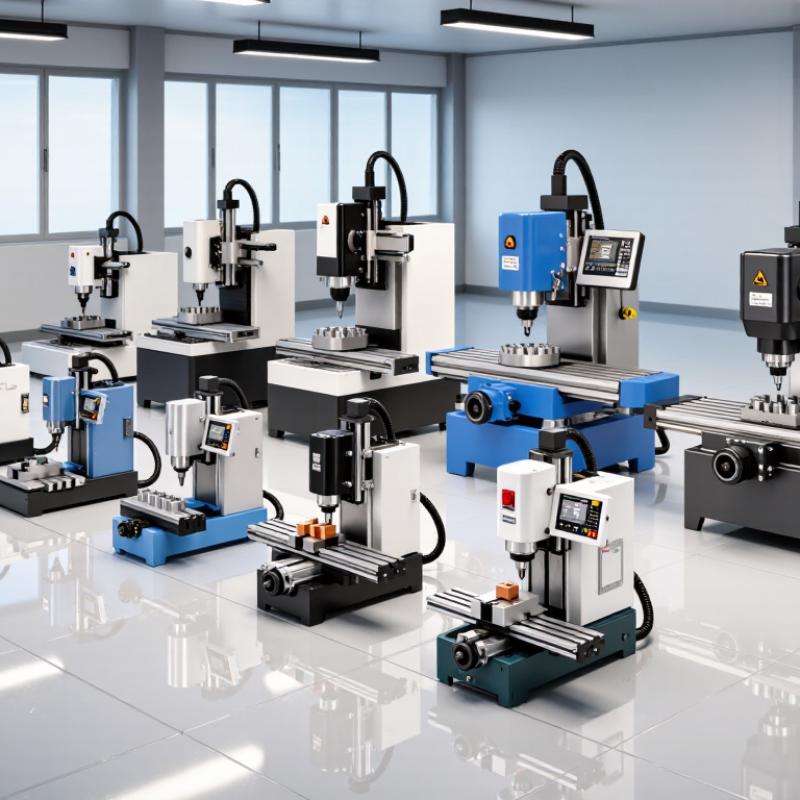
Top 10 Micro CNC Milling Machines for Global Buyers

What Defines a Micro CNC Milling Machine?

A micro CNC milling machine is defined by the scale of its cutting work, not simply by a compact cabinet. In micromilling research, cutters below 1 mm in diameter are commonly treated as micro-tools. The machine must therefore control tiny movements, spindle runout, vibration, and heat with care. A 0.3 mm cutter can break from a small chip buildup or an uneven feed. Small details matter.

There is no single universal size cutoff for a “micro” machine. Buyers should check the working envelope, minimum tool diameter, positioning resolution, spindle speed, and measured accuracy under load. Grand View Research valued the overall CNC machine market at USD 101.22 billion in 2023; that figure includes many machine types, not micro mills specifically. It signals broad adoption, but does not define the category. In practice, a stable micro mill should hold fine tolerances across repeated cuts, not just advertise a small tool size. I would test it. Request a sample cut in the intended material, then inspect edge quality and dimensional consistency. Tiny machines can still disappoint.

How Micro CNC Mills Differ in Design and Capability

Micro CNC mills differ less by footprint than by how their frames, spindles, and axes manage cutting forces. A rigid base helps limit vibration when a tiny cutter enters metal. Short travel can improve compactness, but it may restrict part size and tool access. Small is not simple. Some designs prioritize high spindle speeds for delicate tools, while others favor broader torque ranges for tougher materials.

Capability depends on the whole setup, not one impressive specification. Spindle speed matters, but runout, toolholding, and machine stiffness affect the cut too. A mill with generous speed may still struggle if the spindle wobbles or the workpiece is poorly secured. Very small tools are unforgiving. Coolant delivery and chip removal also matter, since trapped chips can mark a surface or break a cutter. Buyers should compare stated travel, repeatability, and compatible tooling against the parts they actually plan to make.

In practical use, workholding often becomes the overlooked constraint. A small vise, fixture plate, or custom clamp can consume much of the available table space. Thermal drift may also change results during long, fine-detail jobs. It is worth asking how specifications were measured and testing with a representative material and cutter. I would not treat any single accuracy figure as a promise for every setup; measurement methods and operating conditions vary. Tool access is another detail that is easy to miss. A narrow enclosure or crowded spindle area can make routine changes slower.

Key Criteria for Comparing Machines Across Global Markets

When comparing micro CNC milling machines across markets, start with the parts you plan to make, not the brochure. Record the materials, smallest features, and expected batch size. A machine suited to aluminum brackets may struggle with tiny steel details. Small parts. Tight spaces. Check spindle speed, tool compatibility, travel, and stated accuracy against your actual jobs.

Specifications need context. Ask how positioning accuracy was measured and whether repeatability data is available under working conditions. A quoted tolerance can look reassuring, yet tool wear, machine temperature, and setup quality affect results. Request a sample cut or inspect a test piece with a suitable measuring tool. I would treat a clean demonstration as useful, not conclusive.

Global purchasing adds practical checks. Confirm electrical requirements, control-language options, metric and imperial settings, and the availability of replacement parts where the machine will operate. Packaging, installation guidance, and response times for technical support can shape downtime as much as cutting speed. Compare total landed cost, including training and routine tooling. One detail is easy to miss: a compact machine still needs room for safe access, chip removal, and maintenance. A floor plan helps, though it cannot predict every workshop constraint.

Top 10 Micro CNC Milling Machines for Global Buyers — Key Criteria for Comparing Machines Across Global Markets
Rank Machine Configuration Typical Axes Indicative Working Travel (X × Y × Z) Typical Spindle-Speed Range Best-Suited Materials and Work Key Comparison Criteria Global-Buyer Checks
1 Compact benchtop machining center 3 About 200–400 × 150–300 × 150–300 mm About 6,000–24,000 rpm Small aluminum, brass, plastic, and light steel components; prototyping and education Frame rigidity, enclosure, workholding options, tool-change arrangement, and service access Confirm input voltage and frequency, guarding requirements, installation needs, and available local service
2 Compact production vertical machining center 3, with optional 4th axis About 400–600 × 300–450 × 300–450 mm About 8,000–15,000 rpm Aluminum and steel parts, small fixtures, and repeat production work Tool capacity, rapid-traverse rates, chip removal, coolant system, and continuous-duty capability Check the machine’s electrical connection, coolant and waste rules, and documented safety conformity for the destination market
3 High-speed micro-machining center 3 or 3+2 About 200–500 × 150–400 × 150–350 mm About 20,000–60,000 rpm Small cutters, fine features, non-ferrous metals, engineering plastics, and precision mold details Spindle runout, thermal management, tool balance limits, minimum tool size, and suitable cutting data Ask for spindle-interface details, maintenance intervals, and performance test conditions—not speed alone
4 Compact 5-axis trunnion machining center 5 About 100–400 mm linear travel per axis; rotary capacity varies by configuration About 10,000–30,000 rpm Small contoured parts, impellers, medical components, and multi-face machining Rotary-axis range, workpiece clearance, simultaneous 5-axis control, collision avoidance, and postprocessor support Verify control-language support, postprocessor availability, operator training, and rotary-axis service coverage
5 Compact swivel-head 5-axis mill 5 About 200–500 mm linear travel per axis; head-angle range varies About 8,000–24,000 rpm Small complex parts needing angled features or machining from multiple directions Head stiffness, angular accuracy, usable tool length, work envelope, and calibration procedure Compare axis conventions and machine specifications carefully; confirm local training and calibration support
6 Micro mold-and-die milling machine 3 or 3+2 About 200–600 × 150–400 × 150–400 mm About 12,000–30,000 rpm Tool steel, hardened materials within the machine’s rated capability, and detailed cavity work Cutting stiffness, thermal stability, tool-length measurement, probing options, and surface-finish capability Request cutting demonstrations using comparable material and tools; check guarding and coolant requirements
7 Enclosed graphite-capable micro mill 3 or 3+2 About 200–500 × 150–400 × 150–350 mm About 12,000–30,000 rpm Graphite electrodes and other materials requiring effective fine-dust control Sealing, dust extraction compatibility, filtration, spindle protection, and cleaning access Confirm extraction and filtration needs against workplace rules; do not assume a standard enclosure is dust-tight
8 Compact horizontal machining center 3 or 4, with optional rotary axis About 300–600 × 250–500 × 250–500 mm About 6,000–15,000 rpm Small batch production where chip evacuation and multi-face access matter Pallet or fixture arrangement, chip evacuation, tool access, footprint, and automation interfaces Compare shipping dimensions, floor-loading requirements, power supply, and the availability of compatible fixtures
9 CNC toolroom mill with manual operating functions 3 About 300–600 × 200–400 × 250–450 mm About 3,000–10,000 rpm Maintenance work, one-off parts, fixtures, and general-purpose metal cutting Manual/CNC mode usability, axis feedback, control simplicity, guarding, and setup flexibility Check operator qualification requirements, control-language documentation, and spare-part lead times
10 Compact 5-axis dental or small-part mill 5 Small work envelope; commonly designed around compact blanks or fixtures rather than large stock Often about 20,000–60,000 rpm, depending on material and spindle design Small-format work in materials such as wax, polymers, composites, ceramics, or light metals, according to machine configuration Wet or dry operation, material compatibility, tool library, workholding, and validated workflow integration Confirm material-specific process requirements, dust or coolant controls, software compatibility, and applicable local regulations

Comparison note: The entries describe common machine configurations, not specific models. Travel and spindle-speed figures are indicative market ranges; actual specifications, accuracy, payload, tooling, and compliance depend on the individual machine and its documented test conditions.

Ten Micro CNC Milling Machines: Features and Applications

Micro CNC milling machines differ in rigidity, spindle speed, axis count, and automation. Small does not mean simple. A compact three-axis mill suits flat parts and basic pockets. A fourth-axis model rotates small components for machining several sides. Five-axis machines reach angled features, though setup and programming become more demanding. High-speed spindle mills can handle fine details in suitable materials. Enclosed desktop machines help contain chips and coolant near the work area.

Other useful configurations include automatic tool-changing mills for repeated jobs, cast-frame machines designed to reduce vibration, and thermally managed models for steadier dimensions during long runs. Probe-equipped mills can check workpiece position, while compact production cells combine machining with part handling.

Their uses range from instrument components and small molds to prototypes and precision housings. Match each machine to the part’s material, tolerance, and batch size; a fast spindle alone does not guarantee accuracy. Ask for sample-cut results and inspect the workholding plan.

One caveat: published specifications rarely show the full effect of operator skill, tool wear, or a poorly supported workpiece.

How to Match a Micro CNC Mill to Your Workshop Needs

A micro CNC mill should fit the parts you actually make, not just the dimensions listed in a catalogue. Measure your largest workpiece, then allow room for the vise, clamps, tool changes, and spindle clearance. Match spindle speed and torque to your materials: small cutters in aluminum need different conditions from cutters in steel. Check stated positioning accuracy, but also ask how repeatability was tested. A number without a test method tells you little. Run a sample cut with your own material if possible.

Workshop planning also includes future connections. The International Federation of Robotics’ World Robotics 2024 report counted 4,281,585 industrial robots operating worldwide in 2023. That figure is not a measure of micro-mill demand, but it shows why automation compatibility can matter. Check available control interfaces, software workflow, and service access before buying. A compact machine can still be awkward if its enclosure blocks maintenance.

Tips: Measure the full footprint, including door swing and chip clearance. Confirm voltage, phase, air, and coolant requirements for your location. Ask for a test cut and inspect the finished edge, dimensions, and chips. Specs can look convincing on paper; the real cut may tell a different story.