2026 Top Micro CNC Milling Machine Types for Buyers
Choosing a micro CNC milling machine in 2026 is less about finding the smallest model and more about matching its capabilities to real work. A compact machine may suit watch parts, dental components, small molds, or detailed prototypes, but size alone tells buyers little. Spindle speed, tool capacity, axis travel, rigidity, and control software all affect the finished part. So does the material. Aluminum cuts differently from stainless steel, and tiny tools can expose vibration or setup problems quickly.
This guide compares common machine types, including benchtop mills, precision desktop systems, and compact industrial models. It highlights where each option fits, what specifications deserve closer inspection, and which trade-offs can be easy to miss. Ask suppliers for sample-cut data, service details, and clear information about achievable tolerances under stated conditions. Check the work envelope against your largest planned part, not just a catalog photo. Look closely at the details.
A low purchase price can be appealing, but tooling, calibration, maintenance, and operator training also shape ownership costs. There is no universal best machine. Even a strong specification sheet cannot guarantee consistent results in every workshop. Buyers should compare verified performance with their own material, workflow, and quality requirements. Some details may remain uncertain until a test cut. That is worth acknowledging. By weighing machine type against actual production needs, readers can make a more informed shortlist and avoid paying for capacity they may never use.
What Defines a Micro CNC Milling Machine in 2026?
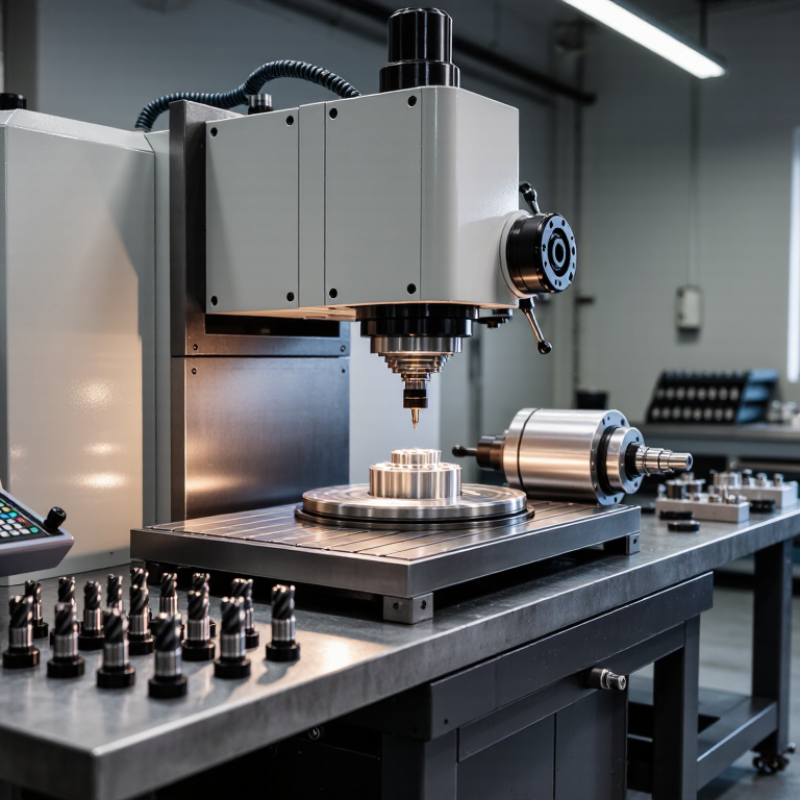
A micro CNC milling machine is defined less by its cabinet size than by the scale of its cutting work. In a widely cited review in CIRP Annals, Chae, Park, and Freiheit describe micro-milling around the use of cutters under 1 millimeter in diameter. That is a useful reference, not a universal standard.
Tiny tools. A 0.5-millimeter end mill may cut a narrow slot in a medical component, while the same machine handles small molds or delicate instrument parts. The spindle, tool runout, and machine structure must all support that scale.
Precision depends on more than the machine’s advertised resolution. A 1-micrometer command increment does not guarantee a 1-micrometer finished feature. Tool deflection, heat, vibration, and chip size can shift the result. NIST’s engineering metrology guidance emphasizes that measurement uncertainty must be considered when judging precision.
Buyers should therefore check repeatability and inspect sample parts under realistic cutting conditions. Ask for measured slot widths, surface finish, and tool-life data—not just a specification sheet.
One caveat: the smallest cutter is not always the best choice; fragile tools can break when feeds or chip evacuation are poorly controlled.
How Micro CNC Milling Machines Differ by Design and Motion
2026 Top Micro CNC Milling Machine Types for Buyers
Micro CNC milling machines vary in how they support the workpiece and move the cutting tool. A compact vertical mill places the spindle above a fixed or moving table. It suits small parts that need clear top-side access, such as miniature brackets or sensor housings. A gantry design carries the spindle across a bridge, leaving more room for flat, delicate components. Its open layout can help with loading, though the frame must resist vibration.
Motion matters as much as structure. In a three-axis machine, the tool or table moves along X, Y, and Z. This is practical for pockets, slots, and stepped surfaces. A fourth rotary axis can turn a part during cutting, reducing repeated setups. Five-axis motion reaches angled faces more directly, but programming and calibration become more demanding. More axes are not automatically better.
Pay attention to what moves: the table, the spindle, or both. A moving table may be stable for modest workpieces, while a moving spindle can preserve access around larger fixtures. Check travel limits, spindle runout, and enclosure clearance against the actual part size. A machine may look precise on paper. Small tools are unforgiving, and even a slight setup error can leave visible marks. It is easy to underestimate that detail.
2026 Top Micro CNC Milling Machine Types for Buyers - How Micro CNC Milling Machines Differ by Design and Motion
| Machine type | Typical design and motion | Where it fits | Main advantages | Buyer considerations |
|---|---|---|---|---|
| 3-axis vertical micro mill | The spindle moves along the vertical axis; the workpiece moves in two horizontal axes. Cutting is performed from one primary setup orientation. | Small prismatic parts, pockets, slots, and flat-sided features. | Straightforward programming and setup; often a practical starting point for small-part milling. | Check tool access, workholding space, spindle runout, and whether multiple setups are needed for side features. |
| 4-axis rotary micro mill | Adds one rotary axis to the three linear axes. The workpiece or rotary fixture turns so the cutter can reach multiple sides or follow indexed or continuous rotary paths. | Parts with features around a cylinder, indexed faces, or repeated features on several sides. | Can reduce repositioning and support machining around a part in fewer setups. | Confirm rotary-axis capacity, fixture clearance, workpiece balance, and control support for the intended toolpaths. |
| 5-axis trunnion-style micro mill | Three linear axes work with two rotary axes. In a trunnion layout, the table tilts and rotates to present different workpiece orientations to the spindle. | Complex small components, angled faces, and multi-sided parts that benefit from fewer setups. | Enables access to multiple faces and can support shorter tools for some geometries. | Evaluate the usable work envelope with the table tilted, rotary limits, collision avoidance, and programming requirements. |
| 5-axis swivel-head micro mill | Three linear axes are combined with two rotary motions in the spindle head, allowing the tool direction to change while the workpiece remains on the table. | Parts requiring angled tool approach or machining access from several directions. | May keep larger or more awkward workpieces stationary during multi-direction machining. | Compare head clearance, angular range, tool reach, and accuracy specifications across the working area. |
| High-speed micro milling center | A machine category emphasizing a high-speed spindle, responsive motion, and small-tool machining; it may use a 3-axis or multi-axis configuration. | Fine details, small cutters, and materials or processes suited to higher spindle speeds. | Can support small-tool cutting strategies when spindle, tool, material, and feed conditions are properly matched. | Do not compare spindle speed alone; check torque characteristics, runout, thermal behavior, toolholding, and compatible tooling. |
| Micro gantry mill | A bridge or gantry carries the spindle across the work area. Depending on the design, the bridge, spindle, or table provides the linear-axis motion. | Thin plates, flat workpieces, and jobs where access across a broad, shallow work area is useful. | The open layout can make loading and workpiece access convenient for suitable parts. | Assess frame stiffness, vibration control, axis geometry, and cutting-force suitability for the intended materials. |
| Compact benchtop CNC mill | A small-footprint machine, commonly configured with three linear axes. Construction and motion systems vary by model and intended duty. | Prototyping, education, light-duty production, and small parts that fit within its rated capacity. | Uses less floor space than many larger machining centers and can be convenient for compact work areas. | Verify machine rigidity, axis travel, guarding, power requirements, and material-cutting capability rather than relying on size alone. |
Note: “Micro” does not define a universal machine size or accuracy class. Compare published travel, work envelope, spindle and positioning specifications, tooling, and application tests for the parts you plan to make.
Which Micro CNC Mill Types Suit Different Materials and Tasks?
For buyers comparing 2026 micro CNC milling machines, material should guide the machine type. A compact three-axis mill suits plastics, wax, wood, and aluminum prototypes. Its fixed workholding keeps simple pockets, slots, and drilled holes accurate. Use sharp, small-diameter tools and moderate cutting speeds. Heat can deform plastic quickly.
A four-axis mill adds rotary positioning for round parts and angled features. It works well with brass, aluminum, and small steel components. Watch the rotary setup carefully. Tiny alignment errors become visible on a 20-millimeter part. A five-axis micro mill handles curved medical, aerospace, and miniature mold components more efficiently. It reduces repeated clamping, but its software and calibration demand more technical skill.
High-speed spindle mills are useful for engraving, circuit-board isolation, and delicate finishing. They perform best with nonferrous metals and engineered plastics. For hardened steel or titanium, buyers need stronger frames, slower feeds, effective coolant control, and rigid toolholding. A benchtop machine may look capable, yet vibration can ruin narrow walls and deep cavities. In practical testing, I would inspect surface finish under magnification, not trust a product photograph. I have also seen operators choose excessive spindle speed and create melted edges. That mistake is easy to repeat. Select the smallest machine that meets the material, tolerance, work envelope, and production frequency. Keep some margin for future work, though this judgment is rarely exact.
How Key Specifications Shape Micro CNC Milling Performance
2026 Top Micro CNC Milling Machine Types for Buyers
How Key Specifications Shape Micro CNC Milling Performance
Micro CNC mills differ sharply in rigidity, speed, and control. A 2024 market report from Fortune Business Insights valued the global CNC machine market at about USD 86 billion. That growth reflects demand for smaller, tighter production systems. However, market size does not guarantee micro-machining quality.
Spindle speed directly affects tool diameter and cutting heat. For tiny cutters, 20,000–40,000 revolutions per minute can improve surface finish. Excessive speed still causes runout, tool wear, or melted material. Spindle runout below 5 micrometres is a practical target for precision work. Frame rigidity matters just as much. A lightweight structure may vibrate when cutting hardened steel. That vibration appears as ripples on a 10-millimetre pocket wall.
Positioning accuracy and repeatability should be reviewed separately. ISO 230-2 testing defines how machine positioning performance is measured. A specification claiming ±0.005 millimetres may describe ideal laboratory movement. Real results change with temperature, tool length, and machine setup. I learned this the hard way during a small aluminium test. The machine reached its coordinates, but thermal drift shifted the final hole.
Work envelope also shapes buying decisions. A compact 200-millimetre travel may suit watch parts and electronic fixtures. It becomes restrictive for multi-operation setups. Look for closed-loop feedback, thermal compensation, and measurable backlash data. The 2023 Global Machine Tool Report also identifies automation and precision as major purchasing drivers. Still, published figures need independent verification. Run a test cut. Measure the part.
2026 Top Micro CNC Milling Machine Types for Buyers
Typical spindle-speed ranges by machine type (rpm). Actual specifications vary by model, tooling, and application.
Higher spindle speed can support small-tool machining and fine surface finishes, but it is not a standalone measure of performance. Buyers should also compare positioning accuracy, rigidity, tool capacity, and workpiece requirements.
How Buyers Can Match a Micro CNC Mill to Their Needs
A micro CNC mill should fit the parts you actually make, not just the smallest dimensions in its specification sheet. Measure your typical workpiece, tool reach, and clearance for clamps. A compact machine may suit watch components or small instrument parts, but a cramped work area can make setup awkward. Check the usable travel in all three axes. Then compare it with your largest realistic job.
Material matters. Aluminum and plastics place different demands on the spindle, cutting tools, and chip management than stainless steel. Look for a rigid frame, stable spindle speeds, and practical access to workholding. Small cutters are unforgiving. Runout, vibration, or a loose vise can spoil a fine feature quickly. Ask how the machine handles your intended materials, and request a sample cut if one is available. Numbers alone can mislead.
Think about daily operation, too. Does the control support your workflow? Can you reach the work area easily, and is routine maintenance straightforward? A machine that meets a tight tolerance on paper may still require careful fixturing and repeated checks. That part is easy to underestimate. Compare the machine’s stated accuracy with the tolerance your drawings require, and leave room for tool wear and setup variation. If your workload is still changing, avoid paying for capacity you cannot use; a little extra travel may be worthwhile, but only when it solves a real setup problem.
Related Posts
-
Top 10 CNC Metal Milling Machine Types for Global Buyers
-

10 Digital Tips for Choosing the Perfect Micro CNC Milling Machine for Your Business Needs
-

Top 10 Micro CNC Milling Machines of 2025: What to Look For?
-
2026 Best Home CNC Machine Options for Your Projects
-
Ultimate Guide to Choosing the Best VMC Milling Machine for Your Manufacturing Needs
-
Top Strategies for Maximizing Efficiency with the Best Home Shop CNC Machine