China Top 10 Types of CNC Machines for Global Buyers
China has become a major source of CNC equipment for manufacturers seeking practical capacity, competitive pricing, and export-ready support. Yet choosing among the many types of CNC machine requires more than comparing spindle speed or purchase price. A three-axis milling machine may suit aluminum brackets, while a five-axis model can reach complex aerospace surfaces without repeated repositioning. A CNC lathe, turning center, router, or wire EDM machine solves a different production problem.
Industry reports show why this decision matters. Grand View Research’s CNC machine market analysis projects strong global growth through 2030, supported by automotive, aerospace, electronics, and medical manufacturing. The report also identifies Asia-Pacific as a key regional market. Exact market values differ between research firms, because their definitions and reporting years are not identical. That uncertainty deserves attention. Still, the direction is clear: buyers are investing in automation, precision, and flexible production.
Professor Yoram Koren, a leading authority on advanced manufacturing systems, wrote, “A reconfigurable manufacturing system is designed at the outset for rapid change.” His observation remains useful when evaluating China’s CNC suppliers. Machine architecture, controller compatibility, service response, and operator training can matter more than a polished specification sheet. Real experience often exposes the gap. A machine may promise tight tolerances, but coolant management, tooling quality, and factory conditions influence daily results. This guide examines the top 10 types of CNC machine available from Chinese manufacturers, using application fit, technical capability, reliability, and buyer risk as practical comparison points. No ranking is perfect. Production evidence should always have the final word.
What CNC Machines Are and How They Are Classified
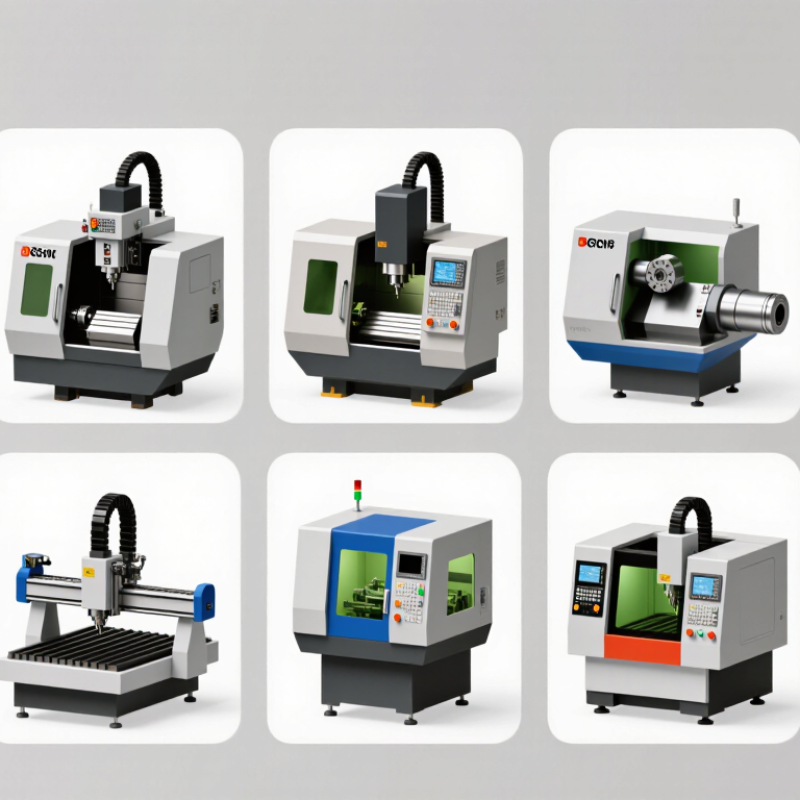
Computer numerical control (CNC) machines use programmed instructions to guide cutting, drilling, forming, or finishing. Their movements follow precise coordinates, often called axes. A milling machine moves a cutting tool across a fixed workpiece. A turning machine rotates the workpiece against a cutting tool. Both can produce accurate metal components.
The ten commonly discussed CNC types include milling machines, turning centers, routers, plasma cutters, laser cutters, waterjet cutters, wire EDM machines, sinker EDM machines, grinding machines, and Swiss-type lathes. Each type suits a different process. Routers often handle sheets and panels. Laser and plasma machines cut metal quickly. Waterjets reduce heat distortion. EDM systems shape hard conductive materials through controlled electrical discharge. Grinding machines improve surface finish and dimensional accuracy.
CNC machines can also be classified by axis count. Three-axis equipment is practical for flat surfaces and simple cavities. Four- and five-axis systems reach angled faces with fewer setups. Classification by structure matters too. Gantry, vertical, horizontal, and turning designs change access, rigidity, and chip removal. In real workshops, I check spindle speed, travel range, tool capacity, control functions, and repeatability before comparing machines. A catalog number alone proves little. Floor space, power supply, operator skill, and maintenance access can change the decision. The categories are useful, but not perfect. Some machines combine several functions, and their actual performance depends heavily on programming, fixturing, material, and inspection practice.
China Top 10 Types of CNC Machines for Global Buyers
What CNC Machines Are and How They Are Classified
CNC machines use computer-controlled motion to manufacture parts with repeatable accuracy. The chart compares ten widely used CNC machine types by their typical number of controlled axes. Actual configurations vary according to the machine design, tooling, and production requirements.
China’s Top 10 CNC Machine Types for Global Buyers
China’s CNC machine sector serves aerospace, automotive, medical, electronics, and general engineering markets. For buyers, machine type matters more than appearance. A three-axis machining center suits flat parts and routine milling. Five-axis models reduce repositioning and improve access to complex surfaces. CNC turning centers handle shafts, bushings, and other rotational parts. Swiss-type lathes support small, precise components. Other important categories include CNC routers, grinders, EDM machines, laser cutters, waterjet machines, and gear-cutting equipment.
Fortune Business Insights valued the global CNC machine market at about US$88.45 billion in 2023. It forecasts continued growth through 2032, driven by automation and tighter production requirements. The International Federation of Robotics reported 541,302 industrial robot installations in 2023. This figure is not a CNC-machine total, but it shows stronger demand for connected manufacturing.
In practice, buyers should verify positioning accuracy, repeatability, spindle power, control compatibility, and service response. A low purchase price can become expensive after one failed controller or delayed spare part.
Tips: Match the machine to the material, tolerance, batch size, and floor space. Request sample machining, inspection records, energy data, and a clear acceptance standard. Check export documentation and local electrical requirements. Do not trust impressive brochures alone. I have seen specifications look excellent until cutting tests exposed vibration and poor chip evacuation. That uncomfortable step deserves more attention. Reliable suppliers should explain limitations, not only advertise maximum speed.
Key Features and Applications of Each CNC Machine Type
China’s CNC machine market offers ten practical types for global buyers. CNC milling machines use rotating cutters to produce slots, pockets, and complex surfaces. They suit automotive parts, molds, fixtures, and general metalworking. CNC turning machines rotate the workpiece against a fixed tool. They efficiently make shafts, bushings, threads, and cylindrical components. CNC routers use high-speed spindles for wood, plastic, aluminum, and composite sheets. Their large worktables support furniture panels, signs, and lightweight enclosures. CNC drilling and tapping machines combine fast hole-making with accurate thread production. They are useful for electrical cabinets, flanges, and repeated assembly parts.
Wire EDM machines cut hardened materials with a controlled electrical discharge. They deliver narrow slots and precise profiles for dies and intricate tooling. Sinker EDM machines shape cavities inside hardened steel. Mold production is their strongest application. CNC laser cutters provide concentrated heat for thin sheet metal and clean outlines. They support brackets, covers, and customized panels. Plasma CNC machines cut thicker conductive plates at high speed. Their practical uses include structural frames and heavy fabrication.
Waterjet machines cut metal, stone, glass, and composites without a heat-affected edge. They work well for heat-sensitive materials and mixed production. CNC grinding machines remove tiny amounts of material for tight tolerances and smooth finishes. They are essential for bearings, precision shafts, and hardened components. Cutting speed, spindle power, axis travel, control compatibility, and after-sales service deserve careful checking. No machine fits every factory. In practice, sample testing often reveals limitations that brochures overlook.
China Top 10 Types of CNC Machines for Global Buyers - Key Features and Applications of Each CNC Machine Type
| No. | CNC Machine Type | Typical Axis Configuration | Key Features | Common Materials | Typical Applications | Main Advantages | Important Buying Considerations |
|---|---|---|---|---|---|---|---|
| 1 | CNC Milling Machine | 3-axis; 4-axis and 5-axis versions are also available |
|
Aluminum, steel, stainless steel, brass, titanium, plastics and composites | Machine components, fixtures, molds, brackets, housings and general precision parts | Versatile, accurate and suitable for a wide range of part geometries | Spindle speed, table size, travel range, tool capacity, rigidity, coolant system and control compatibility |
| 2 | CNC Turning Center or CNC Lathe | Usually 2-axis; live tooling and a Y-axis may be added |
|
Steel, stainless steel, aluminum, brass, copper, titanium and engineering plastics | Shafts, pins, bushings, rollers, fittings, threaded parts and rotational components | Efficient production of cylindrical parts with good repeatability | Maximum turning diameter, turning length, spindle bore, chuck size, bar capacity, turret stations and chip control |
| 3 | CNC Router | Usually 3-axis; 4-axis models are used for indexed or rotary work |
|
Wood, MDF, plywood, plastics, foam, acrylic, aluminum and composite panels | Cabinet parts, signage, furniture panels, architectural models, prototypes and decorative components | Large cutting area, fast processing and effective sheet nesting | Working area, spindle power, vacuum hold-down, dust collection, gantry rigidity and software support |
| 4 | CNC Plasma Cutting Machine | Typically 2-axis X-Y cutting with computer-controlled torch height |
|
Mild steel, stainless steel, aluminum, copper and other electrically conductive metals | Structural parts, brackets, frames, agricultural equipment, metal artwork and fabrication blanks | Fast and economical cutting of conductive sheet and plate materials | Plasma power, maximum plate thickness, torch-height control, cutting table size, consumable cost and fume management |
| 5 | CNC Laser Cutting Machine | Usually 2-axis X-Y motion with automatic focusing and Z-axis height control |
|
Carbon steel, stainless steel, aluminum, brass, copper, acrylic, wood and selected plastics | Sheet-metal panels, electrical enclosures, signage, decorative parts and precision blanks | High precision, fast profile cutting and efficient nesting of sheet materials | Laser source type, rated power, maximum sheet size, material thickness, assist gas system, focus control and safety enclosure |
| 6 | CNC Waterjet Cutting Machine | Usually 2-axis X-Y; 3-axis, 4-axis and 5-axis heads support bevel or 3D cutting |
|
Steel, stainless steel, aluminum, stone, glass, ceramics, rubber, composites and laminates | Stone and tile cutting, aerospace panels, architectural inlays, machine parts and composite components | No thermal distortion, broad material compatibility and ability to cut thick stock | Pump pressure, cutting envelope, abrasive consumption, cutting head accuracy, water treatment and noise control |
| 7 | Wire EDM Machine | Usually 4-axis controlled wire movement; advanced systems may provide additional tilt capability |
|
Tool steel, hardened steel, carbide, nickel alloys, titanium and other electrically conductive materials | Stamping dies, extrusion tools, precision inserts, medical components and complex conductive parts | Very accurate cutting of hard materials and fine internal or external profiles | Maximum workpiece size, wire diameter range, taper capability, dielectric filtration, threading automation and surface-finish performance |
| 8 | Sinker EDM Machine | Commonly 3-axis electrode movement; optional rotary or multi-axis systems are available |
|
Hardened tool steel, carbide, stainless steel, copper alloys and other conductive metals | Injection molds, die-casting dies, forging dies, precision cavities and small deep features | Creates complex shapes that are difficult or impossible to mill conventionally | Tank size, electrode capacity, generator performance, flushing system, automation options and achievable surface finish |
| 9 | Swiss-Type CNC Lathe | Multi-axis; typically includes synchronized sliding headstock, turning tools and live tooling |
|
Stainless steel, titanium, brass, aluminum, cobalt-chrome and engineering plastics | Medical screws, connectors, pins, watch components, miniature shafts and electronic hardware | Excellent support for slender parts, reduced deflection and efficient complete-part machining | Bar capacity, number of tool stations, guide-bushing system, sub-spindle capability, live-tool speed and setup complexity |
| 10 | 5-Axis CNC Machining Center | Three linear axes plus two rotary axes; configurations include trunnion-table and swivel-head designs |
|
Aluminum, titanium, steel, stainless steel, nickel alloys, composites and plastics | Aerospace structures, impellers, turbine components, medical implants, molds and complex automotive parts | High geometric flexibility, improved surface quality and reduced setup time | Rotary-axis range, simultaneous versus indexed machining, spindle speed, machine envelope, collision control, postprocessor support and operator skill |
Note: Specifications and achievable results vary according to machine configuration, tooling, workholding, programming, material grade and cutting conditions.
How to Compare Chinese CNC Machines for Your Production Needs
Comparing Chinese CNC machines should begin with your production drawings, not a supplier’s catalogue. Define material, tolerances, batch size, spindle load, and daily operating hours. A machine cutting aluminum may perform poorly on hardened steel. The reverse can waste energy and floor space. Be specific.
Review the machine structure, guideways, ball screws, spindle rating, and controller compatibility. Ask for positioning accuracy and repeatability reports under recognized testing methods. Request sample parts made from your material. Measure critical holes and surface finish independently. A polished demonstration is not enough. Check chip evacuation, coolant filtration, guarding, and access for maintenance. These details affect uptime more than a long feature list.
Service capability often separates a useful machine from an expensive delay. Confirm spare-parts availability, remote diagnostics, training hours, installation procedures, and response times in writing. Examine electrical diagrams, manuals, software languages, and warranty limits. Verify whether local technicians can repair the control system. Factory acceptance testing can expose vibration, thermal drift, or tool-change errors before shipment. Still, testing has limits. Your workshop temperature and operators may differ. Budget for commissioning and realistic operator training. Price matters, but lifecycle cost matters more: tooling, electricity, consumables, calibration, downtime, and financing fees should appear in the comparison sheet. A lower quotation may hide costly exclusions. Independent inspection is worthwhile when tolerances are tight or production is continuous. Reliability is proven slowly, through records, repeatable parts, and honest answers to inconvenient questions.
Quality, Pricing, and Export Factors for Global Buyers
China’s CNC machine market covers ten practical categories: turning centers, machining centers, routers, grinders, EDM systems, laser cutters, plasma cutters, gear machines, drilling machines, and five-axis equipment. This range helps global buyers match equipment to material, tolerance, and production volume.
During factory evaluations, I have found that a low quotation rarely tells the whole story. A rigid cast frame, tested spindle, and stable controller often matter more than attractive specifications. Ask for cutting samples using your actual alloy and drawing. Small differences appear quickly.
Quality should be checked through measurable evidence. Request spindle runout data, positioning accuracy results, repeatability records, and documented inspection methods. Confirm whether electrical cabinets, motors, and safety components meet destination-market requirements.
Pricing needs a wider calculation. Include tooling, software, sea freight, insurance, installation, training, spare parts, and local taxes. A machine priced 12 percent lower may become more expensive after voltage conversion or delayed commissioning. This happens more often than buyers expect. Broad tolerance claims without test conditions deserve a pause.
Export reliability involves more than shipping the machine. The supplier should provide packing photos, serial-number records, manuals, wiring diagrams, and a clear warranty process. Check crate moisture protection and lifting points before loading.
Ask who handles remote diagnosis and how replacement parts are dispatched. Payment milestones should follow inspection evidence, not only a promised completion date. I prefer fast communication, but that preference can mislead me. A slower technical reply may reveal stronger engineering discipline. Maybe.
Related Posts
-
What Are the Best Types of CNC Machines from China?
-
7 Tips for Choosing a Home Shop CNC Machine
-
Navigating the Future: 2025 Market Insights and How to Choose the Best Basic CNC Machine
-
What Are the Top China CNC VMC Machine Suppliers?
-
What is a Home Shop CNC Machine and How to Choose One?
-
Top 10 CNC Milling Machines for Precision Manufacturing in 2023