
China Top Storage Rack Upright Manufacturers for Global Buyers
Choosing a Storage Rack Upright manufacturer is not just a price comparison. It is a decision about stability, fit, and dependable supply. A rack may look robust in a brochure, yet small differences in steel thickness, hole spacing, or beam connections can affect installation and performance. Details matter. Global buyers should compare verified load data, material specifications, quality-control processes, and technical support—not rely on attractive claims alone.
Storage-rack design specialist Daniel Wu summarizes the principle: “A dependable upright is one whose capacity, connections, and finish match the demands of the actual warehouse.” Buyers can use this guide to assess China’s leading manufacturers against practical criteria, including production consistency, customization, packaging, export experience, and communication. Ask for drawings and test documentation, then check that the proposed configuration suits the floor, load pattern, and handling equipment. Fit matters.
No single supplier is right for every project. Some buyers need standard frames shipped quickly; others need tailored dimensions and closer engineering support. A lower quote can be tempting, but it may leave important details unclear. That deserves a second look. This introduction is a starting point, not a substitute for project-specific technical review. The comparisons ahead aim to help global buyers ask sharper questions and identify manufacturers whose products and service match real operating needs.
What Storage Rack Uprights Are and How They Support Warehouse Systems
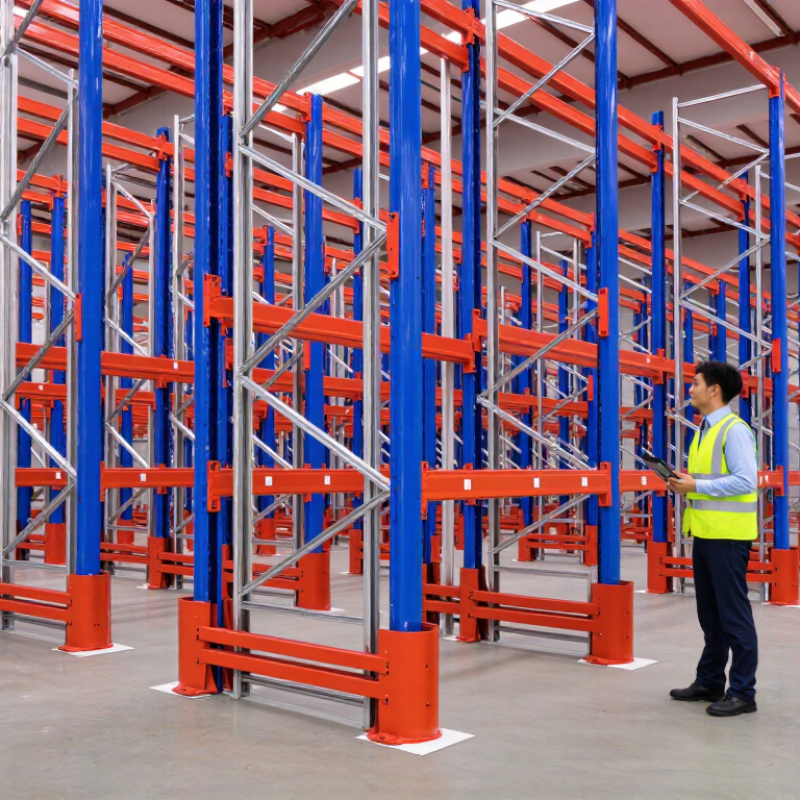
Storage rack uprights are the vertical frames that give a warehouse rack its structure. They usually consist of steel columns joined by diagonal and horizontal braces. Beams connect to the uprights at selected heights, creating bays for pallet storage. The upright transfers the load through its frame and base plate to the floor. Small details count.
The frame’s capacity depends on more than steel thickness. Its height, depth, bracing pattern, beam spacing, and connection design all matter. A change in pallet weight or rack layout can affect how forces move through the system. Buyers should compare rated capacities and configuration details, not appearance alone. A sturdy-looking frame is not proof of a suitable load rating.
In daily use, forklifts can strike lower columns, while repeated loading may loosen connections or reveal damage. One detail is easy to miss: a frame can look straight from the aisle but have a bent base plate. Clear inspection routines help catch issues early. Still, a visual check cannot replace current specifications or a qualified assessment when damage is found. Warehouse conditions vary, and a neat drawing may not capture every real-world constraint.
Common Upright Types, Materials, and Design Features
Storage rack uprights commonly use roll-formed or structural steel profiles. Roll-formed sections are lighter and often feature punched slots for adjustable beam connections. Structural uprights use heavier steel sections and may suit demanding loads, but their weight and cost can be higher. Teardrop slots allow quick beam adjustment; bolted connections offer a different fit. Details matter.
An upright frame usually pairs two columns with horizontal and diagonal bracing. These braces help control sway, while base plates transfer loads to the floor. Steel thickness alone does not determine capacity. Frame height, beam spacing, connection design, anchoring, and floor conditions all matter. A tidy specification can still overlook the actual slab.
Surface protection should match the storage environment. Powder-coated steel suits many indoor warehouses, while galvanized finishes may be considered where moisture exposure is a concern. Check finish consistency around punched holes and welds, where coating can be less uniform. Ask for load data tied to the proposed configuration, not just a general rating. This is easy to overlook. A site measurement may also reveal uneven floors or tight aisle clearances, so final selection benefits from checking conditions before ordering.
How Chinese Manufacturers Produce and Test Rack Uprights
Rack uprights are usually made from cold-formed steel coil. Operators level and slit the coil, then feed it through rollers that shape the upright’s open profile. Punching stations create regular connection slots. Small changes in slot pitch or flange width can affect beam fit, so manufacturers check dimensions during production. The World Steel Association reported 1,888.2 million tonnes of global crude steel production in 2023. That figure describes supply, not rack quality; buyers should still request material certificates and traceable batch records.
Testing should follow a defined design basis. ANSI MH16.1-2023 covers the design, testing, and use of industrial steel storage racks. Manufacturers may verify steel properties using ASTM A370 methods, then test upright sections under compression to assess load capacity and buckling behavior. They can also check hole geometry, coating thickness, weld quality, and finished dimensions. Test results depend on specimen setup and support conditions. A neat lab result does not replace correct installation or sound floor conditions.
Tips: Ask for test reports tied to the exact upright profile and steel grade. Check whether stated capacities include the connection details used in your system. One detail is easy to miss: damaged slots can change how a beam seats, even when the upright looks straight.
| Production or Quality Stage | Typical Method | Key Checks and Data | Why It Matters to Buyers |
|---|---|---|---|
| Engineering and load design | Upright sections, perforations, bracing, frame geometry, and connections are defined from the project drawings and intended rack configuration. | Review the specified steel grade, section dimensions, connection details, design loads, and applicable market requirements. Rack capacity must be calculated for the particular system and configuration. | Upright capacity is not a universal value; it depends on the complete frame design, material, bracing, beam connections, and installation conditions. |
| Incoming coil inspection | Steel coil is identified and checked before it is slit or fed into production. | Verify material identification and supplier documentation; inspect coil width, thickness, surface condition, and relevant material certificates against the purchase specification. | Traceable incoming material helps ensure that production uses steel matching the approved design and order requirements. |
| Coil slitting and preparation | Wide coil is slit into narrower strips sized for the upright roll-forming line. | Check strip width, edge condition, and coil identification. Confirm that slit material is free from damage that could affect forming or coating. | Consistent strip preparation supports stable forming and reduces the risk of defects along the upright profile. |
| Roll forming and perforation | Roll-forming stations progressively shape the strip; punching operations create the specified beam-connection slots and other holes. | Inspect profile dimensions, straightness, slot position, slot pitch, hole shape, and burrs against the approved drawings and inspection plan. | Accurate geometry helps beams and accessories fit as designed and supports correct assembly in the field. |
| Cutting and end preparation | Formed profiles are cut to the required length, with ends prepared as specified for the frame design. | Measure overall length and check cut squareness, end condition, and any specified base or connection features. | Correct length and end preparation help maintain frame alignment and provide the intended interface with base plates or other components. |
| Welding and frame components | Where the design requires it, braces, base plates, or other components are joined to the upright using the specified fabrication process. | Check weld location and appearance against the drawing and inspection criteria; use qualified procedures and additional weld inspection where required by the project. | Consistent joints and correctly positioned bracing are important to the structural behavior of the assembled frame. |
| Surface treatment | Depending on the order, uprights may receive a conversion coating and powder coating, or another specified finish. | Check coating coverage, visible defects, color where specified, and dry-film thickness using the agreed sampling plan and coating specification. | Surface preparation and coating quality affect appearance and protection from corrosion during storage, transport, and service. |
| Dimensional inspection | Finished parts are checked using suitable gauges, measuring tools, and the approved inspection plan. | Record critical dimensions such as section size, upright length, perforation spacing, and connection-feature position; apply drawing tolerances rather than assumed universal limits. | Documented inspection results make it easier to verify conformance and address fit-up issues before shipment. |
| Material and mechanical verification | Material tests may be performed by the mill, a qualified laboratory, or as specified in the purchase contract. | For applicable steel specifications, tensile properties and other material characteristics can be verified using recognized test methods such as ASTM A370 or ISO 6892-1. | Test reports help buyers confirm material properties; the required tests and acceptance values should be agreed for the project. |
| Structural design and testing | Rack components and systems are evaluated using engineering calculations and, where required, tests representative of the intended design. | Ask for the design basis, test scope, loading configuration, results, and applicable standard. Common references include EN 15512 and ANSI/RMI MH16.1, subject to the destination market and project specification. | Results are meaningful only when the tested configuration and assumptions are relevant to the rack system being purchased. |
| Final inspection and traceability | Finished goods are checked, identified, and prepared for packing according to the order and shipping plan. | Review inspection records, part identification, quantity, finish, packaging, and traceability documents. Keep nonconforming products controlled and documented. | Clear records and identification support receiving inspection, installation, and follow-up if a quality issue arises. |
| Packaging and export preparation | Uprights are bundled or protected to limit movement and surface damage during handling and transport. | Confirm bundle quantity, protective materials, labels, lifting or handling instructions, and shipping-document requirements before dispatch. | Suitable packaging helps reduce transit damage and makes product identification and unloading more efficient. |
Note: These are typical manufacturing and quality-control practices, not universal requirements. Actual materials, tolerances, tests, acceptance criteria, and rack capacities should be confirmed against the approved drawings, contract, system design, and destination-market requirements.
How Global Buyers Assess Manufacturer Quality and Capabilities
Global buyers should assess storage rack upright manufacturers through evidence, not polished catalogs. Request steel-grade certificates, dimensional inspection records, weld procedures, and load-test documentation. Then compare these records with the proposed upright profile, beam connections, and stated load capacity. A sample component can reveal rough edges, inconsistent holes, or coating damage that photographs hide. Small details matter.
The World Bank’s 2023 Logistics Performance Index assessed 139 economies across six dimensions, including infrastructure, logistics competence, and tracking and tracing. These measures offer useful context: a capable supplier should support clear material traceability and dependable delivery, not merely quote a low price. MHI’s 2023 Annual Industry Report surveyed more than 1,000 supply-chain professionals; 87% expected investment in supply-chain technology to rise over the following two years. Buyers can ask whether a manufacturer uses digital inspection records and can share revision-controlled drawings. Show the evidence.
Production capability also needs a practical check. Ask for factory capacity, typical lead times, quality-control checkpoints, and examples of comparable projects. Verify whether the supplier can manage changes in upright height, perforation pitch, or finish without losing drawing control. A site visit helps, but it is not a guarantee. I would still check a delivered batch against the approved sample; schedules and real-world handling can expose gaps that an audit misses.
Sourcing, Customization, and Shipping Considerations for International Buyers
When sourcing storage rack uprights from China, compare more than the quoted price. Send manufacturers a clear drawing with upright height, section dimensions, hole spacing, and steel thickness. Ask how they control punching and welding tolerances; small variations can complicate beam installation on site. Request material certificates and sample inspection records, then confirm the stated load capacity matches your intended rack configuration. A tidy drawing helps, but it may still miss a site constraint.
Tips: Share photos of existing racks and the warehouse floor. Confirm finish, color, labels, and packing details in writing. Ask for a sample before approving bulk production.
Customization can cover upright profiles, slot patterns, base plates, and protective coatings. Specify each requirement rather than relying on verbal assurances. For coastal routes or humid storage, discuss moisture protection and corrosion resistance with the supplier. Agree on inspection timing, acceptable tolerances, and how defects will be handled. These details take time. They can prevent costly rework later.
For shipping, confirm bundle dimensions, gross weight, loading plan, and port responsibilities before production ends. Uprights need secure strapping and edge protection; otherwise, bundles may shift or scrape during transit. Check the commercial invoice, packing list, shipping marks, and delivery terms with your logistics provider. Build in time for production checks and port delays. Schedules sometimes slip, even with careful planning.