
Top Hydrated Lime Mixer Suppliers for Global Buyers?

For global buyers, choosing a Hydrated Lime Mixer supplier involves more than comparing prices or catalog images. Hydrated lime is a fine, alkaline powder, and its handling can affect mixing consistency, equipment wear, and workplace cleanliness. A mixer that performs well in a small trial may behave differently during continuous production. Details matter.

Reliable suppliers can explain how their equipment suits the buyer’s material, batch size, and process conditions. Buyers should ask about mixing uniformity, dust-control options, wear-resistant contact parts, discharge design, and access for cleaning. Clear technical drawings and practical installation guidance are useful signs of experience. So is an honest discussion of limitations.

This guide introduces suppliers serving international markets and the factors that help distinguish a strong fit from a polished sales pitch. Company reach alone does not prove equipment quality. Compare documented specifications, relevant project experience, component availability, and responsiveness after delivery. Ask how the supplier verifies performance, and request references where appropriate. A sample test can reveal issues that a brochure cannot.

There is no universal best choice. Plant layout, local service coverage, operating conditions, and budget all shape the decision. Some supplier claims may remain difficult to verify without a site visit or trial. That uncertainty deserves attention. The following overview gives buyers a practical starting point for evaluating Hydrated Lime Mixer suppliers with care, rather than relying on rankings alone.
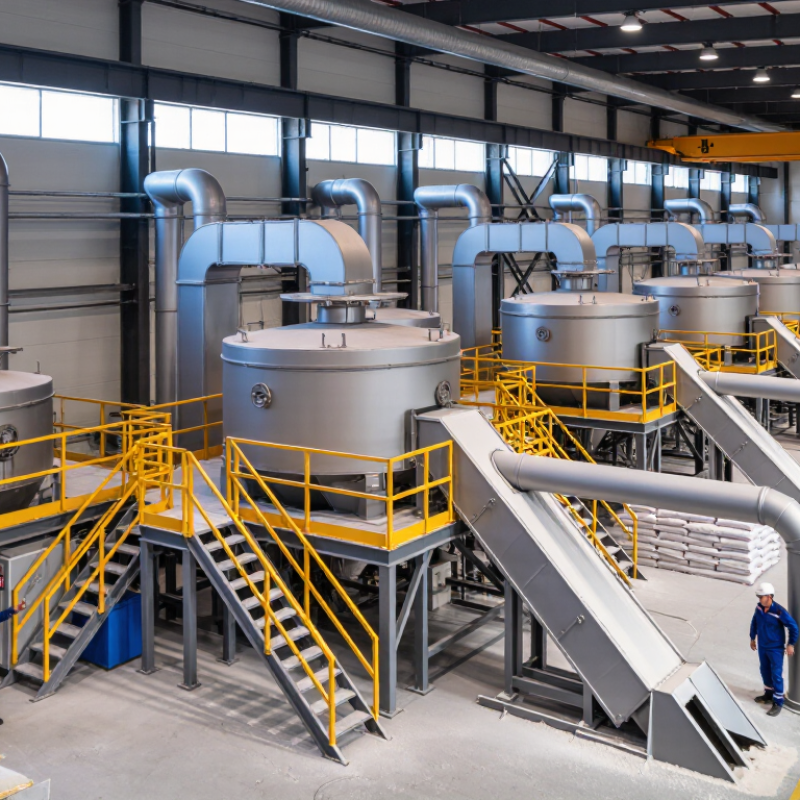
Top Hydrated Lime Mixer Suppliers for Global Buyers?

Understanding Hydrated Lime Mixers and Their Industrial Uses

Hydrated lime, or calcium hydroxide, is mixed as a dry powder or dispersed in water to form a controlled slurry. These preparations support municipal water treatment, wastewater pH adjustment, flue-gas cleaning, soil stabilization, and construction. The U.S. Geological Survey’s Mineral Commodity Summaries 2024 estimates U.S. lime production at about 17 million metric tons in 2023, underscoring the material’s broad industrial role. That figure covers lime overall, not hydrated lime mixers specifically. Mixer choice still matters: uneven dispersion can leave dusty pockets or visible lumps in a slurry tank.

Industrial mixers commonly use ribbon, paddle, or high-speed systems, depending on batch size and whether the process is dry or wet. Buyers should check throughput, contact materials, dust-control provisions, cleanout access, and the ability to maintain a consistent solids concentration. A mixer that performs well with free-flowing powder may struggle when the feed cakes or absorbs moisture. There is no universal best design.

Tips: Ask suppliers for a trial using your actual lime and target recipe. Measure dispersion time and inspect for settled solids. Keep the test realistic. USGS production data offers useful market context, but equipment decisions should also draw on plant trials and process requirements. A small test can reveal awkward maintenance issues that a polished specification sheet misses.

Key Features to Compare Across Mixer Suppliers

Top Hydrated Lime Mixer Suppliers for Global Buyers?

Compare suppliers by how well their mixers handle your actual hydrated lime, not by brochure capacity alone. Ask for batch size, bulk density, moisture range, and target mixing time used in their test. A useful trial checks for dead zones, dust leakage, and residue around the discharge gate. Small details matter. Request a written test method and results you can reproduce.

Energy use deserves scrutiny. The IEA’s Energy Efficiency 2023 report puts industry at about 37% of global final energy demand, making efficient equipment selection relevant beyond the purchase price. Compare installed motor power, expected operating hours, and energy per tonne of finished blend. A low quoted power figure can mislead if the mixer needs longer cycles. Ask suppliers to state their assumptions.

Check wear parts, shaft seals, access panels, and cleaning time. Request maintenance intervals and availability estimates for replacement components in your region. Confirm that the supplier can document material-contact surfaces and provide commissioning support. Then speak with a reference customer handling a similar lime grade. One limitation: supplier test results may not match your feed’s moisture or particle distribution, so an independent site trial can still be worthwhile.

How Global Buyers Can Evaluate Supplier Capabilities

For global buyers, a mixer supplier’s capability is more than vessel size or quoted output. The U.S. Geological Survey’s Mineral Commodity Summaries 2024 estimated global lime production at about 430 million metric tons in 2023. That scale makes reliable handling important, but it does not prove a mixer will suit your hydrated lime. Ask suppliers to test your actual material, including its moisture, bulk density, and tendency to form lumps.

Request measurable results from a factory acceptance test: batch uniformity, mixing time, discharge residue, motor load, and dust leakage. Check how the supplier selects shaft speed and mixing elements for your batch size. NIOSH’s Pocket Guide lists a 5 mg/m³ time-weighted recommended exposure limit for calcium hydroxide. Buyers should therefore ask for dust-control details and confirm applicable workplace requirements with qualified local professionals. Small details matter.

Review wear-part life, spare-parts availability, installation support, and maintenance access. Ask for references from plants handling similar powders, then verify the operating conditions behind each reference. A polished brochure is not proof. I would also question unusually high capacity claims unless the supplier explains the test material and cycle time. Supplier comparisons are imperfect: different test methods can make identical-looking figures misleading. A clear, documented trial is more useful than a broad promise.

Top Hydrated Lime Mixer Suppliers for Global Buyers

How global buyers can evaluate supplier capabilities

Suggested evaluation weighting for a buyer’s scoring framework—not measured market data or a ranking of actual suppliers. Validate each area with project-specific requirements, technical documentation, references, and factory or quality audits.

Regional Considerations for Sourcing Hydrated Lime Mixers

Regional sourcing should start with the lime, not a supplier’s brochure. USGS Mineral Commodity Summaries 2024 estimated global lime production at about 430 million metric tons in 2023, with China producing roughly 310 million. For buyers far from major production hubs, nearby technical support, spare parts, and reliable shipping routes deserve close attention. Distance matters. A mixer may arrive promptly, while replacement seals take weeks.

Check the basics. In humid coastal markets, ask about corrosion protection, sealed bearings, and access for cleaning. At cold or high-altitude sites, confirm motor starting performance and material flow at actual operating temperatures. Generic capacity figures may not reflect these conditions. Request drawings and test records for the intended lime and batch size.

Regional logistics also affect purchasing decisions. The World Bank’s 2023 Logistics Performance Index assessed 139 economies and reported differences in infrastructure, customs, and shipment reliability. Compare landed cost, not only the quoted equipment price. Confirm voltage and frequency options, commissioning support, and local technician response times. One limitation: country-level logistics scores cannot predict performance at a specific port or plant. A reference call or site visit may reveal what the index misses. Keep common wear parts nearby; a small seal failure can interrupt an entire shift.

Top Hydrated Lime Mixer Suppliers for Global Buyers? - Regional Considerations for Sourcing Hydrated Lime Mixers

Region Typical sourcing priorities Mixer and process considerations Utilities and compliance checks Practical buyer checks
North America Dust containment, dependable parts availability, and integration with bulk storage and conveying systems. Confirm whether the process requires batch or continuous mixing. Hydrated lime is a fine, alkaline powder; enclosed transfer points and effective dust collection can help limit airborne dust. Many sites use 60 Hz power, but voltage and electrical requirements vary. Confirm the installation’s supply and applicable local electrical and workplace requirements. Request drawings, motor and control specifications, wear-part details, and a clear list of items included in the quotation.
Europe Documented machine configuration, maintainability, energy use, and conformity documentation for the destination market. Ask for evidence that the mixer can handle the specified lime grade, moisture conditions, throughput, and required blend uniformity. Material compatibility should be checked for wetted or exposed parts. Many European industrial supplies use 50 Hz power. Verify local voltage, controls, guarding, and the conformity requirements that apply to the specific machine and installation. Check the scope of the technical file, operating instructions, spare-parts support, and commissioning responsibilities.
Middle East Equipment suited to site conditions, local service capability, and reliable supply of wear parts. Consider ambient temperature, outdoor exposure, and dust-management arrangements. For dry powder handling, confirm that seals, access covers, and connected conveying equipment suit the operating environment. Power characteristics and import requirements differ by country and project. Confirm the site’s electrical data and the destination country’s documentation and customs requirements. Agree on delivery terms, installation support, training, and the availability of replacement components before placing an order.
Asia-Pacific A configuration that matches the local plant layout, process scale, utility supply, and support arrangements. Mixer selection depends on the process: batch mixers suit discrete batches, while continuous mixers are designed for steady feed and discharge. Confirm capacity using the actual bulk density and operating conditions. Electrical standards, voltage, and frequency vary across the region. Verify the exact site supply, control-panel requirements, and any local certification or import rules. Request an agreed inspection and acceptance plan, clear packaging specifications, and documentation in languages needed by operators and maintenance teams.
Latin America Straightforward maintenance, accessible replacement parts, and clear arrangements for technical support and installation. Check that the proposed mixer and feeder are sized for the required throughput and powder characteristics. Enclosed equipment and dust extraction should be considered where fine lime is transferred or mixed. Electrical supplies and import procedures vary by country. Confirm the destination site’s voltage and frequency, plus local electrical, safety, and customs requirements. Clarify the quotation currency, shipping terms, spare-parts lead times, and whether local-language manuals or training are available.
Africa Robust construction, practical maintenance access, and support suited to the project’s location and infrastructure. Assess dust sealing, access for inspection, and the availability of suitable lifting and maintenance equipment at the site. Confirm the mixer’s operating range and feed-system requirements. Power supply, site conditions, and import rules vary considerably. Confirm these details directly with the project team and local authorities before finalizing the design. Check packing for transport and storage, commissioning options, technical documentation, and a recommended initial spare-parts list.

Note: Regional details are general sourcing considerations, not a supplier ranking. Confirm process requirements, site utilities, applicable regulations, and delivery terms for the specific project.

Steps for Selecting and Verifying a Reliable Supplier

A reliable hydrated lime mixer supplier should be checked against your actual process, not a polished catalogue. The USGS Mineral Commodity Summaries 2024 estimated U.S. lime production at 17 million metric tons in 2023, reflecting the scale of industrial handling. Ask suppliers to document mixer capacity, batch consistency, dust-control provisions, and materials of construction. Match these details to your lime’s moisture, particle size, and target output. Small differences matter.

Request drawings, test records, and references for comparable installations. Verify the company’s legal identity, manufacturing location, service coverage, and warranty terms independently. Ask for a factory acceptance test using an agreed recipe and measurable criteria, such as mixing time and discharge residue. See the machine run. A video helps, but it cannot replace a witnessed test. Check whether spare parts and trained technicians are available near your site.

Review quality procedures and traceability for critical components, then confirm them during a site or remote audit. Compare total operating costs, not just purchase prices: power use, wear parts, cleaning time, and downtime can change the calculation. ISO 9001 certification can support confidence in documented processes, but it does not prove that a mixer suits your material. I would still test a representative sample. Supplier claims sometimes look cleaner than the powder itself.