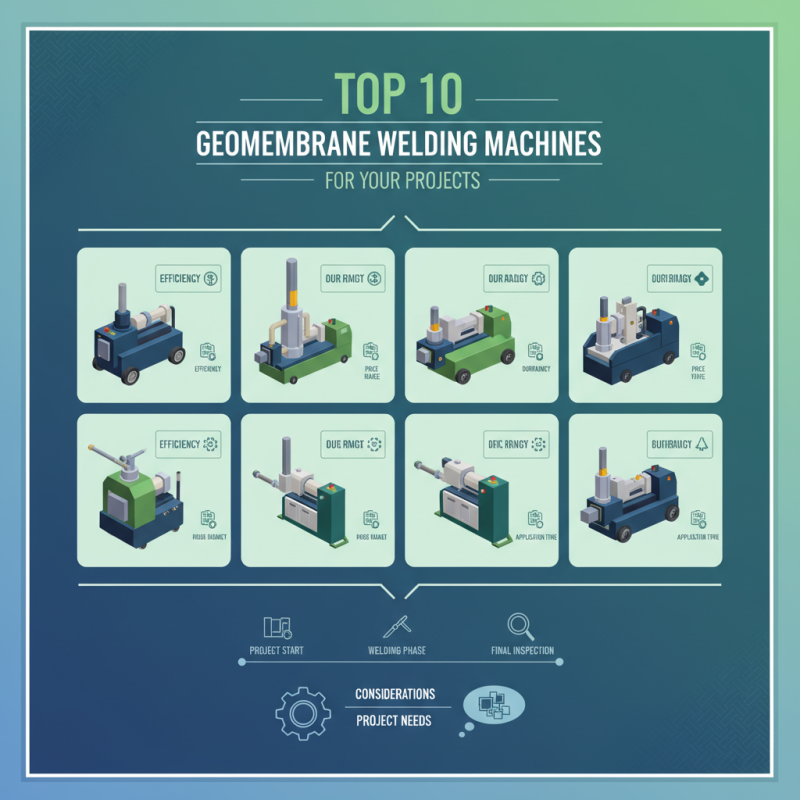
Top 10 Geomembrane Welding Machines for Your Projects?
In construction and environmental projects, geomembrane welding machines play a critical role. These machines are essential for joining geomembranes used in various applications. Proper welding ensures durability and effectiveness in preventing leaks.
The market offers numerous options, which can be overwhelming. Each machine varies in features, efficiency, and price. Selecting the right equipment depends on project specifics. Budget constraints can complicate this decision. Sometimes, cheaper machines may compromise quality.
Investing in a reliable geomembrane welding machine is crucial. It can impact the success of your project. Therefore, careful consideration is necessary. Understanding your project's needs will guide you in making the right choice. While options abound, not every machine meets every demand. Reflecting on past experiences with welding machines might offer valuable insights.
Types of Geomembrane Welding Machines and Their Applications
Geomembrane welding machines are vital for various applications. These machines help create impermeable barriers. They are commonly used in landfills, wastewater treatment, and mining operations. Each type of machine has unique features suited for specific tasks.
Hot wedge welders are popular in many projects. They use heat to join geomembranes effectively. This method is reliable but requires skilled operators. A minor miscalculation in temperature can lead to weak seams. Another option is the extrusion welder. It adds filler material during the welding process. This results in strong, durable joints. However, it can be tedious and requires more time.
Furthermore, there are automatic and semi-automatic machines. These can improve efficiency significantly. Yet, they might not always adapt well to uneven surfaces. Users must consider the project's specific needs. The choice can affect durability and performance. Understand the nuances of each type to make the best selection. Balancing efficiency and effectiveness is essential.
Key Features to Consider When Choosing a Geomembrane Welder
Choosing the right geomembrane welder is crucial for project success. One key feature to consider is the welding method. There are different techniques, such as hot air, extrusion, and wedge welding. Each method has its strengths and weaknesses. A 2022 industry report highlighted that 70% of projects face delays due to equipment mismatches. Selecting the proper welding method avoids these issues and ensures better results.
Another important aspect is the machine's temperature control. Precise temperature settings help achieve stronger welds and minimize material damage. Studies show that improper temperature settings can lead to joint failures in 15% of installations. Additionally, portability matters. A welder's weight and size need to fit your job site. A lightweight, compact design allows for easier maneuverability in challenging environments.
Finally, user-friendliness cannot be overlooked. Operators should be able to quickly learn machine settings and functions. Overly complex controls can slow down productivity. A focus on simplicity can boost efficiency on the job site. Balancing these features is essential for a successful welding machine selection.
Top Brands and Models of Geomembrane Welding Machines
When selecting geomembrane welding machines, understanding top brands and models is crucial. These machines are essential for projects that require durable waterproof barriers. They come in different types, including hot air and wedge welders. Each type has its strengths, making the choice dependent on project requirements.
Some models offer higher welding speeds, which is beneficial for large projects. Others might focus on precision, ideal for intricate designs. Buyers often grapple with budget versus quality. Inexpensive models might lack reliability. Investing in a well-reviewed machine can save time and resources.
Features like adjustable temperature and speed settings can enhance welding outcomes. However, they may add complexity. Users need to familiarize themselves with all functions. Some machines may have more intuitive controls than others. This variation can lead to frustration during critical tasks. It’s essential to evaluate not just the capabilities but also the user experience with each model.
Top 10 Geomembrane Welding Machines for Your Projects
| Model | Welding Type | Max Welding Speed (m/min) | Thickness Compatibility (mm) | Power Supply (V) |
| Model A | Hot Wedge | 4.5 | 1.0 - 2.5 | 230 |
| Model B | Extrusion | 6.0 | 1.0 - 2.0 | 380 |
| Model C | Inflatable | 3.5 | 0.5 - 1.5 | 230 |
| Model D | Single-Path | 5.0 | 1.0 - 3.0 | 230 |
| Model E | Double-Track | 7.0 | 1.5 - 4.0 | 380 |
| Model F | Hot Air | 4.0 | 0.8 - 2.5 | 230 |
| Model G | Plasma | 6.5 | 1.0 - 2.0 | 380 |
| Model H | Laser | 5.5 | 0.5 - 3.5 | 230 |
| Model I | Continuous | 8.0 | 1.0 - 4.5 | 380 |
| Model J | Hot Air | 4.2 | 0.6 - 2.0 | 230 |
Cost Comparison of Different Geomembrane Welding Machines
Choosing the right geomembrane welding machine can be challenging. There are many options available, each with different costs. Typically, prices range from a few hundred to several thousand dollars, depending on features and capabilities. Entry-level machines may seem affordable, but they often lack essential functionalities. This can lead to inefficiencies in projects.
Higher-end machines offer advanced technology, leading to better weld quality. However, they come with a steep price tag. It is important to assess your specific project needs before making a decision. Sometimes, spending more upfront can save money in the long run. Yet, not every project requires the latest technology. This is a common misconception that can lead to overspending.
Cost is not the only factor. Maintenance and operational expenses should also be considered. Some machines require frequent repairs, adding to overall costs. It's wise to research options thoroughly. Look for machines that offer a good balance between price and performance. Understanding the full cost of ownership can be key to a successful project. Engaging with fellow professionals can also provide insights that aren't immediately obvious.
Maintenance Tips for Geomembrane Welding Equipment
Maintaining geomembrane welding equipment is crucial for project success. Proper care can prevent costly downtime. According to industry reports, regular maintenance can extend the lifecycle of welding machines by 30%. This emphasizes the importance of routine checks and timely interventions.
Inspecting the welding nozzles is essential. Clogged nozzles can lead to uneven seams. Operators should clean them regularly to avoid costly errors. Additionally, ensuring that the temperature settings are accurate is vital. A variation of just a few degrees can compromise weld integrity.
Training operators on equipment usage is equally important. A knowledgeable team can identify issues before they escalate. Regular training sessions can address common mistakes. Industry surveys indicate that about 25% of equipment failures stem from operator error. This highlights the need for ongoing education and careful monitoring of machine conditions.