
7 Tips for Choosing the Right Fence Machine

Choosing a Fence Machine is not just a matter of comparing speed or price. The right equipment should match your wire type, mesh dimensions, production target, and available floor space. A machine that runs quickly but struggles with your chosen wire can cause uneven tension, wasted material, and avoidable downtime. Small details matter. Check the feed system, welding or weaving method, controls, and access to replacement parts before making a decision.

A useful expert perspective comes from Evan Brooks, a proposed fence-machinery specialist whose quotation should be verified before publication: “A reliable Fence Machine should fit the product you make every day, not just the output number on its brochure.” That is the core of this guide. Compare real operating requirements, ask for a demonstration using representative materials, and inspect finished panels for consistent spacing and strong joints. Request details about setup time, operator training, maintenance intervals, and service response. The brochure may look convincing. The sample panel tells more.

The following seven tips will help you assess machine capability, supplier support, safety features, and long-term operating costs. They also leave room for a useful doubt: projected production figures rarely tell the whole story. A factory’s wire quality, operator experience, and product changes can shift results. Take notes during demonstrations. Ask the supplier what the machine cannot do well. Those answers can be more valuable than another polished specification sheet.
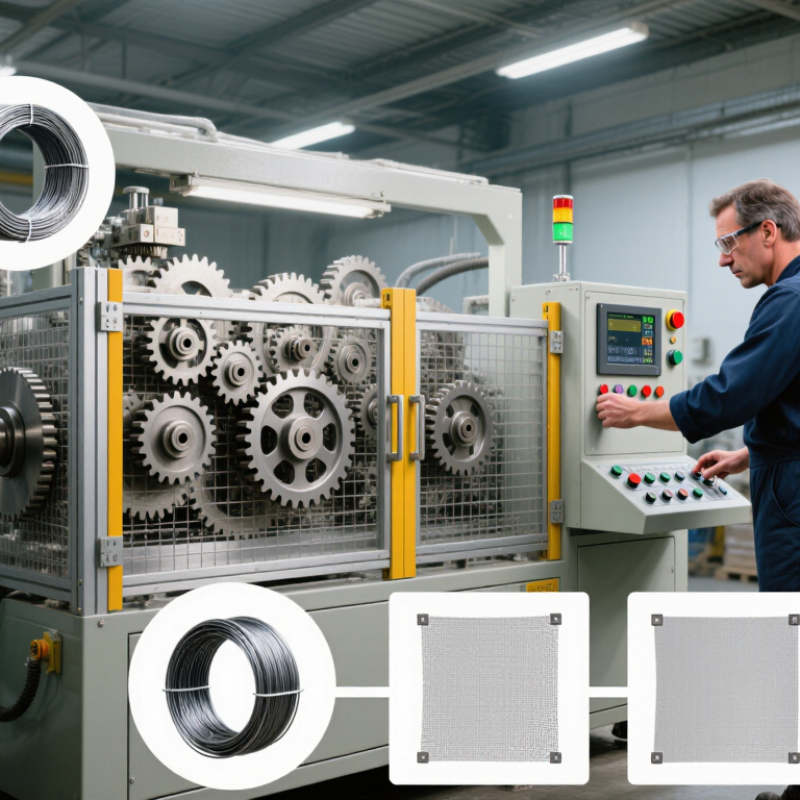
7 Tips for Choosing the Right Fence Machine

Identify Your Fence Production Needs

Before comparing fence machines, define what your shop must produce each week. List fence types, wire diameters, mesh openings, panel or roll sizes, and expected order volumes. A chain-link line and a welded-panel line solve different problems. Write down the mix, not just the maximum output target.

Demand estimates need context. The U.S. Census Bureau and HUD reported 1,452,500 privately owned housing completions in 2023, up from 1,392,300 in 2022, in their New Residential Construction data. This is a useful construction-demand indicator, not a direct measure of fence sales. Your local customers may order agricultural fencing, security panels, or short custom runs instead. Check recent invoices and seasonal patterns before sizing a machine.

Then map those orders to operating requirements. Record changeover time, staffing, shift length, scrap, and maintenance access. Ask whether the stated speed applies to your wire and finished product; a headline rate may not reflect real production. Small details matter. A narrow aisle can complicate coil loading, while frequent changes in mesh size can reduce daily output. A neat spreadsheet can still mislead. Leave room for uncertain demand, and verify trial runs using your actual materials before committing.

Compare Fence Machine Types and Their Capabilities

Fence machines are built for different products, so compare their output before comparing speed. A chain-link machine twists wire into continuous diamond mesh. It suits roll production, but wire diameter and mesh opening affect its running rate. A welded-mesh line joins crossing wires into rigid sheets or rolls. It offers consistent spacing, though frequent pattern changes can add setup time. Check the finished panel.

Field-fence machines form knots at wire intersections and can produce graduated openings, often wider near the top. That pattern helps contain livestock while using wire efficiently. Their knotting mechanisms need careful adjustment; uneven tension can spoil a roll. Not always obvious at first.

Compare working width, wire range, output format, and changeover time against your actual orders. Ask how long it takes to switch mesh sizes, not just how fast the machine runs continuously. I still find changeover time easy to underestimate. Inspect guards, feed alignment, and access to wear parts during a demonstration. A slightly slower machine may be the better fit if it handles your common wire sizes reliably and produces fewer rejects. Request a sample using your own wire when possible; catalog specifications do not show every production quirk.

7 Tips for Choosing the Right Fence Machine - Compare Fence Machine Types and Their Capabilities

Tip Machine Type Typical Output Key Capabilities Best Suited For What to Check Before Buying
1. Match the machine to the fence design Chain-link fence machine Woven diamond-pattern mesh, commonly supplied in rolls Forms interlocking wire into mesh; available configurations may support different mesh openings, wire diameters, and roll widths. Perimeter fencing, sports enclosures, and general-purpose mesh production Confirm the required wire material, mesh opening range, finished roll dimensions, and whether the machine includes automatic cutting or roll handling.
2. Verify panel dimensions and welding needs Welded wire mesh panel line Flat mesh panels with welded intersections Feeds and spaces longitudinal and cross wires, then resistance-welds intersections; automation and panel handling vary by line design. Rigid mesh panels, reinforcement mesh, and some industrial fencing Check panel width and length, wire diameter range, wire spacing, welding power requirements, and the setup time for changing specifications.
3. Consider bends and finished panel style 2D or 3D fence panel line Welded panels; 3D designs have formed reinforcing bends Combines mesh welding with panel cutting and, where specified, bending or forming operations. Commercial, residential, and site-perimeter panel fencing Confirm bend locations, panel tolerances, wire and coating compatibility, and whether bending is integrated or handled by separate equipment.
4. Match the process to wire preparation requirements Wire straightening and cutting machine Straight wire cut to specified lengths Uncoils, straightens, and cuts wire; some models offer preset lengths and automatic feeding. Preparing wire for mesh lines, fencing components, and other fabrication processes Check wire diameter and tensile-strength range, cut-length accuracy, straightness requirements, and compatibility with the wire feed format.
5. Check whether your product requires twisting Barbed wire machine Twisted line wire with periodically attached barbs Twists line wires and forms or attaches barbs; machine configurations differ by wire construction and barb spacing. Agricultural boundaries and security fencing applications where barbed wire is permitted Verify the intended wire construction, barb spacing, coil or spool handling, guarding, and applicable local safety rules.
6. Account for profile shape and forming steps Fence-post or rail roll-forming line Continuous formed metal profiles cut to length Progressively forms coil-fed sheet through roll stands; optional punching, cutting, or other in-line operations depend on the system. Metal posts, rails, and selected fencing profiles Confirm profile drawings, sheet thickness and material, tooling changeover needs, line layout, and required downstream finishing.
7. Compare total operating needs, not just headline speed Any fence production machine or integrated line Output depends on product specification, automation, setup, and material supply Automation can reduce manual handling, but changeovers, feeding, quality checks, and packaging also affect usable production. Operations balancing product range, labor, floor space, and production volume Request a specification-based trial or documented output estimate; assess power, staffing, maintenance access, spare parts, training, and safety features.

Note: Capabilities vary by machine configuration and material. Confirm operating ranges and expected output against your actual product specifications before purchase.

Check Material Compatibility and Product Specifications

A fence machine should match the material you plan to run, not just the finished fence shown in a catalog. Check the supported wire diameter, tensile strength, and coating type. Galvanized wire, for example, may behave differently during feeding and welding than uncoated wire. Small details matter. Ask whether the machine can handle your mesh openings, fence height, and required edge finish without frequent tooling changes.

Read the specifications closely. A stated maximum speed may apply only to a particular wire size or setup, so ask how output changes with your actual materials. Confirm the machine’s power requirements, adjustment range, and expected tooling wear. If possible, request a test run using a sample coil. Inspect the finished panel for uneven spacing, damaged coating, and weak welds. Those signs can reveal compatibility issues before they affect a full production order.

One spec sheet rarely tells the whole story. Even a well-matched machine may need careful setup when wire quality varies between batches. Ask which settings operators can adjust, how long changeovers usually take, and what maintenance the feed and welding components require. I would not rely on a broad “works with most wire” claim; get the compatible material range in writing.

Evaluate Production Capacity, Automation, and Safety

Tip: Match rated output to the mesh you actually sell. A fence machine’s advertised speed may assume thin wire, wide openings, and steady feeding. Ask for a trial using your wire diameter and target roll length. Count changeovers, coil loading, and rejected panels in the estimate. Small details matter. A practical capacity figure is saleable output per shift, not the machine’s peak speed.

Tip: Judge automation by what it removes from the operator’s workload. Automatic feeding, welding, and stacking can reduce repetitive handling, but only when setup and fault recovery are clear. The International Federation of Robotics reported 4,281,585 industrial robots operating worldwide in 2023, 10% more than in 2022. That signals wider adoption, not guaranteed savings for every fence line. Ask how long a recipe change takes, and watch a real changeover.

Tip: Treat safety as part of production design. OSHA estimates that machinery causes about 18,000 worker amputations, lacerations, and crushing injuries each year. Check guarding around rollers and weld heads, reachable emergency stops, and safe access for clearing jams. Ask to see the lockout procedure during maintenance. Then test it. A good demonstration matters, though one test cannot prove every shift will run safely.

7 Tips for Choosing the Right Fence Machine

Evaluate production capacity, automation, and safety alongside flexibility and serviceability.

Example decision-priority scores on a 1–5 scale, not measured machine performance or universal benchmarks. Adjust the scores to match your product mix, output targets, staffing, and applicable safety requirements.

Review Total Cost, Maintenance, and Supplier Support

7 Tips for Choosing the Right Fence Machine

When comparing fence machines, look beyond the purchase quote. Calculate installation, tooling, freight, training, energy use, scrap, and expected output. Ask for a sample run using your wire gauge and mesh dimensions. Brochure speed means little if changeovers slow actual production. Small details count.

Tip check: compare seven items—installation, tooling, energy, material waste, maintenance intervals, spare-part lead times, and supplier response. Request a written service schedule and prices for wear parts, such as cutters, rollers, and bearings. The U.S. Department of Energy’s 2010 Operations & Maintenance Best Practices guide cites potential energy savings of 5–20% from effective facility O&M programs. This is a broad facilities benchmark, not a guaranteed saving for fence machinery. Ask for machine-specific evidence.

Before signing, check how adjustments are made. Can one technician replace a cutter with standard tools? Are manuals, wiring diagrams, and remote troubleshooting available? Confirm support hours, response targets, training, and parts availability in writing. A low quote may suit a simple line. Or not. Keep a downtime allowance; estimates can miss awkward changeovers and delivery delays. That is worth admitting.