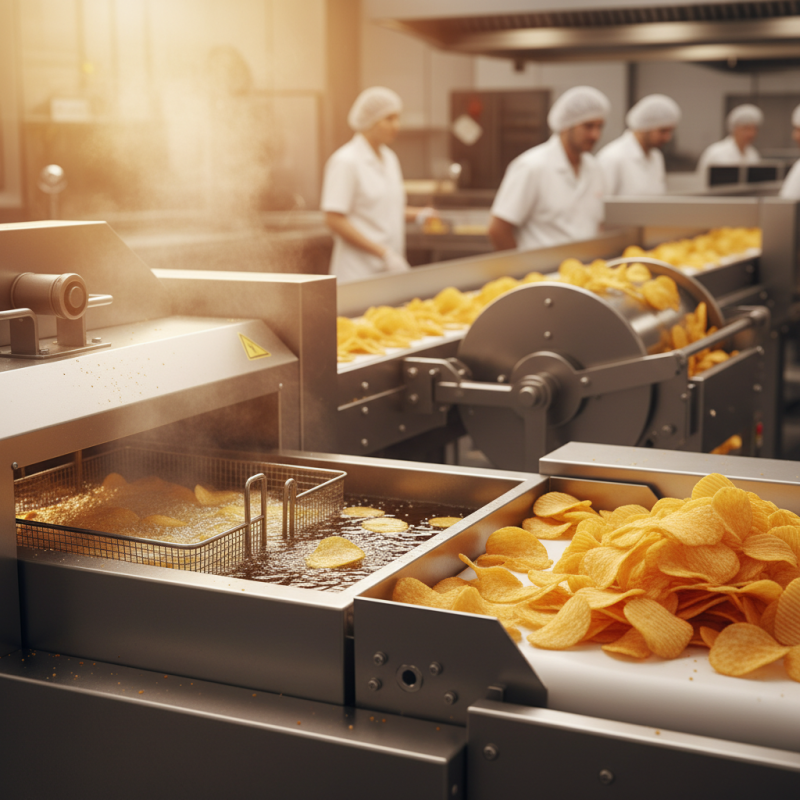
Why Choose a Potato Chips Machine for Your Snack Business?
Entering the snack business can be rewarding. A reliable potato chips machine is essential for success. This machine streamlines the production process. It allows for consistent quality and quantity. With increasing demand, investing in this equipment becomes crucial.
Imagine the sound of crispy chips frying. The aroma fills the air, attracting eager customers. A good potato chips machine ensures even frying. It can reduce waste, saving ingredients and money. However, choosing the right machine can be challenging.
Not all machines are created equal. Some may lack efficiency or durability. Researching features is important. Balancing cost and quality often requires reflection. The right potato chips machine can set a business apart. Satisfied customers lead to repeat business.
Benefits of Using a Potato Chips Machine for Snack Production
Potato chips have become a staple snack globally, with the market expected to reach $45 billion by 2027. Investing in a potato chips machine can significantly streamline production. This machinery allows for consistent shapes and sizes. Uniformity appeals to consumers. It also minimizes waste, ensuring more product in less time.
Using a potato chips machine enhances efficiency. Reports suggest that automated processes cut labor costs by about 30%. With machines handling frying and seasoning, the production line becomes faster and mistakes drop significantly. Employees can focus on quality control rather than repetitive tasks. Quality control is crucial. Chips must be crunchy, flavorful, and visually appealing to capture consumer interest.
However, transitioning to machines requires careful consideration. Initial costs can be high, possibly discouraging some businesses. Training staff also poses challenges. Employees must adapt to new workflows. It may lead to temporary pitfalls in productivity. Nonetheless, the long-term benefits often outweigh initial hurdles. The right machine can transform a snack business economically and qualitatively.
Key Features to Consider in Potato Chips Machinery
When starting a snack business, choosing the right potato chips machine is essential. Various features can make a significant difference. Automatic and semi-automatic models are available. Automatic machines save time and labor. However, they may require a larger investment upfront. Semi-automatic options can be more cost-effective. They might need more hands-on work, which some small businesses prefer.
Size and capacity are crucial factors. A machine that fits in your space is vital. If it’s too large, operations can become complicated. Productivity is another key point. A higher output per hour means greater profitability. However, it’s important to assess your demand realistically. A machine with too high a capacity might sit idle if sales do not meet expectations.
Quality is paramount in the snack industry. The right machine should ensure consistent chip thickness and texture. Too thick chips can lead to waste. Too thin chips might burn easily. Reliability becomes important. A machine that frequently breaks down can disrupt your production. This can hurt your business reputation. Selecting a potato chips machine needs careful consideration of these elements. Think about long-term benefits versus initial costs. Each feature you choose impacts your business growth.
Cost Efficiency and Profitability of Potato Chips Machines
Investing in a potato chips machine can greatly enhance cost efficiency and profitability for snack businesses. Recent industry reports indicate that the global potato chips market is projected to reach $40 billion by 2025. This growth underscores the demand for efficient production methods. A potato chips machine can streamline operations, reducing labor costs. Automated processes mean that one operator can oversee multiple machines, enhancing productivity.
Operational costs are also significantly lower with such machines. Data shows that homemade chips can cost around 30% less than purchasing pre-packaged products. Thus, businesses can enjoy higher profit margins. However, initial investment costs can be daunting. A mid-range potato chips machine might cost $20,000-$50,000. It’s essential to evaluate the return on investment carefully.
Quality control is another critical aspect. A potato chips machine ensures uniformity in size and quality. This consistency boosts customer satisfaction. Still, businesses must regularly maintain their equipment. Neglecting machine upkeep can lead to higher long-term costs. Investing in a potato chips machine involves some risks, but the potential for substantial rewards makes it a compelling choice.
Maintenance and Durability of Potato Chips Production Equipment
Maintaining potato chips production equipment is crucial for any snack business. Regular maintenance ensures the machine runs smoothly. A well-maintained machine can last significantly longer. According to industry reports, the average lifespan of durable potato chips machines can exceed 10 years with proper care. However, neglecting maintenance may shorten this lifespan drastically.
Inspecting components periodically helps catch issues early. Parts like heating elements or blades wear out and can affect production quality. Timely replacement of these parts can improve efficiency. It’s estimated that businesses save up to 30% in operational costs when equipment is properly maintained. Yet, many small operators overlook this, leading to unexpected shutdowns.
Investing in quality machinery pays off in the long run. Durable machines usually have better performance and efficiency metrics. Keeping records of maintenance can assist in tracking performance trends. However, not all owners prioritize this, often leading to operational inefficiencies. A lack of focus on maintenance can result in higher costs and reduced product quality. Regular servicing is a small effort for significant returns.
Why Choose a Potato Chips Machine for Your Snack Business? - Maintenance and Durability of Potato Chips Production Equipment
| Aspect | Details | Importance |
| Machine Type | Automatic or Semi-Automatic | Enhances efficiency and reduces labor costs. |
| Material Used | Stainless steel | Increases durability and meets hygiene standards. |
| Maintenance Frequency | Monthly | Ensures longevity and optimal performance. |
| Power Consumption | Varies by model (Average: 3-15 kW) | Affects operating costs and efficiency. |
| Output Capacity | 100-500 kg/hour | Determines production scalability. |
| Warranty Period | 1-3 years | Provides peace of mind and protection on investment. |
Comparing Manual vs. Automated Potato Chips Processing Solutions
When starting a snack business, consider the processing method for your products. Manual and automated potato chips machines have distinct advantages and challenges. According to industry reports, automated solutions can increase production efficiency by up to 50%. However, the initial investment can be a significant factor to consider.
Manual potato chips machines can be more affordable. They are suitable for small operations or those just starting. These machines require skilled labor, which can lead to variability in product quality. In fact, a recent study highlighted that businesses using manual machines often report higher labor costs over time. With less consistency in output, customers may notice the difference.
Tips: If you're leaning toward manual machines, invest in employee training. Ensure that your staff understands the production process. For automated systems, analyze your budget carefully. The upfront cost is high, but savings in labor and time can pay off.
Ultimately, weighing manual versus automated systems is key. Know your business needs. Assess your budget, quality requirements, and production goals. Research suggests that many successful brands blend both methods. Consider the potential of starting small and upgrading as demand grows. Your choice will shape the future of your snack business.
Comparing Manual vs. Automated Potato Chips Processing Solutions
This chart illustrates the differences in production speed and efficiency between manual and automated potato chips processing machines. As seen, automated machines significantly outperform manual methods, leading to higher output and lower labor costs.