What Is a High Temp Heat Pump and How Does It Work?
A High Temp Heat Pump is designed for buildings that need hotter water than standard heat pumps can provide. It can often deliver water above 60°C, depending on the model, refrigerant, and outdoor conditions. This makes it suitable for older homes, apartment blocks, hospitals, and light commercial buildings with existing radiators.
Thomas Nowak, Secretary General of the European Heat Pump Association, has said, “Heat pumps are a key technology for decarbonising heating.” His view reflects the industry’s growing experience. A High Temp Heat Pump does not create heat directly. It transfers heat from outdoor air, the ground, or another source. The compressor then raises the refrigerant’s pressure and temperature. Heat moves through a heat exchanger. Finally, hot water flows into radiators, storage tanks, or underfloor systems.
The process sounds simple. Real installations are less predictable. Outdoor temperature, radiator size, insulation, and water-flow settings all affect performance. In cold weather, the unit may consume more electricity. Higher delivery temperatures can also reduce efficiency. That trade-off matters.
A qualified installer should measure the building before recommending equipment. Field experience is valuable, but it cannot replace heat-loss calculations. Independent testing, manufacturer data, and local safety standards deserve careful review. Some systems may need upgraded pipework, controls, or backup heating. That is not a failure. It is part of honest system design.
This guide explains how a High Temp Heat Pump works, where it performs well, and where expectations should remain realistic.
What Is a High-Temperature Heat Pump?
A high-temperature heat pump is a heating system designed to deliver hotter water than a standard heat pump. Many models can produce water around 65°C, while some reach higher temperatures under suitable conditions. This makes them useful in older buildings with existing radiators, where lower-temperature systems may struggle to provide enough warmth.
The unit extracts heat from outdoor air, even during cold weather. A refrigerant absorbs this energy and changes into a gas. The compressor then raises the gas pressure and temperature. A heat exchanger transfers that heat into the building’s water circuit. The heated water flows through radiators, underfloor pipes, or a hot-water cylinder. It sounds simple. The engineering is not.
In practice, performance depends on outdoor temperature, insulation, radiator size, and the required water temperature. During a cold morning, the compressor may work harder and use more electricity. Efficiency can also fall when the system constantly produces very hot water. A site survey should check heat loss room by room, not just the building’s floor area. Existing radiators may still work, but some might need replacement or better balancing. That assumption needs checking. From practical installation experience, poor controls and undersized pipework can create more problems than the heat pump itself. Regular filter checks, airflow clearance, and professional servicing help maintain stable operation.
How High-Temperature Heat Pumps Generate Heat
What Is a High Temp Heat Pump and How Does It Work?
A high-temperature heat pump produces heating water at temperatures often reaching 70–90°C. It can serve older radiators that need hotter water than standard heat pumps provide. The process begins when the outdoor unit absorbs low-grade heat from air, ground, or water. Even cold air contains usable thermal energy. The refrigerant carries this energy through the system.
The compressor then squeezes the refrigerant gas, raising its pressure and temperature sharply. This is the critical heating stage. The hot gas flows through a heat exchanger, where it transfers heat to water in the building’s heating circuit. The refrigerant cools, condenses into a liquid, and passes through an expansion valve. Pressure drops there, preparing the refrigerant to absorb heat again. The cycle continues quietly.
In practical installations, performance depends on more than the heat pump itself. Poor insulation, undersized radiators, or dirty filters can increase electricity use. Higher water temperatures also reduce efficiency because the compressor works harder. A well-designed system uses weather compensation to adjust output as outdoor conditions change. During freezing weather, defrost cycles may briefly interrupt heating. That detail is easy to overlook. Measurements from the actual building matter more than brochure figures, and seasonal results can differ from laboratory ratings. Technicians should check flow rates, controls, noise, and refrigerant safety during commissioning. Even experienced installers can miss a small imbalance.
| Data Dimension | Technical Description | Typical or Representative Data | Why It Matters |
|---|---|---|---|
| Definition | A high-temperature heat pump is a vapor-compression heating system designed to deliver hotter water, air, or process heat than a standard low-temperature heat pump. | Many systems are designed for supply temperatures of approximately 70–90°C; specialized industrial systems can reach approximately 100–160°C, depending on design and operating conditions. | Higher delivery temperatures allow the system to serve applications that traditionally use boilers or other high-temperature heating equipment. |
| Primary Heat Sources | The system extracts low-grade thermal energy from outdoor air, ground loops, surface water, wastewater, industrial exhaust air, or process fluids. | Source temperatures may range from below 0°C for outdoor air to above 20°C for wastewater or industrial heat-recovery streams. | The available source temperature strongly affects heating capacity, efficiency, and the final temperature the heat pump can produce. |
| Step 1: Evaporation | A refrigerant absorbs heat from the source in the evaporator and changes from a low-pressure liquid into a low-pressure vapor. | The refrigerant boils at a temperature lower than the available heat-source temperature, allowing it to absorb energy even from relatively cool air or water. | This is the stage where renewable or recovered heat enters the heat-pump cycle. |
| Step 2: Compression | An electrically driven compressor raises the refrigerant’s pressure. Its temperature rises significantly as a result of compression. | Electrical input is converted into mechanical work, while the refrigerant’s pressure and temperature increase to levels suitable for heat delivery. | Compression is the key step that makes high-temperature heat production possible. |
| Step 3: Condensation | The hot, high-pressure refrigerant releases heat in the condenser to a water loop, air stream, or industrial process fluid. | Useful output temperatures commonly range from approximately 55–90°C in building systems, with higher temperatures possible in specialized industrial designs. | The condenser transfers both extracted environmental heat and compressor energy to the heating system. |
| Step 4: Expansion | An expansion valve reduces the refrigerant pressure and temperature before the refrigerant returns to the evaporator. | The pressure drop prepares the refrigerant to absorb heat again, completing the closed refrigeration cycle. | This continuous cycle enables repeated heat transfer without directly burning fuel at the point of use. |
| Heat Output | Heat may be delivered as hot water, hot air, steam, or directly to a process loop, depending on system architecture. | Common building outputs include hot-water supply temperatures of approximately 60–90°C; industrial outputs vary by equipment configuration. | The output format determines whether the heat pump can connect to radiators, domestic hot-water systems, drying equipment, or industrial processes. |
| Coefficient of Performance (COP) | COP is the ratio of useful heat delivered to electrical energy consumed. | A COP of 3 means approximately 3 units of heat are delivered for every 1 unit of electricity under the stated test conditions. High-temperature operation often produces a lower COP than low-temperature operation. | COP changes with outdoor temperature, source temperature, supply temperature, part-load operation, defrosting, and system design. |
| Temperature Lift | Temperature lift is the difference between the heat-source temperature and the delivered heat temperature. | For example, raising heat from 10°C to 80°C requires a larger temperature lift than raising it from 10°C to 45°C. | A larger temperature lift generally increases compressor work and reduces efficiency, so adequate source heat and lower return temperatures are valuable. |
| Refrigerant Circuit Design | High-temperature units may use a single-stage cycle, two-stage compression, economized compression, cascade circuits, or other enhanced-cycle arrangements. | Two-stage or cascade arrangements can divide the total temperature lift between multiple compression stages. | Advanced configurations can improve operating stability and efficiency when very high delivery temperatures are required. |
| Efficiency Influences | Performance depends on source temperature, supply and return temperatures, compressor efficiency, heat-exchanger sizing, controls, and defrost requirements. | Efficiency is normally higher when the heat source is warmer and the required supply temperature is lower. | System design should be evaluated using seasonal performance rather than a single laboratory COP value. |
| Typical Applications | High-temperature heat pumps can provide space heating, domestic hot water, district heating, heat recovery, drying, washing, pasteurization, and other process heat. | They are particularly suitable where useful waste heat is available or where existing heating distribution systems require higher water temperatures. | Applications with steady heat demand and accessible waste heat can provide favorable operating conditions. |
| Relationship with Existing Systems | A high-temperature heat pump may supply an existing hydronic heating network, preheat water for a boiler, or operate alongside a backup heater. | Hybrid operation can use the heat pump for most normal loads and supplementary heating during peak demand or extreme conditions. | Integration can reduce fuel consumption while retaining the reliability of existing high-temperature equipment. |
| Advantages | Potential benefits include reduced direct fossil-fuel use, recovery of otherwise wasted heat, compatibility with some high-temperature heating systems, and lower on-site combustion emissions. | Actual energy and emissions savings depend on the electricity mix, system efficiency, operating schedule, and replaced heating technology. | Performance should be assessed using site-specific energy data and seasonal operating conditions. |
| Key Limitations | Very high supply temperatures can reduce efficiency, increase compressor stress, and require specialized components, controls, and refrigerant management. | Cold outdoor conditions, high flow temperatures, poor insulation, undersized heat exchangers, or frequent defrosting can reduce seasonal performance. | Correct sizing, hydraulic balancing, insulation, and temperature optimization are essential for reliable operation. |
| Maintenance Considerations | Routine service may include checking refrigerant circuits, filters, pumps, valves, sensors, heat exchangers, electrical connections, and control settings. | Maintenance intervals depend on equipment type, operating hours, water quality, air quality, and local regulations. | Regular maintenance helps preserve capacity, efficiency, safety, and operating life. |

Key Components of a High-Temperature Heat Pump
What Is a High Temp Heat Pump and How Does It Work?
A high-temperature heat pump transfers heat from outdoor air, the ground, or waste heat into a building. Unlike a standard system, it can deliver water temperatures around 70–90°C. This makes it suitable for older buildings with radiators, though performance depends on outdoor conditions and system design.
Key Components of a High-Temperature Heat Pump
The evaporator absorbs low-grade heat through the refrigerant. A specially designed compressor then raises the refrigerant’s pressure and temperature. Many high-temperature models use enhanced vapor injection or staged compression for more stable operation. The condenser transfers heat into the building’s water circuit. An expansion valve lowers refrigerant pressure, preparing it for another cycle. Sensors and electronic controls adjust compressor speed, water flow, and defrosting. A buffer tank can reduce rapid cycling, especially in homes with uneven heating demand. From practical system checks, poor airflow or dirty filters often reduce output before any major component fails. No system is perfect. High flow temperatures can increase electricity use, and incorrect settings may create unnecessary wear.
Tips:
Keep outdoor coils clear of leaves and snow. Check water pressure regularly. Ask a qualified technician to verify refrigerant circuits and safety controls. Lowering the flow temperature, when possible, usually improves efficiency. Small adjustments matter. A well-insulated building may need less heat than expected, but real performance should be measured during cold weather, not assumed from specifications.
What Is a High-Temperature Heat Pump and How Does It Work?
Representative refrigerant-cycle temperatures and key components at a 10°C heat-source temperature and approximately 65°C water-delivery temperature.
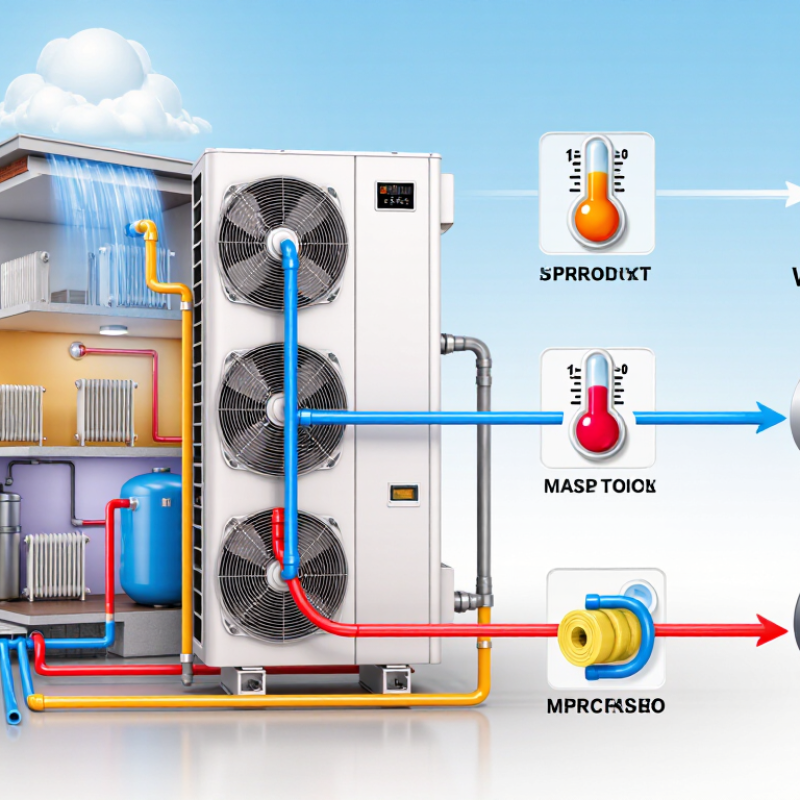
The evaporator absorbs heat from the surrounding air, ground, or water. The compressor raises the refrigerant pressure and temperature, allowing the condenser to transfer heat to a building-water circuit at a higher temperature. The expansion valve then reduces refrigerant pressure before the cycle starts again. Actual temperatures vary with refrigerant type, outdoor conditions, system design, and heating demand.
How the Heating Cycle Works Step by Step
A high-temperature heat pump supplies hotter water than a standard heat pump. Many systems can deliver 65–90°C, depending on the design and outdoor conditions. The heating cycle begins inside the evaporator. Refrigerant absorbs heat from outdoor air, ground, or waste heat. Even cold air contains usable thermal energy.
The compressor then squeezes the refrigerant vapor. Pressure rises sharply, and temperature rises with it. The hot vapor reaches the condenser, where it transfers heat to water flowing through radiators or process equipment. As the refrigerant cools, it becomes liquid. The expansion valve reduces its pressure and temperature. The cycle starts again.
It sounds simple. Real systems are less perfect. Frost, poor insulation, dirty filters, and high water temperatures can reduce efficiency. The International Energy Agency reports that efficient heat pumps can provide three to five units of heat for each unit of electricity. Its 2023 market report also recorded global heat pump sales growth of about 11% in 2022. These figures describe broad markets, not every installation.
Tips: Keep radiators clean and check flow temperatures with a qualified technician. Lowering the water temperature by a few degrees may improve seasonal efficiency. Do not assume maximum temperature is always best. Heat-loss calculations matter more than a brochure rating. Review the IEA data alongside local weather records and measured energy bills.
Applications, Benefits, and Operating Limitations
What Is a High Temp Heat Pump and How Does It Work?
A high temperature heat pump transfers heat from outdoor air or the ground into a building. Unlike standard systems, it can produce water above 60°C, sometimes approaching 80°C. The compressor raises the refrigerant pressure and temperature. A heat exchanger then transfers that energy to the heating circuit or hot water tank. The process still uses electricity, but it moves heat rather than creating it directly.
Applications, Benefits, and Operating Limitations
These systems suit older homes with existing radiators and limited space for major renovations. They can also serve apartment blocks, clinics, schools, and workshops needing hotter water. In retrofit projects, keeping the original radiators may reduce construction work and disruption. They can lower fuel use and on-site emissions, especially where the electricity supply is relatively clean. Comfort may improve too. Rooms warm steadily, without the sharp bursts common with some boilers.
Performance has limits. Efficiency usually falls as the required water temperature rises. A unit delivering 70°C water may use noticeably more electricity than one delivering 45°C water. Cold weather, poor insulation, blocked filters, and frequent defrosting can reduce output. The outdoor unit also needs airflow and careful drainage. Electrical capacity, noise, maintenance access, and backup heating require early assessment. High temperature does not mean unlimited temperature. An installer should check heat loss room by room, not rely only on the old boiler size. That step is sometimes skipped, and the result can be disappointing. Even a correctly selected system may need lower radiator temperatures, better insulation, or adjusted heating schedules.