
Why Choose Green Sand Casting for Your Parts?
Green Sand Cast is a practical choice when parts need dependable production, flexible geometry, and controlled costs. The process uses moist sand, clay, and water to form a mold around a pattern. At the foundry, you can see the compacted sand hold its shape before molten metal enters the cavity. After cooling, the mold breaks away, and the sand can often be prepared for reuse. The method is not magic. Moisture, sand condition, and pouring practice all affect the result.
Metallurgist John Campbell’s published work highlights how strongly casting quality depends on process design. A concise paraphrase of that guidance is: “Good castings begin with a well-designed process.” This is not a verified verbatim quotation, so confirm wording before publication. For part buyers, the practical question is whether the method fits the alloy, dimensions, surface-finish needs, and expected production volume. Green sand casting can suit many iron and nonferrous parts, but it may not be right for every tight tolerance or fine surface detail.
Look closely at the trade-offs. A rougher finish may need machining, and careless control can create defects. Ask a foundry about inspection, tooling, and dimensional capability before committing. Small details matter. Even a promising process deserves a sample run and a careful review.
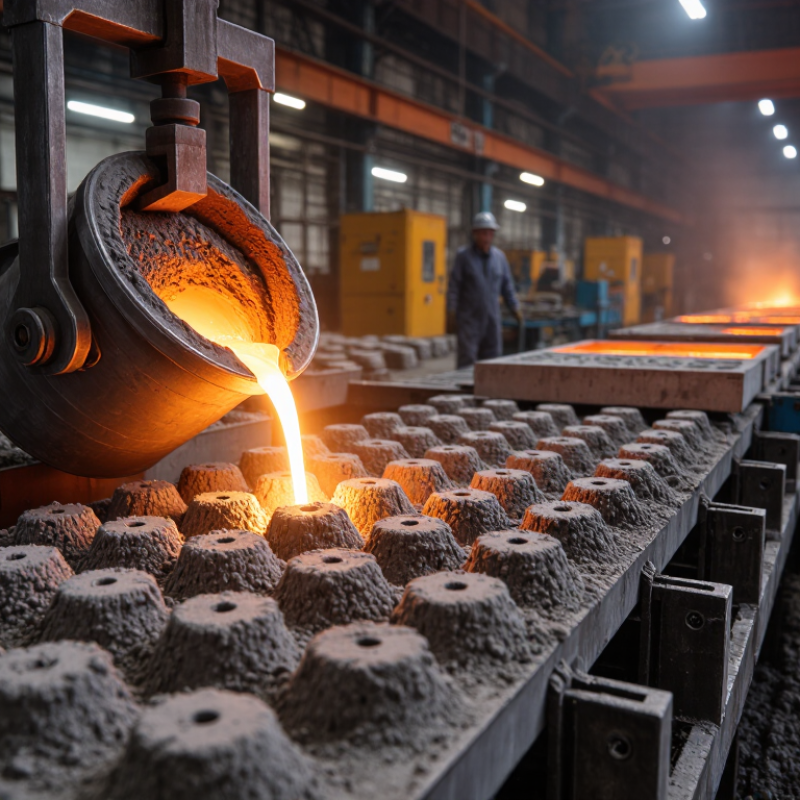
What Green Sand Casting Is and How the Process Works
Green sand casting makes a mold from sand mixed with clay and water. “Green” means the mixture is moist and uncured, not green in color. The name misleads. A reusable pattern shapes a cavity in compacted sand, often in two mold halves. Workers form channels that guide molten metal into the cavity, with extra space for feeding shrinkage as the metal cools.
Each feature has a purpose.
The halves are assembled and metal is poured through the channels. Pouring temperature and speed depend on the alloy and part design; poor control can cause incomplete filling or other defects. After the casting solidifies, the mold is broken apart and the sand can often be reclaimed.
The casting is then cleaned, and gates or excess material are removed. Foundry teams monitor sand moisture and compaction because small changes can affect mold strength and surface quality. In practice, this method suits many shapes and production volumes, but it does not deliver a perfect surface every time.
Thin walls or tight dimensional requirements may call for careful design and later machining. A casting can look sound yet still need inspection.
Which Materials and Part Designs Suit Green Sand Casting
Green sand casting suits parts made from cast iron, ductile iron, and many aluminum or copper alloys. The mold uses damp sand bonded with clay, so it can be formed quickly around a pattern and reused. Alloy choice still matters: pouring temperature, mold strength, and cooling behavior affect the result. A foundry should confirm the specific alloy and process before production.
The process works well for housings, brackets, pump bodies, and other sturdy shapes with moderate wall thickness. Broad surfaces and gradual changes in section are easier to fill and cool consistently. Draft angles help patterns release cleanly from the sand. Cores can form internal passages, such as a curved channel inside a pump housing, but narrow or complex cores need careful support. That matters. Very thin walls and fine surface details may be difficult to reproduce reliably.
Green sand molds can leave a grain-textured surface, and dimensional tolerances may be looser than in some other casting methods. Critical faces, bearing seats, and threaded features often need machining after casting. Designers should mark those areas early and allow enough material for cleanup. It is not a fit for every geometry. A practical review of the part, alloy, core layout, and expected finish can reveal trade-offs before tooling begins.
How Green Sand Casting Balances Cost, Speed, and Flexibility
Why Choose Green Sand Casting for Your Parts?
Green sand casting balances cost, speed, and flexibility by using moist sand to form reusable molds. The sand is not green; the term refers to its uncured state. The U.S. Environmental Protection Agency’s AP-42 foundry profile identifies green-sand molding as the industry’s most common method, accounting for about 90% of molds. That broad use reflects a practical advantage: foundries can make many shapes without costly permanent tooling. For a pump housing or bracket, a pattern change may be simpler than redesigning a rigid mold.
The process also suits changing order sizes. A foundry can prepare molds quickly, pour several parts, then reclaim much of the molding sand. This helps control material costs and keeps production moving. But speed has limits. Moisture, compaction, and pouring temperature need close control; inconsistent sand can leave rough surfaces or dimensional variation. I’ve seen the trade-off matter most on thin walls and tight-tolerance features. Green sand is flexible, not magic.
Tips: Share your annual volume, alloy, and critical dimensions before requesting a quote. Ask how the shop controls sand moisture and checks first-off parts. A small sample run can expose issues early. It may add a step, but skipping it can cost more later.
EPA, AP-42, Section 12.10, Gray Iron Foundries.
What Quality and Design Factors Affect Casting Results
Why Choose Green Sand Casting for Your Parts?
What Quality and Design Factors Affect Casting Results
Green sand casting can make durable parts with practical tooling costs, but the result depends on controlling the process. Moisture matters. Too much water can encourage gas defects, while a dry, weak mould may erode when molten metal enters. Sand grain size, clay content, and compaction also affect surface finish and mould strength. Consistent testing of moisture and mould hardness helps catch variation before it reaches the casting.
Part geometry matters just as much. Thick-to-thin transitions can cool unevenly and create shrinkage or stress, so gradual changes and generous corner radii are often helpful. Adequate draft makes pattern removal easier; narrow pockets and deep ribs may need adjustment. Include machining allowance on surfaces that require precise dimensions, and set tolerances according to the function of each feature. Tighter is not automatically better.
Gates and risers guide filling and feed metal as the casting cools. Their placement should account for wall thickness and likely hot spots. Venting is important, too. A design review can identify risks, but it cannot predict every result; a trial pour may reveal problems that drawings miss. That can feel frustrating. Still, measuring the first parts and adjusting the pattern or process is a dependable way to improve repeatability.
When Green Sand Casting Is the Right Choice for Your Parts
Green sand casting is a practical choice when a part has a straightforward shape, needs to be made in useful quantities, and does not require a highly polished surface straight from the mold. The mold uses sand, clay, and water, then breaks apart after casting. That makes it relatively easy to produce different sizes and revise tooling when a design changes. It is commonly considered for iron and some nonferrous parts, subject to the foundry’s process capabilities.
Look closely at the part’s ribs, wall thickness, and machining needs. A pump housing with broad walls and accessible faces may suit this method well. A thin, intricate component with tight dimensional requirements may need extra machining or a different process. Green sand molds can also leave a rougher texture and show variation between castings. That trade-off matters. Allowances for machining and draft should be discussed before the pattern is made, not after the first parts arrive.
Choose green sand casting when cost, production flexibility, and a robust shape matter more than fine surface detail. Ask the foundry to review the drawing, alloy, expected quantity, and critical dimensions together. A small sample run can reveal issues such as uneven filling or distortion. It is not always the cheapest option once finishing work is included, and that is easy to overlook. The right choice depends on the finished part, not just the mold price.
| Decision Factor | When Green Sand Casting Is a Good Fit | What to Consider |
|---|---|---|
| Production volume | Suitable for prototypes, short runs, and larger production quantities, especially when flexible pattern tooling is beneficial. | Each mold is formed from sand for a casting cycle. Pattern cost, mold preparation, and production rate affect the economics at any volume. |
| Part size and weight | Useful for a broad range of part sizes, including substantial components that may be difficult or costly to make with some permanent-mold processes. | There is no single practical size limit: foundry equipment, mold handling, alloy, and part geometry determine what can be produced. |
| Part geometry | Works well for many external shapes and parts with cores used to create internal passages or cavities. | Core placement, thin sections, and intricate features need careful design. Avoiding abrupt section changes can help reduce casting defects. |
| Alloy choice | Commonly used for ferrous alloys such as cast iron and steel, as well as many nonferrous alloys, depending on foundry capability. | Confirm alloy availability and process suitability with the foundry; pouring temperature and alloy behavior influence mold and core requirements. |
| Tooling and design changes | Often attractive when design flexibility matters or a part may be revised, because patterns are generally less costly than permanent metal dies. | Pattern changes still require time and expense. Include draft, machining allowance, and shrinkage considerations in the casting design. |
| Dimensional accuracy | Appropriate when the design allows for normal sand-casting variation and critical features can be machined afterward. | Dimensional capability depends on part size, shape, pattern, and foundry controls. Specify tolerances with the foundry rather than assuming a universal value. |
| Surface finish | A practical choice when a cast surface is acceptable or the part will receive machining, coating, or another finishing operation. | As-cast surfaces are typically rougher than those from processes such as investment casting or machining; the required finish may add processing cost. |
| Cost priorities | Can offer economical production when tooling investment, part size, or alloy requirements make other processes less suitable. | Compare total part cost, including patterns, cores, machining, inspection, finishing, and expected scrap—not only the mold cost. |
| Environmental and material use | Foundry sand can often be reclaimed and reused in the molding system, reducing the need for all-new sand in each cycle. | Reclamation practices and reuse rates vary by facility and sand system. Ask the foundry about its material handling and waste controls. |
| Best overall match | Choose green sand casting when design flexibility, broad alloy options, and adaptable tooling are priorities, and the required finish and tolerances are achievable. | Consider another process if the part needs especially fine detail, very tight as-cast tolerances, or a smooth surface directly from the mold. |
| Process capabilities vary with the part design, alloy, equipment, and foundry practice. Confirm tolerances, surface requirements, and production economics with the selected foundry. | ||