How to Choose the Best Aluminium Milling Machine?
Choosing an aluminium milling machine starts with the parts you actually plan to make. A thin sign panel, a compact bracket, and a deep aerospace-style profile place very different demands on a machine. Before comparing spindle speeds, note your workpiece dimensions, required tolerances, alloy, and expected production volume. A machine that looks impressive in a catalog may still lack the travel or rigidity your parts need.
A transparent note about the quotation: no source material was supplied to verify a real expert’s words. The following is an original, illustrative line, not a factual quotation. Fictional machining specialist Alex Morgan summarizes a practical selection principle: “Choose for the cut you must repeat, not the feature list you admire.” It is a useful reminder, though not a substitute for testing. Check spindle power, tool compatibility, workholding, chip evacuation, and service support. Ask the supplier how the machine handles your actual alloy and cutter, then request a sample cut when possible.
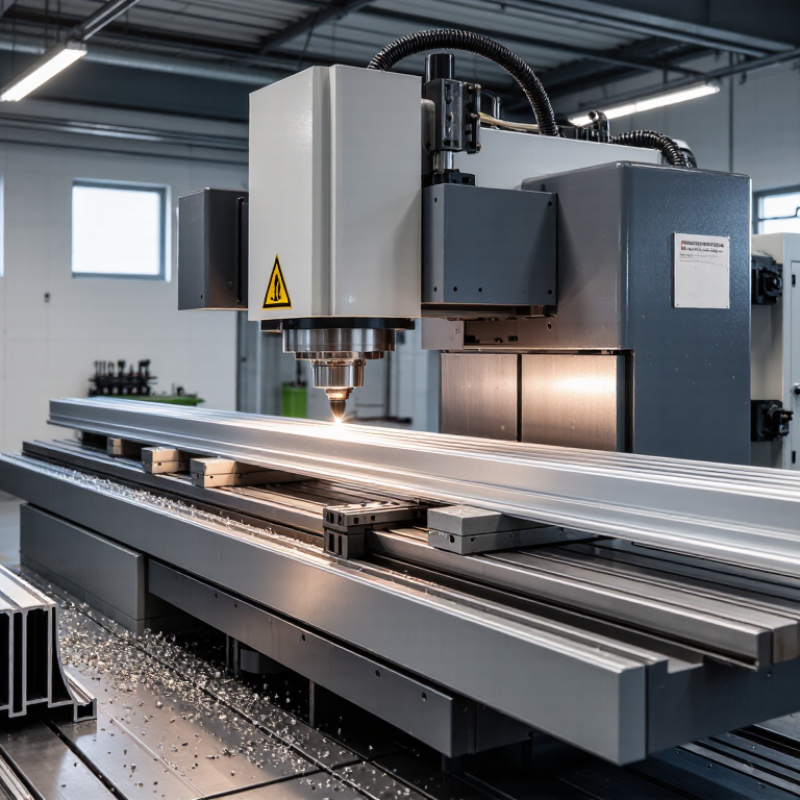
Look closely at the details on the shop floor. Does the table support a long extrusion without awkward overhang? Can coolant reach the cutting zone, and can chips clear cleanly? Small details count. Compare total operating cost, not just the purchase price, and confirm that operators can use the controls confidently. A little hesitation is reasonable: published specifications rarely show every vibration, setup delay, or maintenance task. The best aluminium milling machine is the one that fits your real workload and produces dependable results, day after day.
Define Your Aluminium Milling Requirements
Before comparing machines, define the aluminium parts you actually need to make. Record the alloy, maximum length, width, and thickness, plus the smallest feature and tightest required tolerance. Measure twice. A thin 6061 plate with shallow pockets behaves differently from a thick billet with deep cavities. Note whether parts are prototypes, occasional replacements, or repeat production. Estimate daily or monthly quantities, not just the largest order you can imagine.
List the operations: facing, slotting, drilling, pocketing, or contouring. Include cutter diameters and the deepest cuts you expect, since these affect spindle range, machine rigidity, and tool clearance. Aluminium cuts readily, but long chips can wrap around a cutter, and heat can affect finish. Check how the machine manages chips and coolant, and whether its table can hold your work securely. Leave room for the vise, clamps, and tool changes. Small parts need support, too.
Set realistic accuracy targets from the part drawing and how the component will fit in assembly. It is tempting to specify the tightest tolerance everywhere, but that can raise cost without improving the part. Consider floor space, available power, operator skill, and whether setup time matters more than peak cutting speed. One awkward detail: parts may grow slightly during machining as heat builds. Test the actual alloy and setup when finish or size is critical. Keep a sample drawing and representative blank nearby when checking machine capacity.
Compare Milling Machine Types and Configurations
How to Choose the Best Aluminium Milling Machine?
Compare Milling Machine Types and Configurations
A vertical knee mill suits repair work and small aluminium parts. Its table moves in several directions, and operators can adjust cuts by hand. For repeat production, a CNC bed mill offers steadier motion and easier program control. A gantry machine can handle wide panels, though it needs more floor space. Match the machine to your part size, batch volume, and required accuracy—not just its advertised travel.
Configuration affects cut quality as much as machine type. Aluminium removes quickly, but thin walls can vibrate under a heavy cut. A high-speed spindle, sharp tooling, and effective chip removal help reduce heat and built-up material. Check the number of axes, tool-change options, and fixture space before buying. A fourth axis may save setups for angled features, but it adds cost and programming work. There is no perfect setup; I still find workholding easy to underestimate.
Tips: Ask for a test cut in aluminium similar to your part. Listen for chatter, inspect the edge, and check dimensions after the material cools. Confirm that the enclosure clears your longest tool and largest fixture. Leave room for improvement: a machine that meets today’s needs may feel restrictive as parts change.
How to Choose an Aluminium Milling Machine
Compare common machine configurations by their linear and rotary axes. More axes can reduce repositioning when machining complex parts, but axis count alone does not determine cutting performance.
Typical configurations shown: 3-axis machines have three linear axes; 4-axis machines add one rotary axis; and 5-axis machines add two. Actual machine designs vary. For aluminium, also consider spindle speed, machine rigidity, tooling, workholding, and the size and complexity of your parts.
Evaluate Capacity, Precision, Speed, and Rigidity
Choosing an aluminium milling machine starts with the parts you actually plan to make. Check the table size, travel, and clearance around the spindle. A long extrusion may fit on the table but still exceed the machine’s useful travel. Leave room for clamps and a vise. Capacity on paper can be misleading.
Precision depends on more than the machine’s stated tolerance. Look for backlash control, a stable spindle, and clear ways to check alignment. Aluminium can reveal small setup errors as uneven edges or chatter marks. Make a test cut, then measure the result with suitable inspection tools. Repeatability matters. A single good cut proves little.
Speed should suit the cutter diameter, tool material, and feed rate, not just the highest spindle number. A variable-speed spindle helps when changing tools or part sizes. Rigidity matters just as much: inspect the frame, table, and spindle support for a solid feel. Thin sections can vibrate even on a capable machine. It is tempting to prioritize top speed, but that choice deserves a second look; a rigid setup at a moderate speed may produce cleaner surfaces and more predictable dimensions.
Check Tooling, Control, and Material Compatibility
How to Choose the Best Aluminium Milling Machine?
Check Tooling, Control, and Material Compatibility
A suitable aluminium milling machine needs sharp, polished carbide tooling and reliable chip removal. Aluminium can cling to a dull cutting edge, leaving a smeared surface and built-up material on the tool. Check spindle runout, tool-holding stiffness, and whether the machine can maintain steady feed rates. Small details matter. A weak workholding setup can let a thin plate chatter, even when the spindle has ample power.
Material compatibility matters just as much. Aluminium alloys differ in strength, machinability, and heat response, so match cutting data to the exact grade and temper. ASM Handbook, Volume 2, lists thermal conductivity for 6061-T6 at about 167 W/m·K; heat can therefore spread quickly through the part. That does not prevent local tool heating or chip welding. A rigid, well-tuned control system helps maintain consistent engagement, but overly aggressive settings may still spoil edges. A test cut is worth the time.
Tips: Inspect the tool edge and chip shape after the first pass. Long, sticky chips or a rough finish may signal poor chip evacuation, unsuitable feed, or a tool that needs attention. Keep notes on alloy, cutter, and settings; the first setup will not always be perfect.
Assess Safety, Maintenance, and Total Ownership Cost
A milling machine can appear safe while hiding practical risks. Check whether the work area has a secure enclosure, clear sightlines, and an emergency stop within easy reach. Test the stop and door interlocks during a supervised demonstration. Small details matter. Look for sharp swarf around the table and confirm that chip guards are easy to remove for cleaning. Ask how operators are trained to secure stock and change cutters; a good manual alone does not prevent rushed mistakes.
Maintenance affects both reliability and the real cost of ownership. Ask what daily checks are required, how often lubrication and coolant need attention, and whether routine service can be done without special tools. Request a maintenance schedule and typical parts list, then price filters, belts, cutting tools, and likely service visits. Downtime costs. Compare more than the purchase price: include installation, electricity, consumables, training, and the time needed to clean the machine. A lower-priced model may demand more frequent adjustment, though that is hard to judge from a brochure. If possible, inspect a machine after several months of regular use, not just a polished showroom unit. Record the assumptions behind your cost estimate; they may prove imperfect, but they make comparisons more honest.