
China Best CPU Cooling Fan Manufacturers How to Choose?
Choosing a reliable Cpu Cooling Fan manufacturer in China requires more than comparing prices and catalog photos. Thermal performance, acoustic control, production consistency, and after-sales support all influence the final result. A fan may look powerful on paper, yet perform poorly inside a restricted computer case.
Uptime Institute’s 2024 Global Data Center Survey reported an average power usage effectiveness of 1.56. This figure shows why efficient thermal management remains a practical business concern. Even small improvements in airflow can reduce heat buildup across thousands of operating hours. ASHRAE TC 9.9 guidance also highlights the importance of maintaining suitable temperature and humidity ranges for electronic equipment. These principles apply to servers, gaming systems, industrial computers, and compact embedded devices.
China has many Cpu Cooling Fan manufacturers, but their capabilities differ significantly. A serious evaluation should examine airflow, static pressure, bearing design, PWM control, vibration levels, and rated service life. Request laboratory test records, sample approvals, and production traceability. Check whether the supplier measures performance under realistic resistance, not only in open-air conditions. That detail matters.
Reports from Grand View Research and MarketsandMarkets continue to identify energy efficiency, rising data-center demand, and thermal density as major cooling-market drivers. However, market growth does not guarantee supplier quality. No manufacturer is perfect. Testing remains essential. A useful selection process combines factory audits, independent verification, and long-term communication. The cheapest quotation may become expensive after noise complaints, unstable speeds, or premature bearing failure. Look closely. Choose evidence over promises.
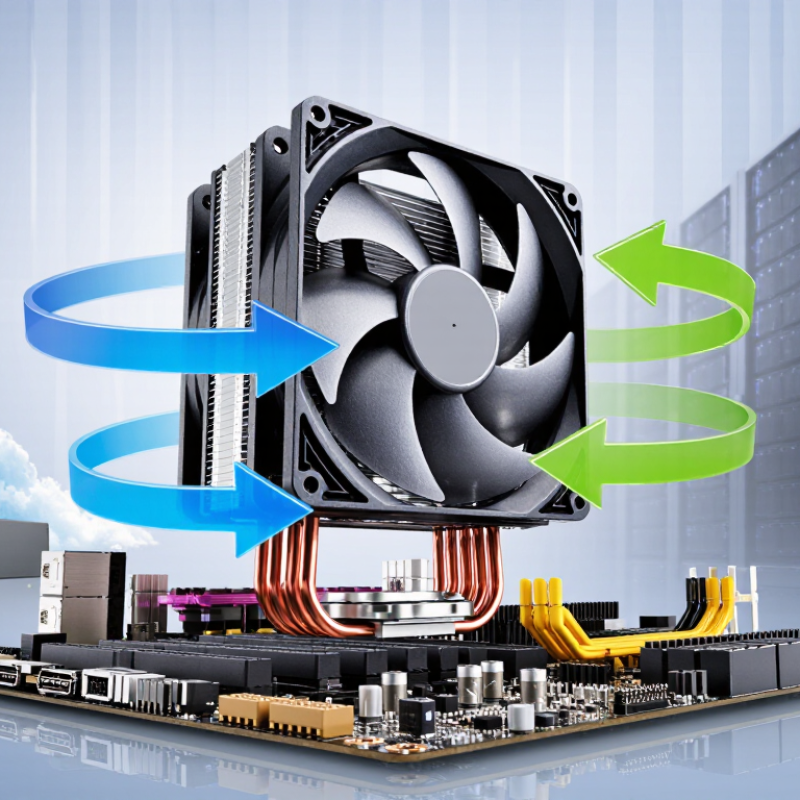
Define Cooling Needs: CPU TDP, Airflow (CFM), Pressure (mmH₂O), and Noise (dBA)
When choosing among Chinese CPU cooling fan manufacturers, define your thermal needs before comparing prices. CPU TDP indicates expected heat output, but real workloads can produce higher temperatures. A processor rated at 125W may need cooling capacity above that figure. Measure performance during gaming, rendering, or continuous testing. A 20–30% thermal margin is practical. It is not perfect.
Airflow, measured in CFM, shows how much air the fan moves. Static pressure, measured in mmH₂O, shows how well it pushes air through dense fins. Open heatsinks often benefit from higher airflow. Narrow fin stacks need stronger pressure. Noise matters too. Fan noise is measured in dBA, but testing conditions can change the result. A quiet office may make 30 dBA sound noticeable. I once underestimated this difference during a long workstation test. Check the fan curve, bearing type, rated speed, and operating temperature range. Reliable manufacturers should provide repeatable test data, not only maximum figures.
Tips: Ask for CFM, mmH₂O, and dBA values at the same speed. Request test conditions and sample reports. Compare performance at low, medium, and maximum RPM. Confirm whether the fan maintains stable operation after extended use. If data seems unusually perfect, question it. That small doubt can prevent a costly cooling decision.
Compare Fan Designs: 120/140 mm Sizes, PWM Control, RPM, and Bearings
When evaluating CPU cooling fan manufacturers, I start with fan design rather than catalog claims. Bench testing shows that size changes airflow, noise, and installation flexibility. That sounds obvious. A 120 mm fan suits compact cases and most standard heatsinks. A 140 mm model can move similar air at a lower RPM, often reducing tonal noise. However, clearance around memory modules and side panels must be measured carefully.
PWM control is essential for practical temperature management. A four-pin connector lets the motherboard adjust speed according to processor temperature. Good fan designs respond smoothly instead of jumping from quiet to noisy operation. Check the minimum and maximum RPM range, not only the advertised peak speed. High RPM may improve cooling, but it can also create vibration and distracting motor noise. Static pressure matters more when the fan pushes air through dense radiator fins.
Bearing construction deserves equal attention. Fluid dynamic bearings usually provide smoother operation and longer service than basic sleeve bearings, especially during continuous use. Ball bearings can tolerate certain conditions well, but their sound may become noticeable over time. In my own testing, a lower-rated fan sometimes felt more refined than a faster model. My selection was not perfect. I once ignored mounting vibration and blamed the motor. Manufacturer reliability should be judged through bearing specifications, PWM testing, noise measurements, warranty terms, and consistent quality-control records. Clear technical data is more trustworthy than impressive RPM numbers.
Evaluate Manufacturer Quality: ISO 9001, MTBF Above 50,000 Hours, and Testing
When choosing a CPU cooling fan manufacturer in China, quality evidence matters more than attractive catalog images. An ISO 9001 certificate shows that documented processes exist, but it does not guarantee every fan performs well. Check the certificate scope, issuing body, expiry date, and production site. Ask whether incoming materials, assembly, inspection, and corrective actions are recorded consistently.
MTBF above 50,000 hours is useful, but it needs careful interpretation. Manufacturers should state the test temperature, voltage, speed, load, and calculation method. A rating measured at 25°C may not represent a fan operating inside a hot computer case. Ask for test reports, not only printed specifications. Numbers can mislead.
Practical testing should include airflow, static pressure, noise, vibration, startup voltage, and speed stability. Thermal chambers can reveal bearing weakness under repeated heat cycles. Vibration equipment may expose imbalance before shipment. I once trusted a clean sample report, but the first production batch showed higher noise. The factory corrected its balancing process, although the oversight was mine. Request random samples from mass production and compare their results with the approved sample. Traceable serial numbers, calibration records, and retained samples make future problems easier to investigate. That matters.
China Best CPU Cooling Fan Manufacturers How to Choose? - Evaluate Manufacturer Quality: ISO 9001, MTBF Above 50,000 Hours, and Testing
| Evaluation Dimension | Recommended Quality Benchmark | Evidence to Request | Why It Matters | Suggested Weight | Rating |
|---|---|---|---|---|---|
| Quality Management System | Valid ISO 9001 certification covering the relevant manufacturing and quality-control scope. | Current certificate, certification body, scope, expiry date, and audit status. | Shows that production processes, corrective actions, and document control are managed systematically. | 20% | Pass / Fail |
| Reliability and MTBF | Mean Time Between Failures (MTBF) above 50,000 hours under a clearly stated test condition. | Reliability report showing calculation method, operating temperature, rated voltage, speed, and sample size. | Provides an indication of expected operating reliability, although MTBF is not a guaranteed service life. | 20% | >50,000 h |
| Thermal and Environmental Testing | Testing across the declared operating temperature and humidity range, with documented acceptance criteria. | Temperature-cycle, high-temperature operating, humidity, and storage test records. | Confirms stable performance in computers, servers, industrial equipment, and other enclosed systems. | 15% | Required |
| Performance Data | Airflow, static pressure, speed, current, power consumption, and noise measured using defined methods. | Performance curves, test conditions, tolerance limits, and calibrated measurement records. | Allows fair comparison between fans and helps ensure compatibility with the CPU heatsink and system airflow design. | 15% | Verified |
| Noise and Vibration Control | Noise measurement in dB(A), balanced impeller, controlled vibration, and documented speed control behavior. | Anechoic or controlled-room test conditions, vibration readings, balancing records, and PWM or DC control results. | Reduces acoustic discomfort, resonance, and vibration-related wear in the finished product. | 10% | Check dB(A) |
| Motor and Bearing Design | Bearing type, lubricant specification, starting voltage, locked-rotor protection, and restart behavior clearly documented. | Engineering datasheet, motor protection test results, bearing supplier specifications, and teardown samples when required. | Affects start-up reliability, operating noise, temperature tolerance, and long-term durability. | 10% | Review |
| Incoming and Final Inspection | 100% functional inspection for critical electrical and mechanical parameters before shipment. | Inspection plan, sampling standard, calibration certificates, nonconformance records, and final inspection reports. | Helps prevent incorrect speed, connector, polarity, dimensions, or abnormal noise from reaching the customer. | 10% | Required |
| Traceability and Change Control | Lot-level traceability for materials, production date, test results, and engineering changes. | Lot coding example, material records, change-notification procedure, and retention period for quality data. | Supports root-cause analysis and reduces the risk of unapproved component or process changes. | 5% | Audit |
| Sample Approval and Corrective Action | Pre-production sample approval, documented corrective-action process, and measurable defect-reduction targets. | Sample approval report, 8D or equivalent corrective-action records, and first-article inspection results. | Ensures production units remain consistent with the approved design and specifications. | 5% | Confirm |
| Recommended Supplier Selection Rule | 100% | ≥80/100 | |||
Verify Compliance: CE, RoHS, EMC Standards, Thermal Tests, and Warranty Terms
China Best CPU Cooling Fan Manufacturers: How to Choose?
Compliance should be checked before price negotiations. Ask for current CE and RoHS declarations for the exact fan model. Do not accept a generic factory statement. CE supports conformity with relevant European requirements, while RoHS addresses restricted substances. Both documents need model numbers, dates, and responsible-party details. Small details matter.
Request EMC test reports from an accredited laboratory. The report should identify the tested sample, operating voltage, test limits, and measured results. A fan may run quietly yet create electromagnetic interference in a packed computer system. Ask how the supplier controls production changes. A changed motor, cable, or controller can make an old report less useful. This is often overlooked.
Thermal testing should reflect real installation conditions. Check airflow, static pressure, noise, fan speed, and temperature rise at several voltages. Request test data at room temperature and under sustained load. Short tests look attractive. They can mislead. Also examine warranty terms carefully. Confirm coverage length, failure definitions, replacement procedures, shipping responsibility, and response times. In practical supplier reviews, unclear warranty language creates more disputes than early product defects. Keep batch records and inspection photos for traceability. No document is perfect, and test results may vary between laboratories. A careful buyer should question missing data rather than assume compliance.
Select the Best Supplier: MOQ, OEM Capacity, Lead Time, Pricing, and Support
Choosing a reliable CPU cooling fan manufacturer in China requires more than comparing catalog photos. MOQ affects cash flow, warehouse space, and testing costs. Ask whether the supplier accepts a pilot order before full production. Ask for evidence. A capable factory should explain motor type, bearing design, airflow, noise readings, and operating temperature. Request recent inspection records and a production sample with matching specifications.
OEM capacity needs careful checking. Can the manufacturer adjust frame dimensions, connector length, LED settings, or packaging? Confirm tooling ownership, drawing approval, and sample revision control in writing. Lead time should include material purchasing, assembly, testing, and shipping preparation. A quoted 20-day schedule may exclude weekends or component delays. Build a small buffer. Real projects rarely move perfectly.
Pricing should show what is included. Compare unit cost, tooling fees, testing charges, packaging, and payment terms separately. The cheapest offer can hide weaker bearings or unstable quality. Inspect several samples, not only one. Support also matters after shipment. Ask about response time, replacement procedures, technical documents, and failure analysis. A useful supplier shares measurable data instead of vague promises. I would still review every assumption, because a clear quotation can contain small details that change the final cost.