How to Choose the Best Laboratory Sample Pulverizer for Your Needs?
Choosing the right laboratory sample pulverizer is crucial for achieving accurate results in material analysis. According to a report by Research and Markets, the laboratory pulverizers market is projected to grow by 5.6% annually. This reflects the increasing demand for precise sample preparation in various industries. The performance of these machines can significantly impact the quality of research and development.
Dr. Emily Thompson, a leading expert in sample preparation technology, emphasizes, "The right pulverizer is key to obtaining reliable data." Each application demands different specifications. Factors like sample type, desired particle size, and throughput speed should guide your choice.
Mistakes in selecting equipment can lead to inefficient processes. Users often overlook the importance of matching the pulverizer to specific materials. This can result in longer processing times and compromised results. It's essential to evaluate options based on genuine needs, rather than industry trends alone.
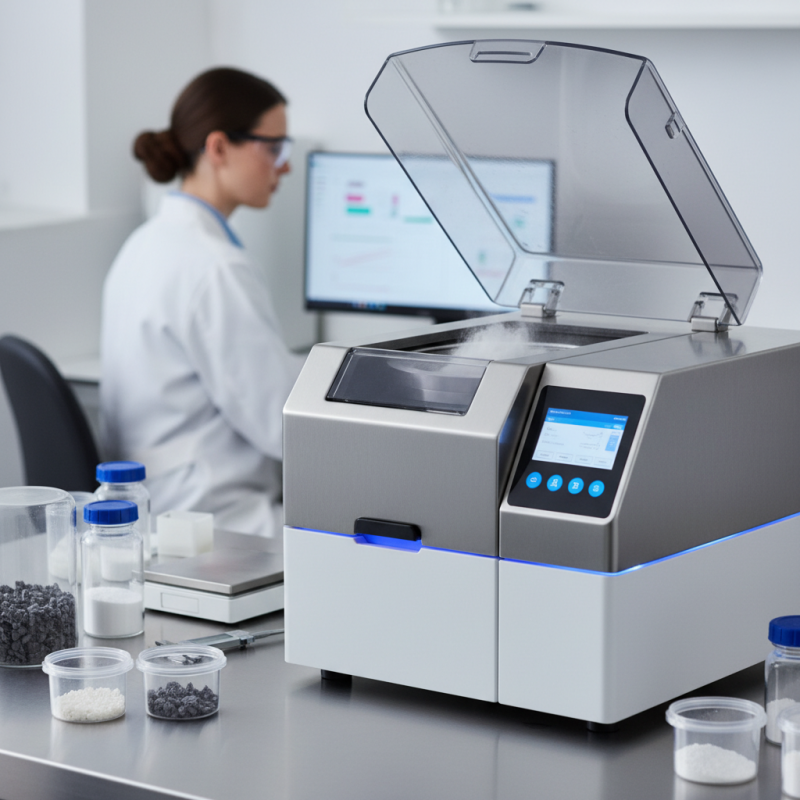
Understanding Different Types of Laboratory Sample Pulverizers Available in the Market
When selecting a laboratory sample pulverizer, understanding the different types is crucial. There are several varieties available, each serving specific needs. Hammer mills are popular for their efficiency. They crush materials into fine particles using rapidly rotating hammers. This method is effective for soft to medium-hard samples.
Another option is ball mills. These devices utilize balls to grind materials. They are particularly useful for mineral samples or tougher materials. However, they may not be ideal for all types of substances. In some cases, they produce uneven particle sizes, which can be problematic.
Additionally, there are vibratory pulverizers. These machines use vibration to achieve consistent grinding. They are excellent for homogenous results but can be sensitive to material variations. It’s essential to reflect on what precisely you need in a pulverizer to make an informed choice. Choosing the wrong type can lead to inefficiency. Always evaluate your specific requirements and the characteristics of the materials you work with.
Key Factors to Consider When Selecting a Pulverizer for Specific Materials
When selecting a laboratory sample pulverizer, material type is crucial. Different materials have unique properties, influencing pulverization methods. For example, brittle materials like ceramics require a different approach compared to tougher materials such as metals. Understanding the material's hardness and moisture content can help you choose a suitable machine.
Tip: Always test the pulverizer with small samples first. This will reveal how effective it is for your specific materials. Make adjustments based on the results.
Consider the desired particle size. Some applications require fine powders, while others may need coarser particles. The pulverizer's design and settings can significantly impact the final product. Thus, reviewing these specifications becomes important.
Tip: Consult technical specifications before purchasing. Look for adjustable settings that allow for flexibility. Test varying parameters to find the optimal configuration for your needs.
Finally, pay attention to the operation and maintenance aspects. Some machines are easier to clean and require less maintenance. A machine that’s complex may decrease efficiency over time. Think about the long-term implications of your choice.
Evaluating Pulverizer Specifications: Capacity, Speed, and Power Requirements
When selecting a laboratory sample pulverizer, evaluating specifications is critical. Capacity is a fundamental factor. It refers to the volume of material the pulverizer can process in a specific time frame. According to industry studies, machines can vary from 1 kg to 100 kg per batch. A unit with a higher capacity is suitable for large-scale operations. However, it may not be ideal for smaller labs focusing on precision.
Speed also plays a vital role in performance. Higher speeds usually result in finer particle sizes. Reports indicate that pulverizers operate between 1000 RPM and 6000 RPM. An important consideration is that while speed increases efficiency, too high can lead to heat build-up. This can affect sample integrity.
Power requirements determine the performance stability of the pulverizer. Most units range from 0.5 kW to 5 kW. Insufficient power can limit efficiency and lead to wear and tear. Larger-sized samples may demand higher power and thus increase operational costs. On the contrary, low-powered models may not meet user expectations, especially in rigorous applications. Understanding these specifications ensures a better fit for your laboratory's needs.
Maintenance and Operational Considerations for Long-term Use of Pulverizers
Selecting the right laboratory sample pulverizer is crucial for efficiency. However, long-term use requires attention to maintenance and operation. Regular cleaning is vital. Dust and residues can affect performance. Ensure you follow a cleaning schedule based on usage frequency.
Check for wear and tear on components. Blades and other moving parts should be inspected routinely. Replace any worn parts immediately. Neglecting this can lead to poor results or even equipment failure. Lubricate parts as needed to keep everything running smoothly.
Training your team is equally important. Ensure that all users know how to operate the pulverizer properly. Misuse can lead to damage. Encourage feedback from operators. This helps identify issues early. Sometimes, small adjustments can make a big difference. Regular maintenance checks keep the pulverizer in top shape and extend its lifespan.
Cost-Effectiveness and Return on Investment in Laboratory Pulverizing Equipment
When selecting a laboratory sample pulverizer, cost-effectiveness is crucial. Initially, consider the purchase price. A low upfront cost may seem attractive, but think long-term. Higher-quality equipment might have a steeper price tag. However, it often lasts longer and requires fewer repairs. This can lead to significant savings over time.
The return on investment (ROI) should also factor into your decision. Equipment that is cheaper to maintain can quickly become more valuable. Take note of the efficiency and time savings during operations. An effective pulverizer reduces labor costs and increases throughput. This means you can process more samples in less time.
Think about the specific needs of your lab. Are you processing large volumes or specialized materials? Equipment that meets these needs might be costly initially but could yield better results. Reflect on your current setup. Are you facing bottlenecks or inefficiencies? Choosing the right pulverizer could make a considerable difference. Aim for a balance between initial costs and long-term benefits.