How to Choose a Solar Water Purification System
Choosing a Solar Water Purification system is not just a matter of buying the largest panel or still. The right design depends on your water source, daily demand, local sunlight, and the contaminants that need treatment. Solar distillation, solar-powered filtration, and solar ultraviolet systems work differently. A sunny afternoon can help, but shade, cloudy days, and seasonal changes affect output. Small details matter: a roof’s afternoon shadow, a cloudy storage tank, or a filter cartridge that is hard to replace.
Solar-thermal researcher Dr. A.K. Tiwari has published work on solar distillation. A practical paraphrase of the design lesson in that research is: “Judge a solar still by the quality and quantity of its treated water, not by sunlight alone.” Treat this as a guiding principle, not a verified verbatim quotation. This guide will help compare treatment methods, capacity, storage, maintenance, and independent performance testing. Check whether a system addresses the specific risks in your source water; clear-looking water is not proof of safety. Ask for test results and realistic daily-output figures under conditions like yours. Then consider cleaning routines, replacement parts, and what happens during several cloudy days. There is no perfect system. Even a well-matched option may need careful upkeep, and that deserves honest attention.
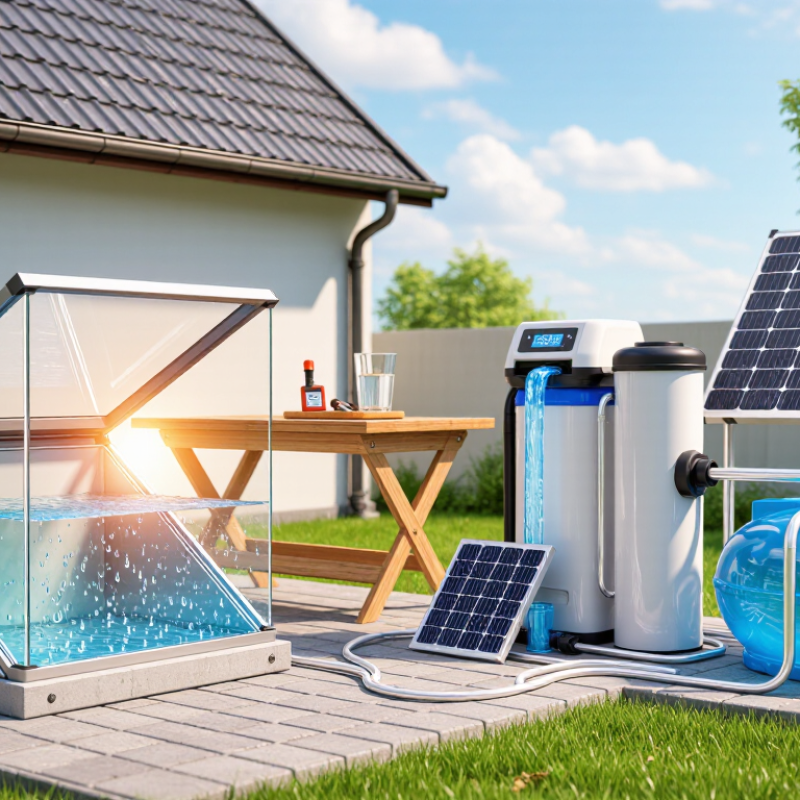
Assess Water Source, Contaminants, and Daily Demand
Choosing a solar water purification system starts with the water you actually have, not the device’s advertised output. Is it rainwater from a roof, a shallow well, or a stream after storms? Note changes in color, smell, and sediment across seasons. Clear water can still contain microbes, salts, or dissolved chemicals. Looks deceive.
Get a laboratory test where possible, especially for well water, and identify which contaminants the system is designed to reduce. A sediment prefilter may protect later stages, but it does not make unsafe water safe by itself. UV can inactivate many microbes in clear water when power is adequate. It does not remove salts or metals. Check performance data and maintenance needs, not just claims.
Estimate daily demand in liters, including drinking, cooking, and busy days. Compare that figure with the system’s output under cloudy conditions, not only its sunny-day rating. Storage can bridge short gaps, but stored water needs a clean, covered container. Replace filters on schedule. Initial estimates are often wrong; tracking household use for a week can reveal the gap. Allow some extra capacity, since actual use rarely follows a neat estimate.
Evaluate Sunlight, Climate, and Available Installation Space
A solar water purification system should match the sunlight your site actually receives, not an ideal forecast. Track shade across the day, including shadows from trees, chimneys, and nearby buildings. Cloudy seasons can reduce output, while cold weather may slow some processes. Check the system’s stated daily capacity under conditions similar to yours. A number measured in strong sun may not reflect winter performance. I would not rely on averages alone. Clouds matter.
Tips: Note direct-sun hours over several days, and check seasonal records for your area. Leave clear access for cleaning and repairs. Measure the installation spot before buying; a roof may be sunny but difficult to reach. Keep space for storage tanks, pipes, and safe drainage. Small details add up.
Climate also affects maintenance. Dust, salt air, frost, and heavy rain can change how often components need inspection. Ask how the unit performs during low-sun periods and what routine care involves. If space is tight, compare the full footprint, not just the collector or panel. Consider where water will be collected and stored. A compact setup can still feel cramped. Test the source water and verify that the system is designed to address its specific contaminants.
Compare Solar Purification Methods and System Components
A solar water purification system should match the water source and daily demand. Solar distillation uses sunlight to evaporate water, then condenses the vapor on a clean surface. It can reduce salts and many dissolved contaminants, but output is slow and depends on sunlight and temperature. A small basin may produce only a limited amount on cloudy days. That matters.
Photovoltaic systems power ultraviolet treatment, often alongside a sediment or carbon prefilter. UV can inactivate many microbes, but it does not remove salt or dissolved chemicals, and cloudy water can block treatment. Compare panel capacity, battery storage, flow rate, and the availability of replacement filters. A battery helps at night, though it adds cost and another component to maintain. Keep it dry.
Look closely at the full system, not just its purification method. Useful components may include a raw-water tank, prefilter, treatment unit, clean storage container, and a way to monitor operation. For UV systems, confirm that the lamp receives the required power and that water passes through at the specified rate. For distillers, check the condenser, seals, and surfaces that contact water. I would still want independent water testing before relying on unfamiliar equipment. A clear-looking sample is not proof.
Match Treatment Capacity with Storage and Usage Needs
Size the purifier around water actually consumed, then check whether storage can cover weak-sun days. WHO’s Domestic Water Quantity, Service Level and Health report uses about 20 liters per person daily as a basic-access benchmark. For four people, that is roughly 80 liters for household needs, not a drinking-water target alone. Separate drinking and cooking demand from washing and cleaning; treating every liter may waste energy and system capacity.
Solar output can vary sharply with sunlight, temperature, and equipment design. Kabeel and El-Agouz’s 2011 review in Desalination reports conventional solar still yields commonly around 2–5 liters per square meter per day. Treat that range cautiously: it describes passive stills, not every solar purification technology. Ask for measured daily output under local conditions, including cloudy periods. Then compare it with peak use, not just the weekly average. A family may draw more water on hot days. Keep enough treated water for a low-output stretch, and use covered, food-safe storage to limit contamination. Tank capacity matters. So does the refill rate. I would leave a safety margin, though the right margin depends on local weather and how reliably the system is maintained.
Check Water Safety, Maintenance, Durability, and Total Cost
How to Choose a Solar Water Purification System
Check the water source before comparing equipment. A clear glass can still contain harmful microbes or dissolved chemicals. The WHO/UNICEF Joint Monitoring Programme reported that 2.2 billion people lacked safely managed drinking water in 2022. That figure highlights why appearance alone is not a safety test. Ask for independent test results covering contaminants found in your source water. WHO’s household-treatment framework assesses reductions in bacteria, viruses, and protozoa. A sunny-day demonstration proves little about consistent treatment.
Maintenance and durability shape real-world performance. Check how often prefilters need replacement, whether parts are easy to obtain, and how the system performs on cloudy days. NREL researchers reported median solar-panel degradation near 0.5% per year in a review of photovoltaic studies (Jordan and Kurtz, 2013); this does not measure filter life or water output. Price the whole system over several years, including filters, batteries, labor, and downtime. I would not trust a neat cost estimate without checking local replacement prices.
Tips: Keep a simple log of filter changes and output. Compare treated water with independent lab results when possible. Small details matter. A missed replacement can undermine an otherwise sound setup.