What are the Best Automotive Components to Source in 2026?
The automotive industry is rapidly evolving. As we look towards 2026, understanding the best Automotive Components to source is crucial. According to a recent report by MarketsandMarkets, the global automotive components market is projected to reach $1.2 trillion by 2026, growing at a CAGR of 5.6%. This growth indicates a high demand for innovative, reliable components.
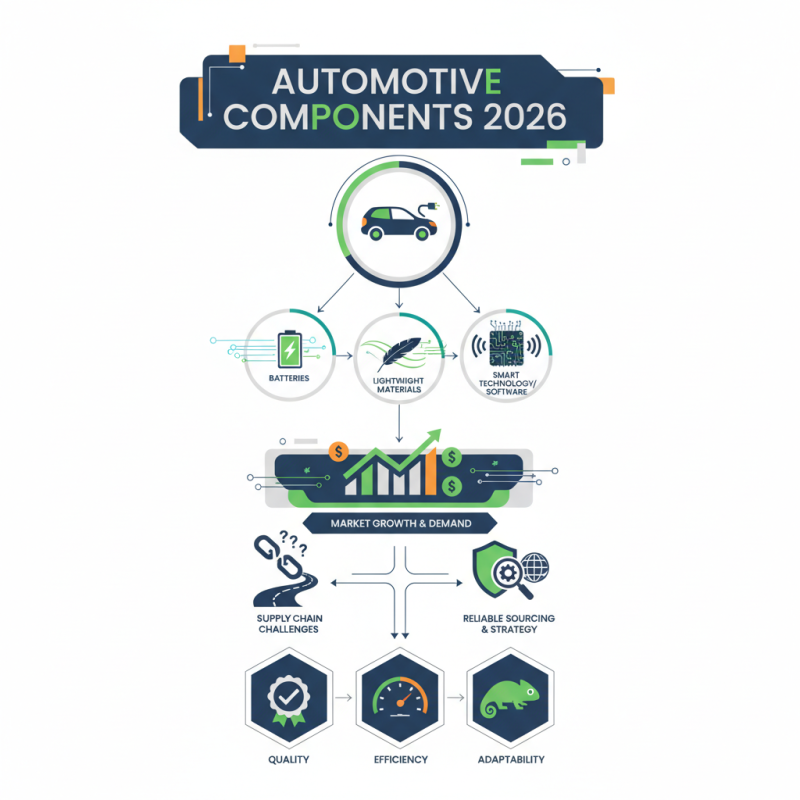
Key industry players are focusing on advanced components. Electric vehicles (EVs) are driving a shift in sourcing priorities. BloombergNEF states that by 2025, EVs will account for 20% of global sales. Sourcing lightweight materials, batteries, and smart technology is essential for manufacturers. These components not only enhance performance but also address sustainability concerns.
However, sourcing is not without challenges. Supply chain disruptions remain a concern. Finding reliable suppliers for critical automotive components can be difficult. It requires careful evaluation and strategic planning. In this landscape, understanding component trends and risks is vital for success. The focus must remain on quality, efficiency, and adaptability in a competitive market.
Emerging Trends in Automotive Component Sourcing for 2026
As we approach 2026, emerging trends in automotive component sourcing reflect the industry's shift towards sustainability and efficiency. According to recent studies by the Automotive Industry Association, nearly 70% of manufacturers are prioritizing eco-friendly materials. This trend paves the way for innovative sourcing strategies that balance performance and environmental responsibility.
The shift is also accompanied by a growing reliance on advanced technology. Reports indicate that 40% of automotive companies are investing in AI-driven analytics for better sourcing decisions. This technology enhances supply chain transparency. Yet, some manufacturers still struggle to adapt, facing challenges in integrating new systems effectively.
Moreover, the focus on electric vehicles is reshaping component requirements. A projection by the Global EV Outlook suggests that demand for battery components will rise by 50% by 2026. However, sourcing critical minerals remains problematic. Supply chain disruptions and price volatility present hurdles that require careful planning and strategic partnerships. Balancing the need for innovation with the realities of sourcing is key to future success.
Key Technologies Driving Automotive Component Innovations
The automotive industry is witnessing rapid advancements, driven by key technologies that ensure component innovation. Electric vehicles (EVs) are at the forefront of this transformation. According to a 2023 report by McKinsey, EV sales are projected to reach 45% of total vehicle sales by 2030. This growth is fueling demand for efficient batteries, lightweight materials, and advanced electronics. Battery technology, in particular, is evolving rapidly. Solid-state batteries, which promise higher energy densities and faster charging times, are expected to reshape EV design in the coming years.
Another critical area is autonomous driving technology. This sector is projected to grow significantly, with a market valuation of over $800 billion by 2030, according to Statista. Key components driving this growth include advanced sensors, AI-based processing units, and vehicle-to-everything (V2X) communication systems. The integration of these technologies raises questions about safety, reliability, and data privacy, worth exploring further.
In addition to EV and autonomous technologies, connectivity plays a vital role. The global connected car market is expected to surpass $200 billion by 2026. This expansion is partly due to increased consumer demand for in-car entertainment and smart navigation systems. However, as car software becomes more complex, manufacturers face challenges in security and maintaining user privacy. As the industry evolves, companies must carefully address these issues to build trust and improve overall reliability.
Best Automotive Components to Source in 2026
Sustainable Materials and Their Impact on Automotive Manufacturing
The automotive industry is increasingly focused on sustainable materials. By 2026, sourcing eco-friendly components will become crucial. Reports indicate that over 30% of automotive manufacturers aim to integrate sustainable materials into their production processes. This trend aligns with consumer demand for greener vehicles.
Many manufacturers now explore recycled metals and bioplastics. These materials not only reduce environmental impact but also lower production costs. A study by the International Council on Clean Transportation shows that using these alternatives could decrease overall emissions by 25%. However, challenges persist. Achieving the same durability and performance as traditional materials can be difficult.
Despite these challenges, advancements in material science offer hope. Researchers are developing stronger, lighter materials from renewable sources. However, the path to widespread adoption requires industry collaboration and investment in research. The landscape is evolving, but the necessary changes are still unfolding. Continuous reflection on these processes will be vital for success in the near future.
What are the Best Automotive Components to Source in 2026? - Sustainable Materials and Their Impact on Automotive Manufacturing
| Component | Material Type | Sustainability Impact | Market Demand (2026) |
| Battery Systems | Recycled Lithium-Ion | High carbon footprint reduction potential | High |
| Interior Components | Biodegradable Plastics | Reduces landfill waste | Medium |
| Body Panels | Aluminum Alloys | Lightweight and recyclable | High |
| Tires | Sustainable Rubber | Renewable and lower ecological impact | Medium |
| Chassis | Composite Materials | Durable and lighter, improving efficiency | High |
Critical Supply Chain Factors for Sourcing Automotive Components
In 2026, the automotive industry faces unprecedented challenges in sourcing components. Recent data from the International Automotive Components Association highlights significant disruptions in the supply chain. A staggering 70% of manufacturers reported difficulties in obtaining semiconductors. This shortage has led to production delays and increased costs. Manufacturers must reevaluate their sourcing strategies and prioritize flexibility.
Additionally, geopolitical factors play a crucial role in the supply chain. According to the Global Supply Chain Institute, 40% of automotive companies may shift sourcing due to trade tensions. This shift can impact the availability of critical components like batteries and electric powertrains. Companies must diversify their suppliers to mitigate risks and ensure continuity.
Sustainability is another essential factor influencing sourcing decisions. The Automotive Industry Action Group reports that 55% of consumers prefer vehicles with sustainable components. As regulations tighten, manufacturers must invest in eco-friendly materials. The integration of circular economy practices can enhance reliability in sourcing. Adapting to these factors is crucial. The industry's future depends on agility and strategic sourcing.
Consumer Preferences Shaping the Future of Automotive Parts Sourcing
The automotive industry is witnessing a significant shift in consumer preferences. In 2026, sourcing decisions will heavily rely on what customers truly value. Sustainability is at the forefront, with eco-friendly components rising in demand. This trend is not just a fad; it reflects a growing consciousness about environmental impact. Car manufacturers must reevaluate their sourcing strategies to align with these preferences.
Additionally, consumers are increasingly interested in advanced technology. Features such as automation and connectivity are shaping choices. However, sourcing these high-tech components can be complex. It requires not only expertise but also strong partnerships with reliable suppliers. Companies must navigate this landscape carefully. They need to be aware of the challenges in integrating new technologies into traditional manufacturing processes.
Moreover, the preferences for safety features cannot be overlooked. As consumer awareness of road safety increases, so does the demand for reliable components that enhance vehicle safety. This puts pressure on manufacturers to invest in research and development. Finding innovative solutions is essential. Balancing these elements will continue to be a challenge, making it clear that understanding consumer desires is key to successful automotive component sourcing in the near future.