
What Are the 2026 Top Compressor Tools for Global Buyers?
Global buyers are entering 2026 with sharper expectations for Compressor Tools. Price still matters, but it no longer tells the whole story. Energy consumption, pressure stability, maintenance access, noise levels, and verified safety records now influence purchasing decisions.
Ron Marshall, a respected compressed-air systems consultant, has often warned, “Compressed air is often the most expensive utility in a plant.” His observation remains practical. A compressor that looks affordable on an invoice may consume more electricity every hour. A compact unit may also become difficult to service in a dusty workshop or remote factory.
This guide examines the 2026 Compressor Tools market through a buyer’s lens. It considers rotary screw, piston, oil-free, portable, and smart-connected systems. It also reviews efficiency data, duty cycles, air quality, warranty coverage, spare-parts access, and supplier support. These details matter in real workplaces, where a blocked filter, unstable voltage, or delayed technician can stop production.
Not every “advanced” feature creates value. Some connected systems provide attractive dashboards but limited decisions. That deserves scrutiny. Buyers should compare measured performance, not polished claims. ISO-related testing, clear technical documentation, and transparent service terms can strengthen confidence. However, even reliable data has limits when operating conditions change.
The strongest choice may not be the most powerful machine. It may be the one that fits the workload, climate, workforce, and long-term maintenance budget. This comparison is useful, but not perfect. Local conditions can overturn a ranking. Wise buyers should verify every specification before signing.
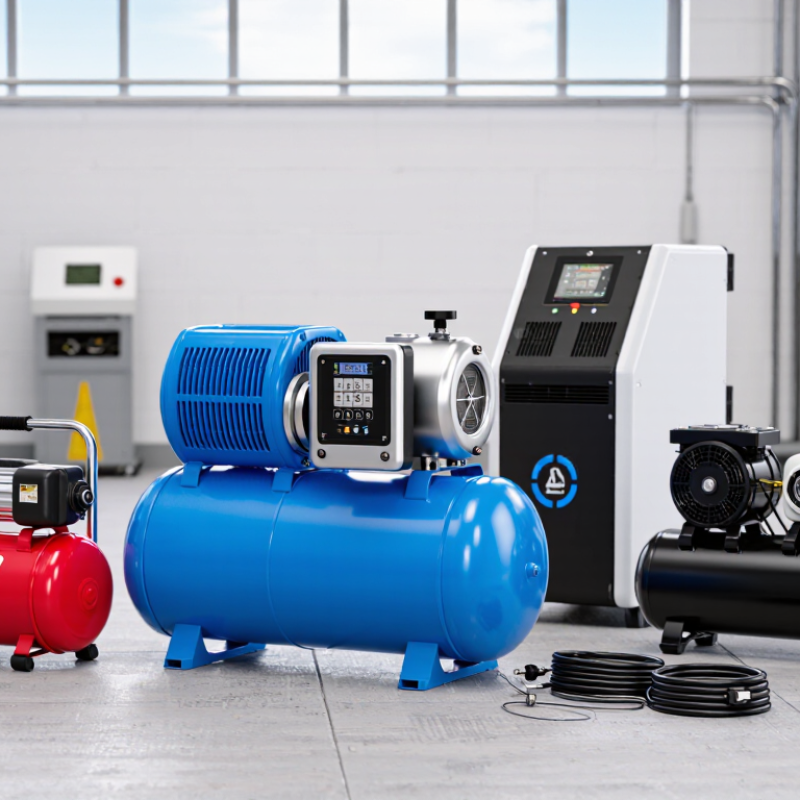
What Compressor Tools Are and Why Global Buyers Need Them
Compressor tools use compressed air to power work that demands steady force and control. Common examples include impact wrenches, nailers, spray guns, sanders, inflators, hoses, filters, and pressure regulators. Unlike many electric tools, pneumatic equipment can run for long periods without overheating as quickly. It also performs well in workshops, construction sites, vehicle service centers, and manufacturing facilities.
Global buyers need these tools because compressed air can improve production speed and reduce manual effort. An impact wrench may remove tight fasteners within seconds. A spray gun can create a more even finish than a basic brush. However, tool performance depends on air delivery, not only advertised pressure. Buyers should compare working pressure, airflow volume, tank capacity, connection size, noise level, and duty cycle.
Pressure is not everything. A tool may appear powerful but fail when the compressor cannot supply enough air. This mistake can cause delays, uneven results, and unnecessary maintenance. Buyers should also check local voltage requirements, technical certifications, replacement parts, warranty support, and transport conditions. In humid regions, moisture separators and regular drainage are especially important. In dusty environments, stronger filtration may protect internal components. Experienced purchasing teams often calculate total operating cost instead of choosing the lowest initial price. That approach is sensible, though not perfect. Field conditions still reveal problems that product sheets cannot show.
What Are the 2026 Top Compressor Tools for Global Buyers? - What Compressor Tools Are and Why Global Buyers Need Them
| Priority | Compressor Tool | What It Is | Typical Working Pressure | Typical Air Demand | Main Applications | Why Global Buyers Need It | Key Selection Criteria |
|---|---|---|---|---|---|---|---|
| 01 | Pneumatic Impact Wrench | A compressed-air fastening tool that delivers high rotational torque for tightening and removing bolts. | 90–120 psi (6.2–8.3 bar) | 4–8 CFM (113–227 L/min) | Vehicle service, machinery assembly, construction, and industrial maintenance. | Improves fastening speed, reduces manual effort, and supports frequent-duty workshop operations. | Maximum torque, drive size, noise level, vibration, duty cycle, and compatibility with local air fittings. |
| 02 | Pneumatic Die Grinder | A compact high-speed rotary tool used with abrasive wheels, burrs, and polishing accessories. | 70–100 psi (4.8–6.9 bar) | 4–8 CFM (113–227 L/min) | Deburring, weld finishing, surface preparation, porting, and precision metalwork. | Provides a compact power source for continuous workshop grinding without an electric motor at the tool head. | No-load speed, collet size, ergonomic design, air consumption, guard requirements, and abrasive compatibility. |
| 03 | Pneumatic Ratchet Wrench | A slim air-powered wrench designed for faster removal and installation of nuts and bolts in restricted spaces. | 70–100 psi (4.8–6.9 bar) | 3–5 CFM (85–142 L/min) | Automotive repair, equipment maintenance, assembly lines, and confined work areas. | Reduces repetitive hand motion while offering better access than many full-size impact tools. | Torque range, head profile, drive size, free speed, reverse control, and serviceability. |
| 04 | Pneumatic Spray Gun | An air-assisted coating tool that atomizes paint, varnish, primer, or other liquid finishes. | 20–50 psi (1.4–3.4 bar), depending on design | 8–15 CFM (227–425 L/min) | Vehicle refinishing, furniture, industrial coating, metal finishing, and woodworking. | Supports more uniform coverage and flexible coating work across different production environments. | Transfer efficiency, nozzle size, fluid viscosity, pattern adjustment, overspray control, and filtration quality. |
| 05 | Pneumatic Nailer or Stapler | A fastener-driving tool that uses compressed air to insert nails, brads, pins, or staples. | 70–120 psi (4.8–8.3 bar) | 1–3 CFM (28–85 L/min), intermittent | Pallet production, furniture, interior finishing, roofing, framing, and packaging. | Enables rapid, repeatable fastening and is often suitable for small and medium workshops. | Fastener size, magazine capacity, trigger safety, depth adjustment, misfire clearing, and local safety rules. |
| 06 | Pneumatic Blow Gun | A hand-held air nozzle used to remove dust, chips, moisture, and loose debris from surfaces. | 30–100 psi (2.1–6.9 bar) | Low to moderate, intermittent flow | Machining, electronics assembly, vehicle cleaning, packaging, and general maintenance. | Offers quick cleaning where dry compressed air is available and helps reduce manual cleaning time. | Safety nozzle design, noise reduction, flow control, extension length, and maximum allowable pressure. |
| 07 | Pneumatic Drill | An air-powered drilling tool for creating holes in metal, wood, plastic, and composite materials. | 70–100 psi (4.8–6.9 bar) | 4–10 CFM (113–283 L/min) | Metal fabrication, aircraft maintenance, automotive work, shipbuilding, and assembly. | Provides a lightweight alternative for environments where heat, sparks, or electric motor maintenance are concerns. | Chuck capacity, speed control, stall torque, weight, noise, side-handle design, and lubrication needs. |
| 08 | Air Filter, Regulator, and Lubricator Unit | A compressed-air preparation assembly that removes contaminants, controls pressure, and may add lubricant. | Designed for the connected system pressure | Must match downstream flow requirements | Protecting air tools, improving performance, and reducing moisture- and particle-related wear. | Essential for international buyers because air quality, pipe conditions, and operating pressure vary by site. | Filtration rating, port size, flow capacity, pressure range, bowl material, drain type, and service availability. |
| 09 | Compressed-Air Dryer | A system component that reduces water vapor and condensation in compressed air. | Selected according to system pressure and air capacity | Sized by compressor output and peak demand | Spray finishing, pneumatic controls, food-related applications, instrumentation, and corrosion-sensitive systems. | Reduces corrosion, frozen lines, coating defects, valve problems, and premature tool wear. | Required pressure dew point, climate, flow rate, ambient temperature, energy use, drain system, and maintenance access. |
| 10 | Air Hose and Coupler Set | Flexible hoses and quick-connect fittings that deliver compressed air from the source to the tool. | Must exceed the system's maximum working pressure | Determined by internal diameter, length, and tool demand | Every workshop, mobile service unit, production cell, and construction site. | Correct hose sizing prevents pressure loss and standardized couplers simplify cross-border replacement. | Inner diameter, length, flexibility, temperature range, abrasion resistance, connector profile, and pressure rating. |
| 11 | Air Leakage Detector | An ultrasonic inspection device used to locate leaks in compressed-air systems, fittings, hoses, and valves. | Used on operating systems across normal plant pressure ranges | Battery-powered measuring instrument | Energy audits, preventive maintenance, utility management, and production-line troubleshooting. | Helps lower wasted compressor energy and supports measurable maintenance programs across different facilities. | Detection range, sensitivity, display quality, calibration, battery life, data logging, and operating environment. |
| 12 | Portable Air Compressor | A mobile compressed-air source that supplies air to tools where a fixed plant system is unavailable. | Common workshop models: approximately 90–150 psi | Approximately 2–20 CFM, depending on size and design | Construction, roadside repair, small workshops, field service, and emergency maintenance. | Improves mobility and allows buyers to operate pneumatic tools in locations with limited infrastructure. | Free air delivery, tank volume, power supply, noise, portability, duty cycle, voltage or fuel requirements, and local certification. |